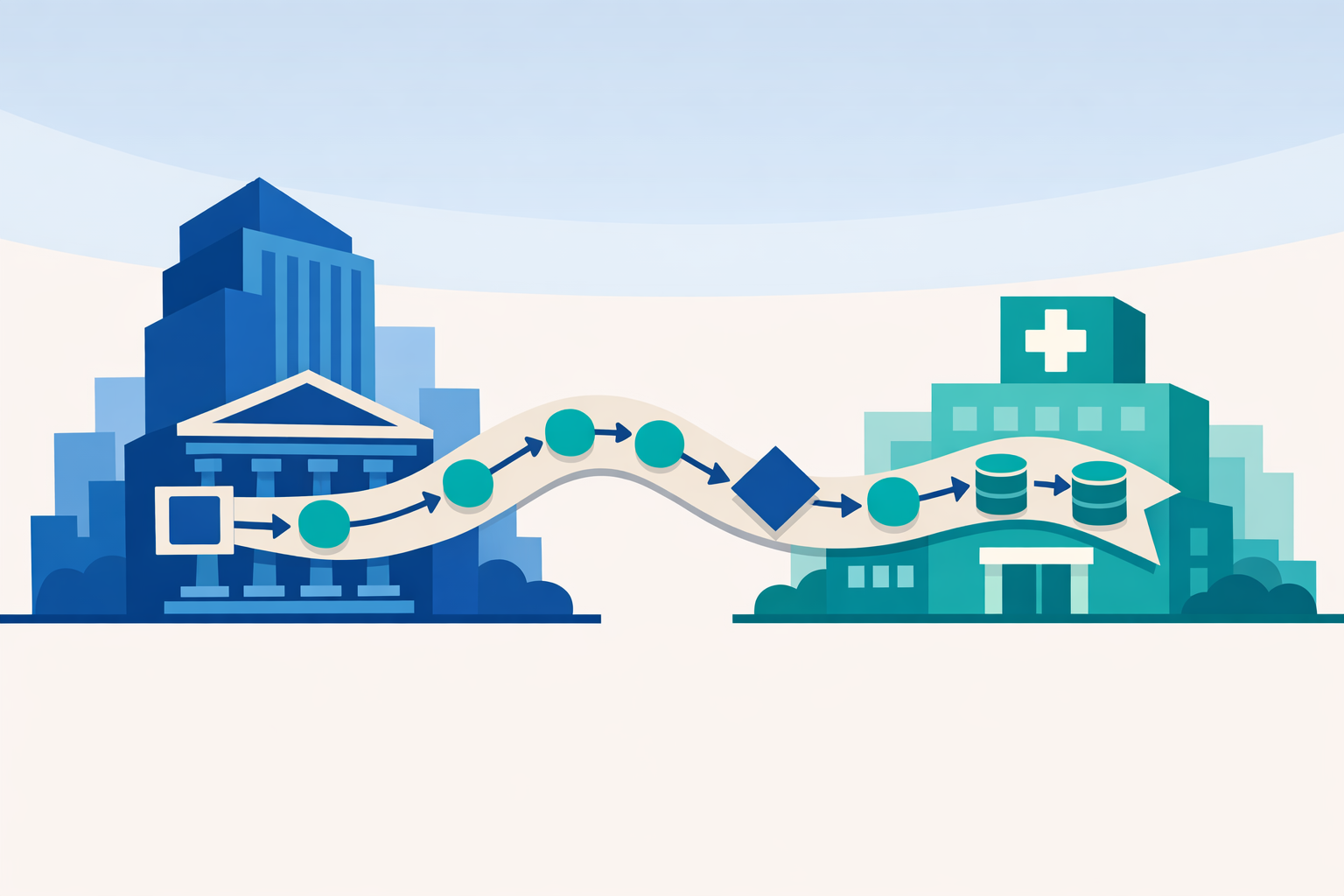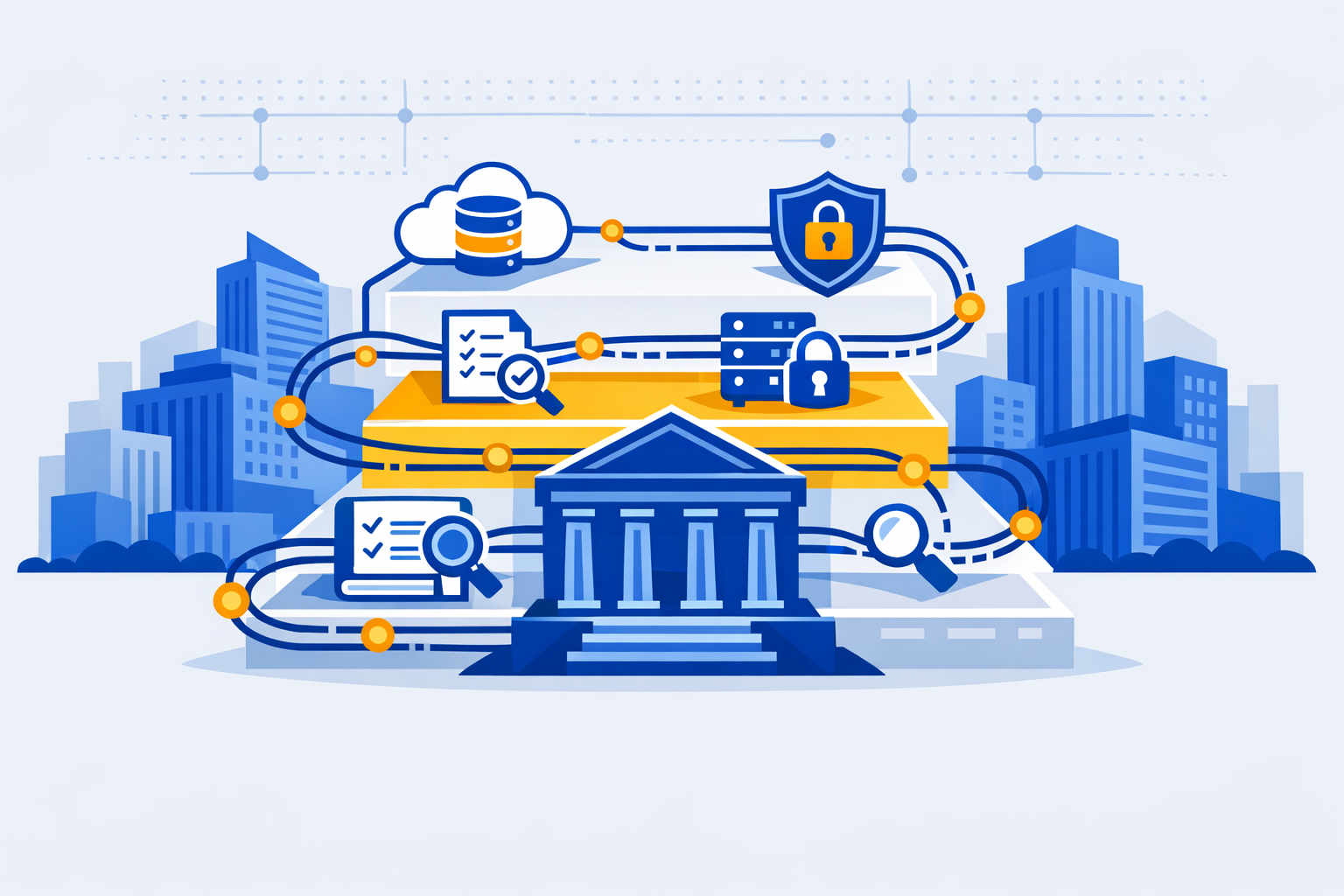
Major U.S. banks and fintechs are accelerating compliance programs around AI data provenance - and the margin for delay is narrowing. With phased regulatory deadlines beginning in late 2026, institutions must demonstrate full traceability of data sources, model inputs, and transformation logic across critical banking workflows. For compliance and technology leaders, the shift signals a fundamental change in how data governance is structured: from ad hoc documentation to formalized, auditable data lineage embedded directly into model risk management (MRM) frameworks.
What Regulators Are Now Requiring
The regulatory impetus is converging from multiple directions. In the U.S., existing Federal Reserve guidance SR 11-7 already requires financial institutions to document data sources, transformations, and model fitness prior to production deployment - a process that takes a minimum of 9-12 months for approval[1]. New sector-specific guidance extends these requirements explicitly to AI decision trails.
Internationally, the EU AI Act requires high-risk AI systems in the financial sector to comply with specific transparency, auditability, and risk management requirements by August 2, 2026 - including credit scoring, loan approval, fraud detection, and AML risk profiling, all explicitly classified as high-risk AI systems under the Act[2].
The latest wave of U.S. regulatory guidance calls for explicit documentation of:
- Data sources - where inputs to automated decisions originate
- Transformation steps - how raw data is processed, filtered, or enriched before reaching a model
- Model inputs and outputs - what features were used, what the model produced, and why
- Access controls and event logs - who accessed data, when, and for what purpose
Regulators are increasing expectations for advanced AML technology, including AI-driven monitoring and stronger transaction surveillance capabilities, while simultaneously requiring financial institutions to strengthen AI oversight for transparency, fair lending compliance, and robust model risk management[3].
The Tiered Provenance Architecture Taking Shape
Facing heterogeneous technology stacks - ranging from legacy core banking platforms to modern AI agents and third-party cloud services - banks are not applying uniform governance controls across all workflows. Instead, a risk-tiered approach to data provenance is emerging as the dominant compliance strategy.
Risk-tiered governance assigns heavier controls to high-impact, high-risk decisions, while lighter-weight documentation applies to lower-risk AI functions - a design principle validated by model risk management specialists[4] who note that blanket governance is counterproductive and inflates compliance overhead without proportionate risk reduction.
In practice, institutions are segmenting AI workflows into at least three tiers:
Tier 1 - Critical Workflows: Credit decisioning, AML screening, and customer due diligence (CDD). These carry the strictest provenance requirements: full end-to-end data lineage, historical decision reconstruction, explainability outputs logged per decision, and model cards documenting architecture, intended use, performance metrics, and training data characteristics[5].
Tier 2 - High-Risk Workflows: Payment routing, fraud detection, and automated underwriting. Provenance requirements include routing logic documentation, feature lineage, model version control, and retraining event logs.
Tier 3 - Standard Workflows: Customer service automation and internal productivity tools. Requirements center on interaction logging, GenAI disclosure, and basic model documentation.
The phased regulatory deadlines reinforce this tiered structure, with 18-month milestones focused on Tier 1 workflows and 24-month milestones extending requirements to Tier 2 and Tier 3 functions.
The Implementation Challenge: Heterogeneous Systems and Legacy Infrastructure
The core technical challenge for most institutions is not conceptual - it is architectural. Financial institutions carry decades of legacy systems that were never designed to support continuous, real-time, governed AI workflows, and when teams attempt to scale across domains, they encounter gaps in data consistency, lineage, and control that undermine reliability[6].
Supervisory findings continue to surface around data accuracy and lineage[7], with remediation cycles reappearing even after significant uplift programs. AI initiatives routinely reveal inconsistent data definitions and fragmented datasets - structural problems that governance tooling alone cannot resolve.
Several specific gaps characterize the current landscape:
- Over half of organizations lack systematic inventories of AI systems currently in production or development, making risk classification and compliance planning difficult to execute[8]
- Undocumented data lineage renders model audit trails unverifiable, directly undermining an institution's ability to satisfy regulator inquiries[9]
- Most financial firms deploy AI with fragmented lineage that cannot answer basic regulatory questions[1] - such as which models will break if a data source changes, or whether a past decision used unauthorized data
In response, several banks are piloting standardized data contracts with vendors - formal agreements that define data quality SLAs, access controls, permissible uses, and lineage metadata obligations for third-party data suppliers. This approach directly addresses the third-party risk management gaps highlighted by the CFPB's Personal Financial Data Rights Rule[3], which requires institutions to strengthen contractual, operational, and technical controls for vendor risk.
Governance-as-a-Service: An Emerging Market Response
The implementation challenge is driving demand for a new category of enterprise tooling: governance-as-a-service (GaaS) platforms that automate data lineage mapping, annotate provenance metadata, and trigger alerts when lineage gaps are detected.
These platforms address a critical gap: AI governance requires dynamic runtime tracking of what AI systems actually accessed, historical reconstruction of exact data states at any past point in time, and the ability to connect models to accountable data ownership[1] - capabilities that traditional data catalog tools were not built to provide.
Under continuous supervision models taking shape through 2028, banks will need reconciled "golden sources" supported by industrial-grade data lineage, metadata, and control frameworks[10] - with automated reconciliations, anomaly detection, and evidence that data breaks are investigated and resolved within defined SLAs.
Key capabilities that procurement teams are evaluating in GaaS platforms include:
- Automated end-to-end lineage mapping across heterogeneous systems (core banking, cloud services, third-party APIs)
- Event logging with tamper-evident audit trails for model input/output records
- Provenance gap detection with real-time alerting
- Support for SHAP/LIME explainability integration at the decision level
- Data minimization and privacy-by-design policy enforcement
This connects directly to the broader regulatory push documented in recent proposals for unified AI governance frameworks for bank workflow agents, which call for interoperable governance controls across multi-vendor automation environments.
Proponents vs. Critics: The Governance Overhead Debate
Not all stakeholders view the tiered provenance mandate positively. Proponents argue that robust provenance frameworks reduce model risk, enhance explainability for regulators, and mitigate operational risk in high-stakes processes - particularly as AI agents take on more autonomous roles in loan approvals and AML screening.
Critics raise three substantive concerns:
- Compliance overhead - Applying comprehensive provenance requirements across all AI systems, including low-risk tools, creates bottlenecks that slow innovation. Uniform high-risk controls applied regardless of risk tier impede development without proportionate risk reduction[9].
- Vendor fragmentation - Without interoperable standards, different governance platforms may produce incompatible lineage formats that cannot be reconciled across systems or presented coherently to examiners.
- Taxonomy gaps - The largest perceived regulatory constraint to AI adoption globally is data protection and privacy, followed by resilience, cybersecurity, and third-party rules[11]. Without common data taxonomies, siloed provenance records may satisfy the letter - but not the spirit - of auditor inquiries.
Privacy-by-Design in AI Pipelines
As banks implement AI agents for workflow automation, a parallel governance challenge has emerged: ensuring that data minimization and privacy-by-design principles are applied without compromising operational speed. Regulators are explicitly calling for institutions to embed governance into data and model pipelines rather than bolting it on after deployment[6].
This requires compliance teams to collaborate with data engineering and model development functions during pipeline design - not retrospectively during audit preparation. Retrofitting governance onto existing AI systems is costly, time-consuming, and potentially impossible for systems lacking proper documentation[12].
Key Takeaways for Enterprise IT and Compliance Leaders
The momentum behind tiered AI data provenance standards is substantive and accelerating. For CIOs, CTOs, and Heads of Compliance, the following actions are most time-sensitive:
- Inventory AI systems now. Institutions that lack a systematic AI model registry cannot begin risk-tiering or provenance mapping - the foundational step for all downstream compliance activities.
- Prioritize Tier 1 workflows for the 18-month milestone. Credit decisioning, AML screening, and CDD functions face the earliest regulatory scrutiny. Lineage infrastructure for these workflows should be the first implementation priority.
- Formalize vendor data contracts. Third-party data suppliers feeding AI models must be brought into the provenance framework through contractual obligations covering data quality, access controls, and lineage metadata.
- Evaluate GaaS platforms against interoperability criteria. Governance tooling that cannot integrate with legacy core banking systems or produce regulatory-standard lineage exports will create compliance gaps rather than close them.
- Integrate provenance into model risk management frameworks. Data lineage is no longer solely a data team concern - internal audit must now independently test data lineage rather than accept business-unit attestations[13]. MRM frameworks must be updated to reflect this expectation.
The trajectory is clear: within two years, formalized, auditable data lineage is expected to become a baseline requirement for all AI-enabled banking processes. Institutions that treat provenance as an infrastructure investment - rather than a compliance checkbox - will be better positioned to satisfy examiner expectations and scale AI deployments safely.
Frequently Asked Questions
What is AI data provenance in banking? AI data provenance refers to the documented record of where data used in an AI model originated, how it was transformed or processed, who accessed it, and how it contributed to automated decisions such as loan approvals or AML alerts. Regulators require this documentation to verify that AI systems operate fairly, accurately, and within permissible data use boundaries.
What is SR 11-7 and why does it matter for AI? SR 11-7 is Federal Reserve guidance on model risk management that requires U.S. financial institutions to document data sources, transformations, and model fitness for purpose before deploying any model into production. As AI systems increasingly function as decision models, SR 11-7 applies directly - and the documentation process for a new AI model typically takes 9-12 months to complete under this framework.
What is the EU AI Act deadline for banks? High-risk AI systems in the financial sector - including credit scoring, fraud detection, and AML profiling - must comply with the EU AI Act's full requirements by August 2, 2026. This includes transparency, auditability, human oversight, risk management documentation, and data lineage records.
What does a tiered provenance approach mean in practice? A tiered approach applies the most rigorous lineage controls - full audit trails, explainability logs, historical decision reconstruction - to the highest-risk workflows such as credit decisioning and AML screening, while applying lighter-weight documentation to lower-risk applications like internal chatbots. This avoids uniform governance overhead that would otherwise slow innovation across all AI use cases.
What is governance-as-a-service (GaaS) for banking AI? GaaS platforms are enterprise software tools that automate the mapping and annotation of data lineage across heterogeneous systems, monitor for provenance gaps in real time, and generate regulator-ready audit documentation. They address the scalability gap between manual provenance tracking and the volume of data flows in a modern bank's AI infrastructure.