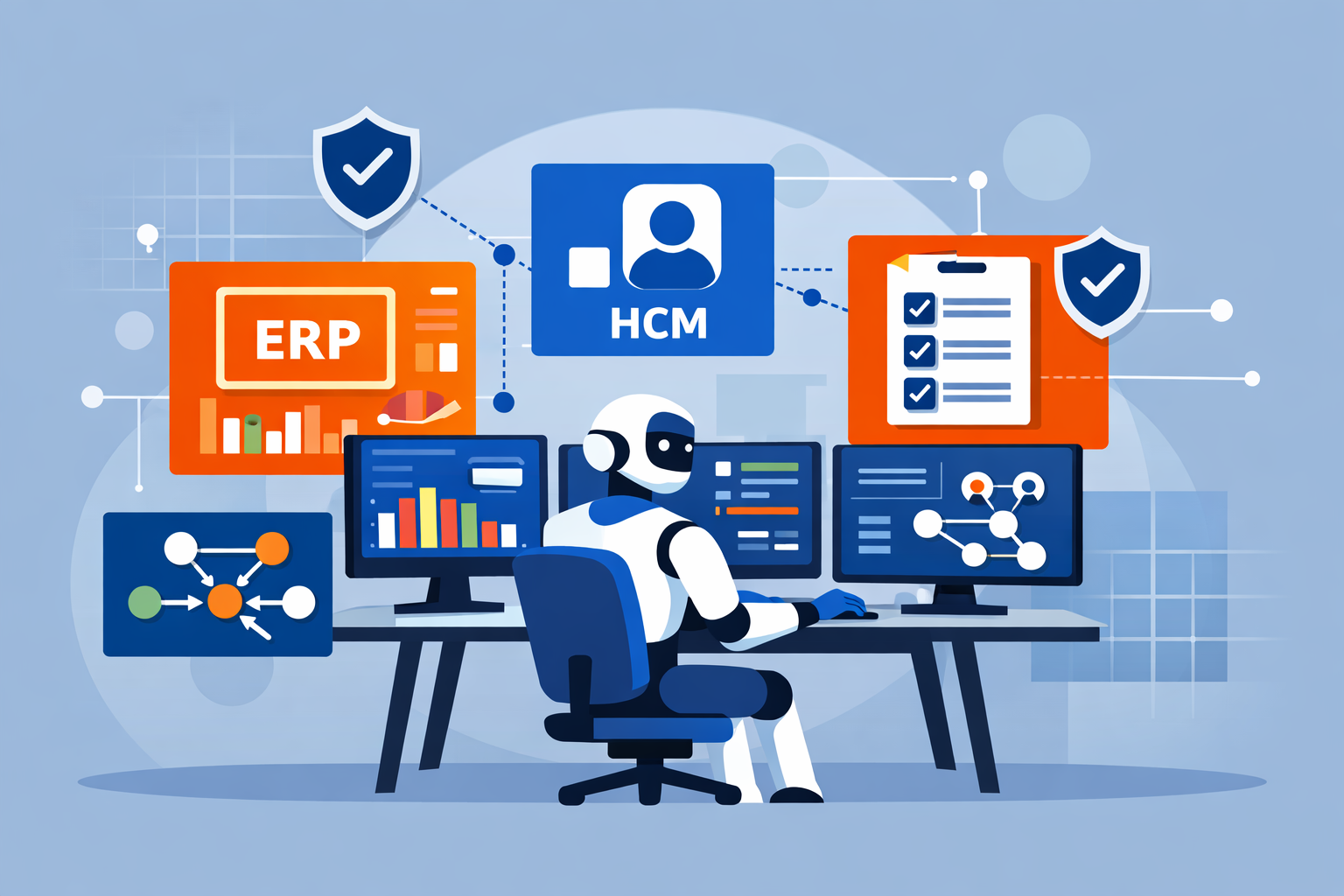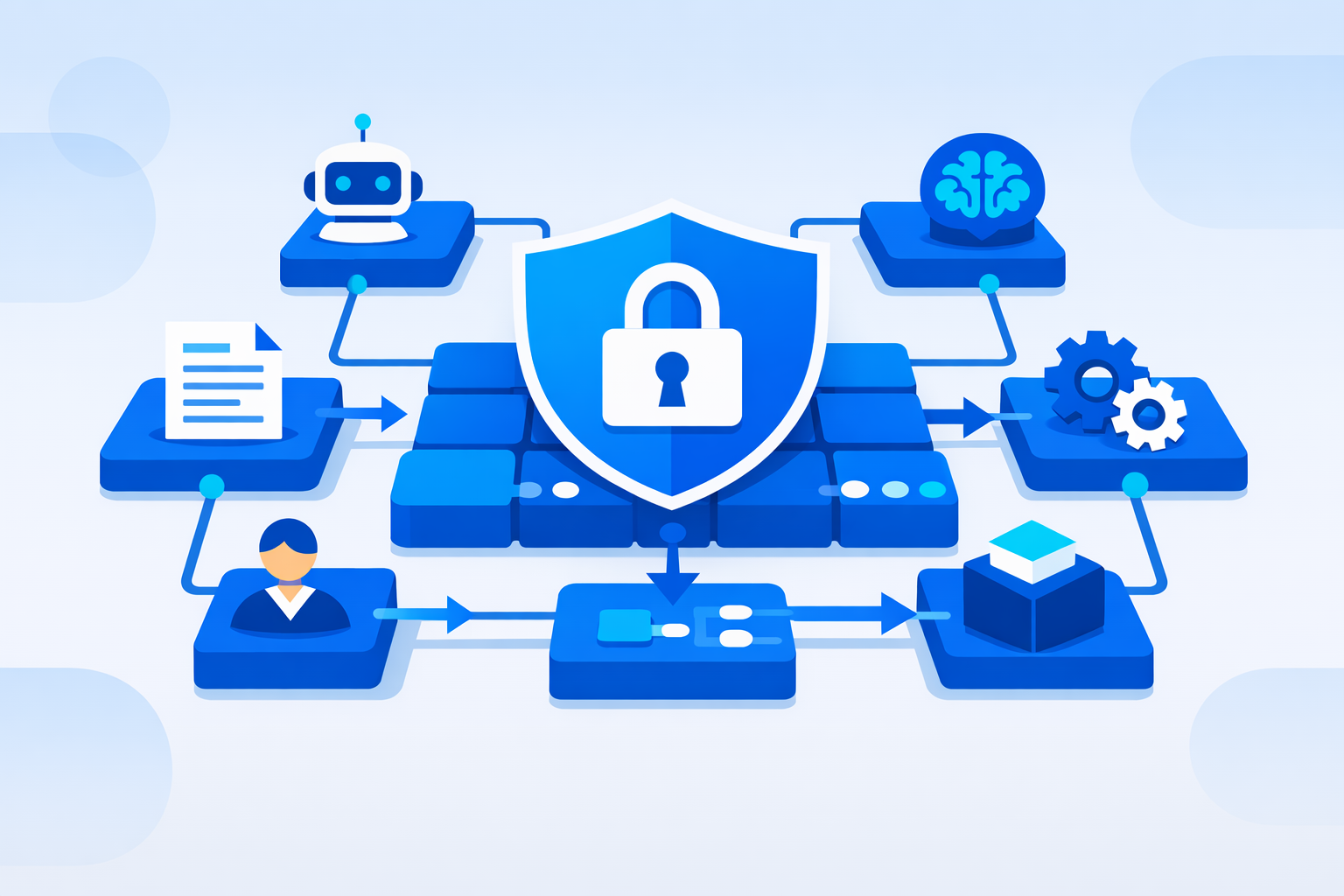
Box, Inc. (NYSE: BOX) announced the general availability of Box Automate on April 28, 2026, bringing no-code, agentic workflow automation to all business-tier customers and intensifying scrutiny over access controls, data leakage prevention, and governance frameworks as enterprises scale AI beyond dedicated IT teams. Box Automate routes work dynamically across people, AI agents, and enterprise systems to replace fragmented, manual content processes at scale, according to a company press release. The launch comes as broader industry pressure builds around governing autonomous AI deployments in regulated environments.
Background
Box previewed Box Automate at Reuters' Momentum AI summit in New York, with CEO Aaron Levie announcing the service would be available within 24 hours. The product builds on Box's earlier rollout of the Box Agent, which reached general availability on April 2, 2026, and positions Box squarely in the growing market for intelligent content management (ICM) platforms that embed AI natively into document-centric business processes.
The GA launch follows a period of rapid capability expansion. Box Automate integrates natively with Box AI, Box Extract, Box Apps, Box Sign, Box Hubs, and Box DocGen, consolidating what Box describes as previously fragmented workflows into a single orchestration layer. Analysts note that the competitive significance lies in Box's content-centric differentiation. "Box Automate introduces no-code workflows that route work across people and AI agents, making it easier to reduce manual, repetitive tasks at scale," said Alan Pelz-Sharpe, founder of Deep Analysis.
Governance and Security Implications
Box Automate's no-code architecture allows business units-HR, finance, legal, and operations-to design and deploy agentic workflows without engineering involvement. Box Automate's drag-and-drop builder requires no code and enables customers to design and deploy automations while ensuring human oversight for critical decisions and AI output verification, according to Box. However, democratizing automation introduces governance exposure that IT and security leaders must address before broad rollout.
A key safeguard is Box Automate's native permissions inheritance. Because Box Automate runs natively on Box, workflows automatically inherit Box permissions, meaning agents cannot access content beyond a user's existing authorization boundary, according to Box support documentation. This design limits lateral data exposure but does not eliminate the need for proactive classification discipline. Box Shield uses classification-based security controls to automatically prevent data loss and employs intelligent, context-aware alerts to detect potential data theft and malicious content, and these controls remain active within Automate workflows.
Data leakage prevention extends beyond permissions. Industry analysts warn that the most critical risks for enterprise agentic AI deployments include prompt injection, data exfiltration, and insider misuse, according to PurpleSec's 2026 AI risk assessment. Regulatory exposure compounds these technical risks: the EU AI Act's general application deadline is August 2, 2026, while Colorado's AI Act takes effect June 30, 2026, creating near-term compliance obligations for enterprises deploying automated decision-support workflows in high-risk categories such as lending, HR, and contract review-precisely the use cases Box Automate targets.
For vendor risk management, enterprises must also evaluate Box's AI supply chain. Box Automate incorporates AI models from OpenAI, Anthropic, and Google, with model improvements applied automatically as underlying models advance. Box states that the Box Agent never uses customer data to train third-party large language models, a commitment that directly addresses a core data governance concern for regulated industries. Box's platform supports compliance with GDPR, HIPAA, ITAR, PCI DSS, ISMAP, and FedRAMP, and Box Zones allows organizations to address data residency obligations across multiple geographies.
The tiered feature model also carries governance implications. Only Enterprise Advanced customers gain access to the full suite of agentic workflow automation capabilities, including AI agents, Box Extract integration, Box Forms integration, Box DocGen integration, Box Apps integration, and Hubs support, according to Box. Any agent run within an Automate workflow consumes Box AI Units, introducing consumption-based cost controls that can serve as both a financial and operational guardrail for IT administrators managing sprawl.
Industry analysts note that agentic AI platforms are forcing a structural governance reckoning. By 2026, AI has become agentic, acting independently through no-code platforms and automation, introducing unmanaged AI agents, unsecured code paths, and compliance exposure, according to Gartner research cited by The National CIO Review. According to a Google Cloud survey of 3,466 enterprise decision-makers, 88% of agentic AI early adopters report seeing positive ROI on at least one generative AI use case, but analysts caution that organizations leading in agentic AI will be those that balance agent supervision, autonomy, and governance infrastructure.
Outlook
Box will showcase Box Automate at its Content + AI Virtual Summit on May 20, 2026. The company has indicated it expects the product to drive upgrades to its Enterprise Advanced tier, which unlocks the full agentic feature set. For CIOs and enterprise architects evaluating the platform, the critical near-term decisions involve aligning Box Automate deployments with existing data classification schemes, updating AI governance policies to address agent-initiated actions and human-in-the-loop requirements, and confirming Box Shield access policy configurations before business-unit rollouts scale beyond pilot scope.