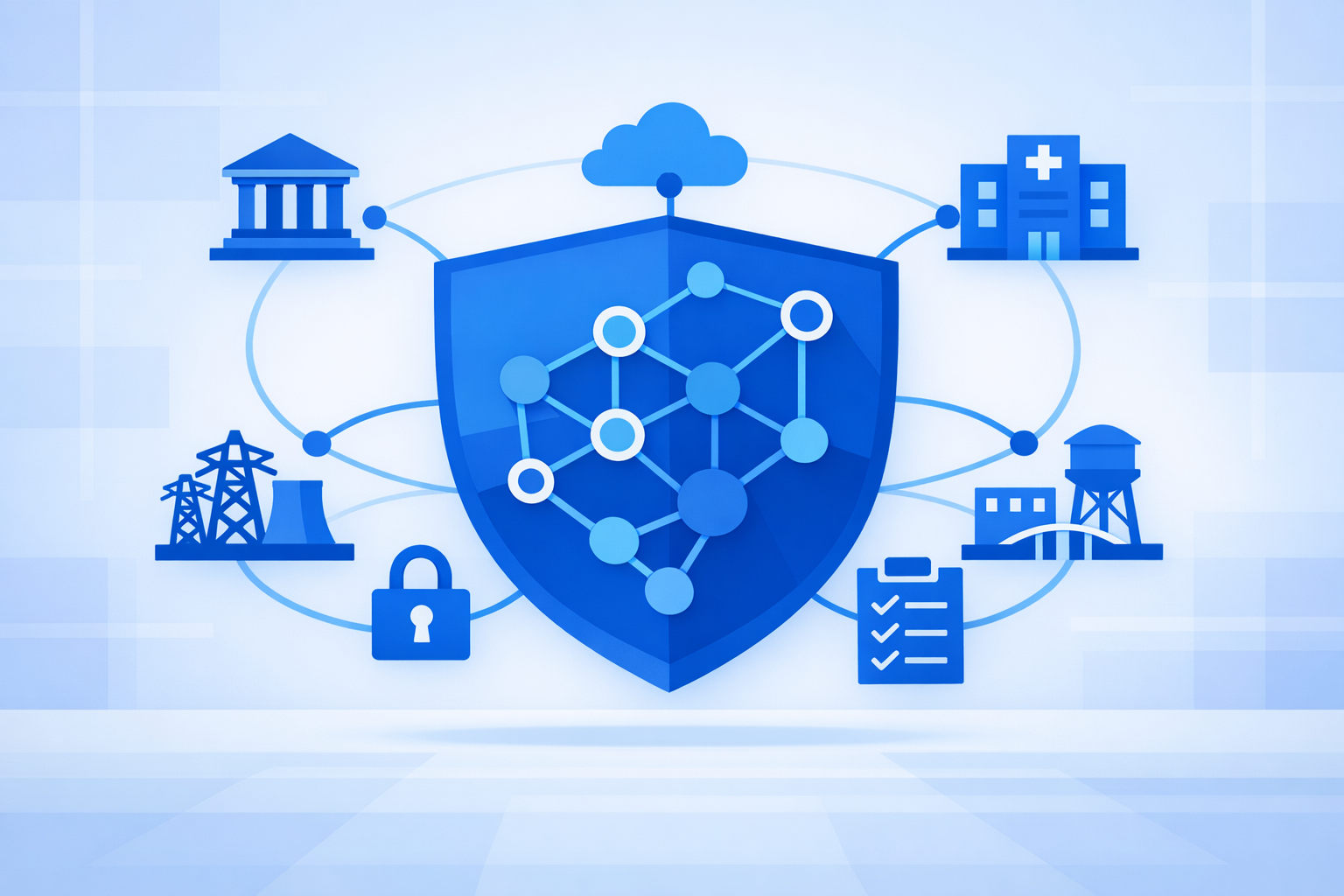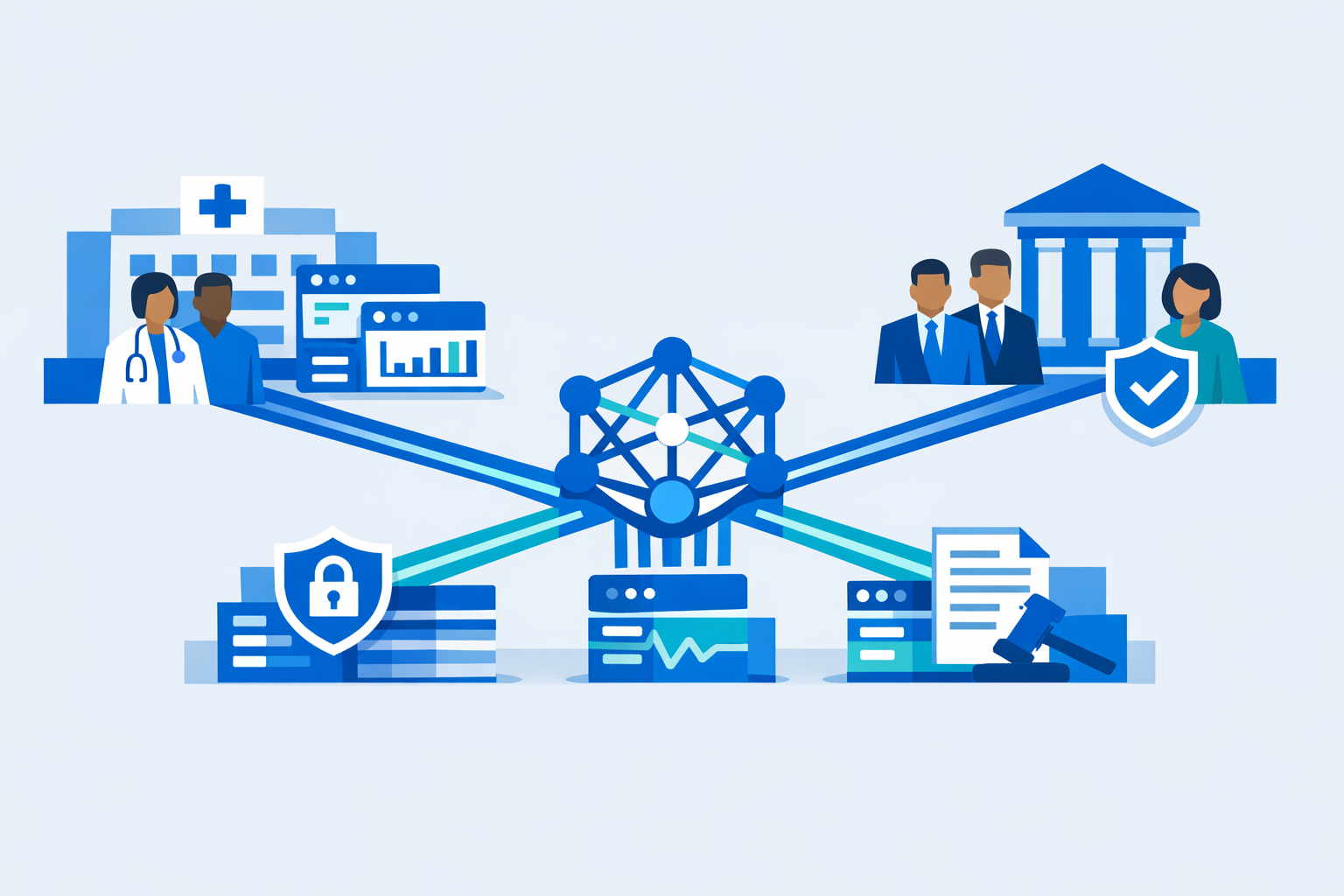
Hospitals, insurers, and banks are shifting data provenance and governance from compliance checklists into core ERP-enabled processes. The move is driven by converging regulatory mandates and the operational demands of cross-organizational AI workflows. It reflects a recognition that AI systems operating across institutional boundaries cannot be trusted or audited without verified data lineage at every step.
Background
The business case for cross-organizational AI in regulated industries is well established: financial institutions that share data within secure environments can identify fraud patterns or assess risk more accurately than either could alone, while healthcare networks use shared patient cohorts to improve treatment outcomes without exposing underlying records. Yet the governance infrastructure to support such collaboration has lagged.
Every enterprise AI initiative rests on a data foundation, and most are failing-not because of algorithm limitations, but because the underlying data is inconsistent, siloed, or ungoverned. A Gartner analysis released in February 2025 predicts that through 2026, organizations will abandon 60% of AI projects unsupported by AI-ready data.
Regulatory pressure is compounding the problem. The EU AI Act entered into force on 1 August 2024, with enforcement beginning in stages through 2025-2026. For high-risk AI-a category that explicitly covers medical AI systems-the Act requires strict quality management, transparency, and human oversight on top of existing sector obligations. In the United States, more than 250 AI-related healthcare bills were introduced in state legislatures in 2025, with a consistent focus on patient disclosure frameworks, bias controls, and preservation of clinician accountability for AI-informed decisions.
Details
The practical imperative centers on two distinct but complementary concepts. Data lineage tracks technical data flows at file and process levels, while data provenance focuses on the authenticity, integrity, and historical context of individual data elements. Data engineers use lineage to debug pipelines; legal and compliance teams rely on provenance to satisfy audit requirements and verify usage rights. Regulators and enterprise risk teams now demand both simultaneously.
ISO/IEC 27701:2025 has introduced major changes to privacy management. The standard, now independently certifiable rather than merely an ISO/IEC 27001 extension, includes expanded rules for AI-driven processing-addressing algorithmic transparency, bias reduction, and accountability in automated decisions.
ERP systems are increasingly the governance enforcement point. One global pharmaceutical organization adopted a governance-first ERP transformation, sequencing SAP Master Data Governance (MDG) as an enterprise capability rather than a post-migration enhancement. MDG-driven workflows were integrated with procurement, manufacturing, quality, and commercial operations, ensuring governance was enforced at the point of data creation rather than through retrospective cleanup. An initial assessment revealed fragmented data ownership, inconsistent processes, and significant quality issues-absent duplicate checks for financial master data created audit risks, while material master data managed by up to 16 departments resulted in inconsistent definitions and missing audit trails.
Finance faces a parallel reckoning on ERP readiness. The Institute of Management Accountants found that 58% of finance professionals rate their ERP data as inconsistent, making it the single most common readiness blocker for mid-market finance teams. McKinsey's 2025 State of AI report found that finance functions scoring below 30 on structured readiness frameworks experienced deployment failure rates above 70%.
Data clean rooms have emerged as the primary architectural response to cross-organizational AI governance requirements. These secure environments enable multiple organizations to analyze shared signals without exposing or transferring raw data, supporting cross-industry intelligence while maintaining strict privacy and regulatory compliance. The industry is shifting toward zero-copy, policy-enforced collaboration models. IDC's FutureScape 2026 predictions forecast that by 2028, 60% of enterprises will collaborate on data through private exchanges or data clean rooms.
Healthcare is the second fastest-growing vertical for clean room adoption. The Healthcare & Life Sciences segment is projected to grow at a CAGR of 25.3% through 2034, driven by the urgent need for privacy-preserving patient data collaboration across payers, providers, pharmaceutical companies, and contract research organizations.
As generative AI becomes more integrated into healthcare workflows, governance must account for data poisoning-the risk that AI-generated content is fed back into systems. Safeguards that validate the integrity and provenance of all inputs, including AI outputs, are essential.
For bias mitigation specifically, the NIST AI Risk Management Framework offers a structured approach to identifying, assessing, and reducing risks in AI systems. Data provenance supports the framework's "Map" function by tracking data origins and transformations, helping organizations spot potential risks in training data or processing methods.
Outlook
In September 2025, the Joint Commission partnered with the Coalition for Health AI (CHAI) to release the first comprehensive guidance for responsible AI adoption across U.S. health systems-a collaboration between the accrediting body for over 23,000 healthcare organizations and a coalition representing nearly 3,000 member organizations. Colorado's AI Act requires disclosure, annual impact assessments, anti-bias controls, and record-keeping for at least three years, with enforcement beginning June 30, 2026-compressing the window for ERP teams that have not yet operationalized lineage and consent management capabilities. The EU regulatory trend moves toward dataset documentation, provenance tracking, and greater transparency, with companies required to prove data origin, copyright status, representativeness, and bias mitigation-making dataset governance as important as model architecture.