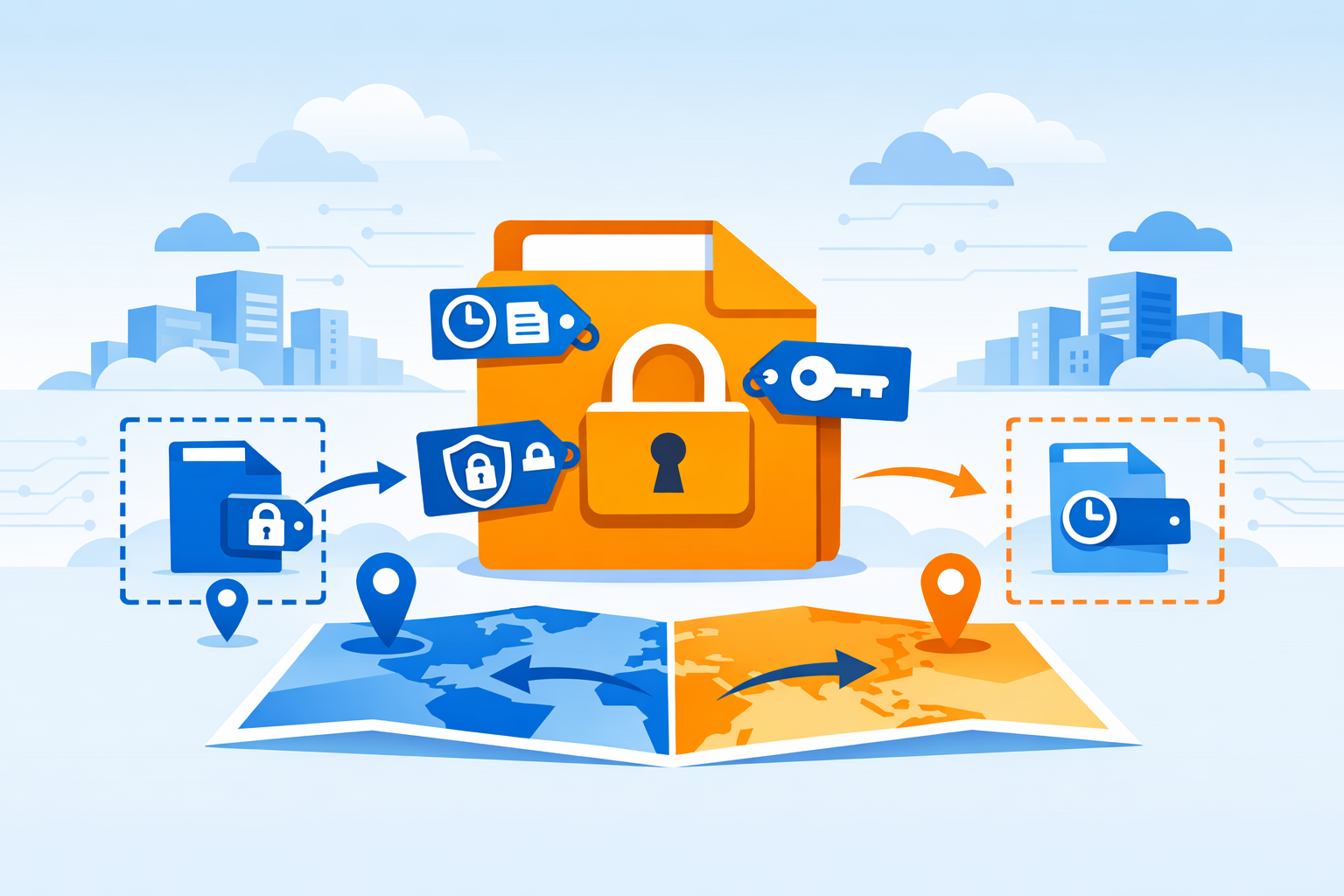
Cloud providers are implementing object-level governance to enforce retention, access, and privacy policies on individual files, regardless of physical location. This shift responds to increasingly restrictive data localization and transfer regulations, including the General Data Protection Regulation (GDPR) and California Consumer Privacy Act (CCPA/CPRA). Providers such as AWS, Microsoft, and IBM are extending governance to the storage layer, enabling enterprises to meet regulatory mandates and more efficiently address eDiscovery, incident response, and data portability requirements.
Background
Historically, cloud vendors addressed data residency via regional storage and sovereign cloud services, but policy enforcement operated at the account or bucket level. Recent privacy laws-including the EU's GDPR, the US's CCPA/CPRA, and various global residency rules-now demand granular control. Object-level governance introduces policy controls for individual files or objects, allowing differentiated retention schedules, access permissions, and encryption requirements. This granularity is especially critical for regulated industries such as finance and healthcare, enabling compliance across jurisdictions without sacrificing performance or flexibility.
Details
AWS's European Sovereign Cloud, built for GDPR-sensitive workloads, stores customer data and metadata-including roles, permissions, and resource tags-within EU borders unless specifically configured otherwise. According to AWS documentation, all customer-generated metadata remains inside the designated boundary, ensuring compliance with regional governance requirements.
Microsoft has recently enhanced its governance capabilities by upgrading Azure Purview (now Microsoft Purview), adding object-level classification and policy enforcement across hybrid and multi-cloud environments via integrations with data catalogs.
IBM's Sovereign Core platform delivers continuous compliance, keeping authentication, authorization, and encryption keys within customer-chosen jurisdictions. This enables granular, object-level application of privacy and retention policies under the customer's control.
Object-level controls integrate with enterprise data governance tools. Organizations using AWS buckets or Azure storage can connect object-level tagging and policy enforcement to data catalogs and Data Loss Prevention (DLP) systems, supporting automated policy assignment and discovery processes. For regulated sectors, this allows precise legal hold execution, rapid data portability, and streamlined retention policy management with minimal performance impact.
Outlook
Enterprises are advised to evaluate governance at the storage layer during early architecture planning to prevent later complexity or performance issues. Implementing object-level controls requires coordinated tagging, catalog integration, and policy lifecycle management aligned with evolving regulations. Cloud providers plan to expand these capabilities with automated classification and cross-region policy orchestration, further supporting compliance-driven digital transformation.