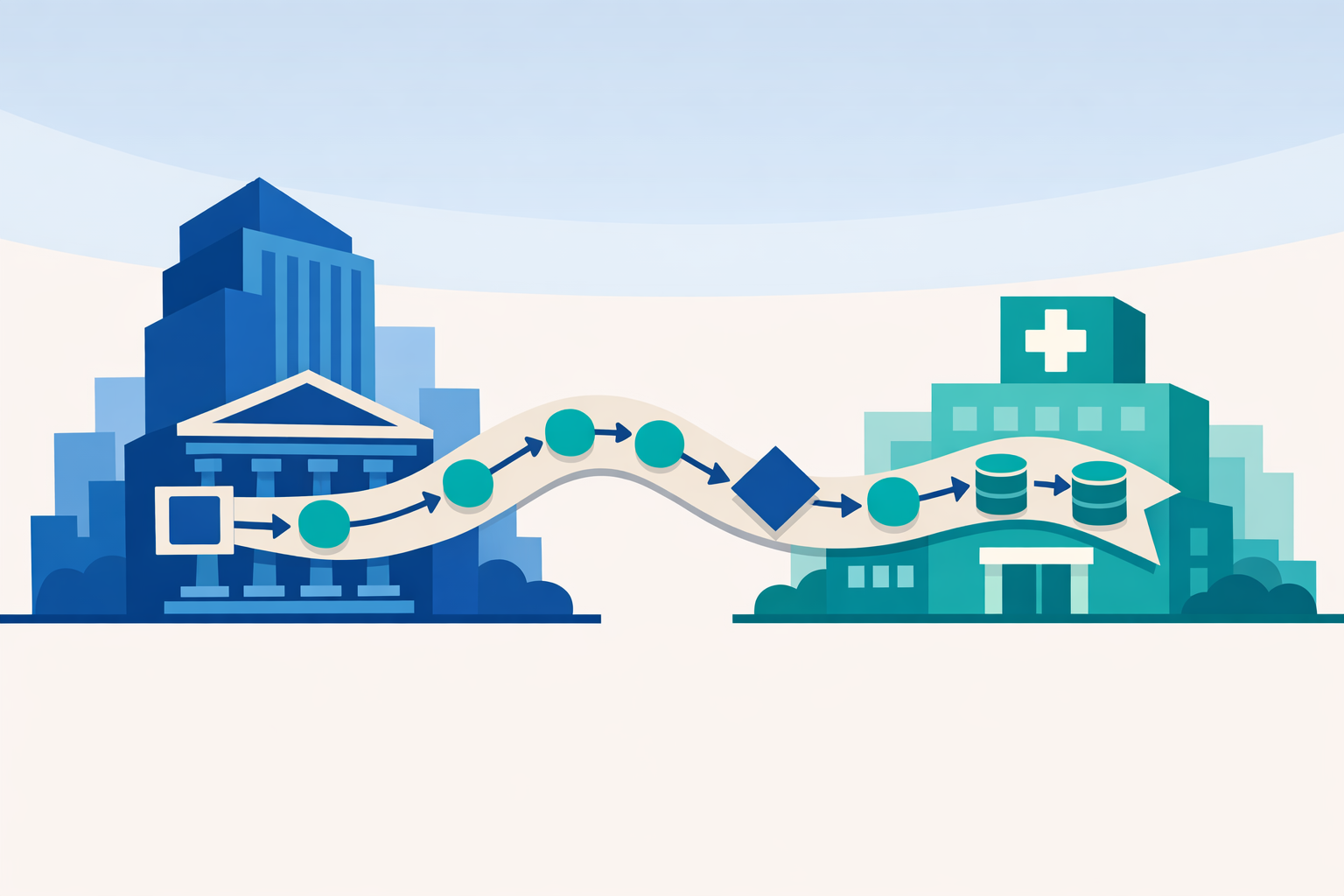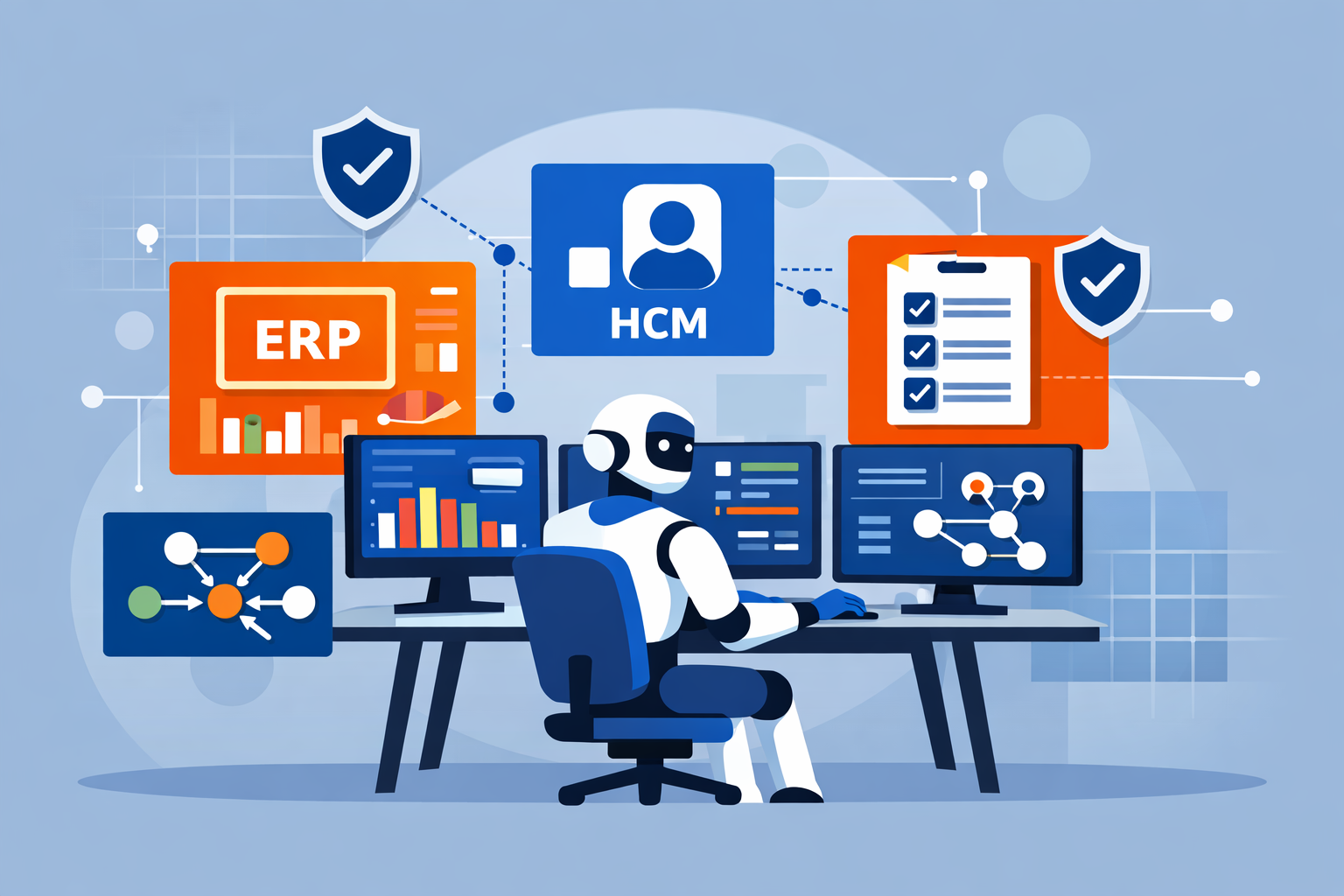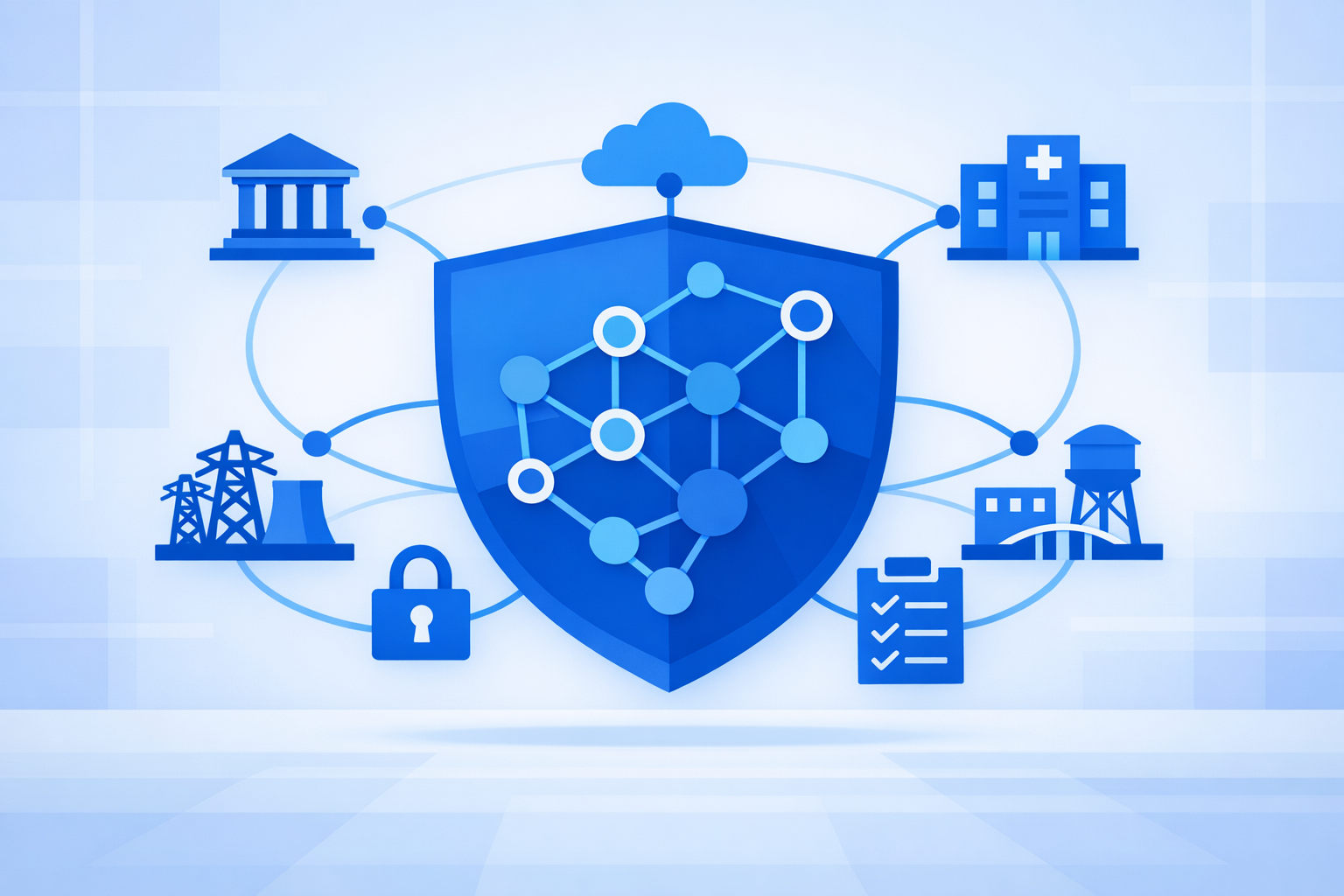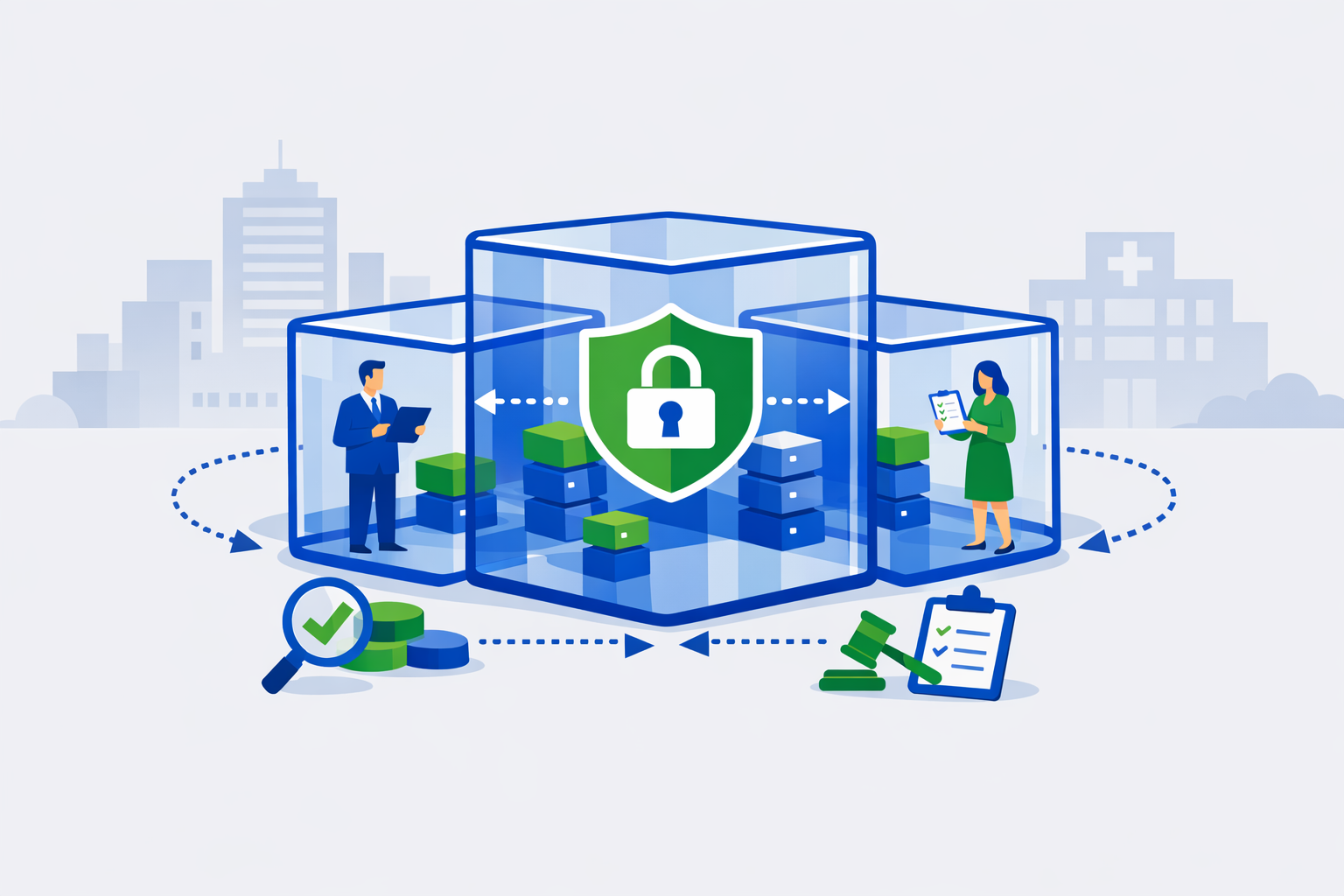
Financial institutions and health systems are shifting data clean rooms from niche capability to foundational AI governance infrastructure, driven by mounting regulatory pressure and the rapid scaling of AI deployments across both sectors.
The global data clean room market was valued at $3.2 billion in 2025 and is projected to reach $18.6 billion by 2034, growing at a compound annual growth rate of 21.7%, according to industry research published in March 2026. This expansion reflects an accelerating push in regulated industries to enable privacy-preserving data collaboration for AI training, testing, and deployment without exposing sensitive financial or patient data to counterparties.
Background
Data clean rooms-controlled environments where multiple parties can analyze data without accessing each other's raw datasets-have long been used in digital advertising. Their application in finance and healthcare has intensified as AI models increasingly depend on large, distributed, and sensitive datasets to function reliably in production.
Healthcare organizations need to analyze and share data across institutional boundaries while maintaining strict controls over privacy, security, and governance. Data clean rooms have emerged as one approach to this challenge, providing controlled environments in which multiple parties can work with data without exposing underlying datasets.
The regulatory backdrop has sharpened urgency. The EU's Digital Operational Resilience Act (DORA), fully effective since January 2025, requires financial institutions to implement comprehensive ICT risk management, incident reporting, resilience testing, and third-party risk management-with privacy implications that include ensuring personal data protection within ICT resilience planning. Simultaneously, the EU AI Act's critical enforcement deadline for high-risk AI systems arrives in August 2026, with Article 10 requiring documented data provenance: organizations must prove where their training data originated.
The alignment of clean room architectures with privacy-by-design principles in GDPR Article 25, the CPRA's risk assessment requirements, and emerging EU AI Act obligations positions clean rooms as a strategic compliance investment rather than a discretionary technology spend.
Details
Implementations in both sectors emphasize layered cryptographic protections and strict access controls. According to Lee Kim, HIMSS senior principal for cybersecurity and privacy, multiple entities can collaborate on research or technology initiatives without compromising governance controls. Clean rooms "preserve each party's data ownership and operate in accordance with applicable privacy, security and data protection requirements." Rather than viewing raw data, entities "can see aggregated outputs, statistical results, the results of approved queries or privacy-preserving derivative information," Kim noted.
In financial services, the pressures are equally acute. Financial institutions face increasing demands to guarantee data privacy while meeting regulatory reporting obligations. Emerging technical frameworks integrate differential privacy, homomorphic encryption, and smart contract-based governance to enable cooperative model training while preventing leakage of sensitive information.
On-premises clean room deployments retained a 28.8% market share in 2025, driven primarily by large financial institutions and certain healthcare organizations facing strict data residency, sovereignty, or classification requirements that preclude use of public cloud environments for sensitive data collaboration. On-premises deployments are technically more complex, requiring enterprises to manage their own privacy-enhancing computation infrastructure, cryptographic key management, and secure multi-party computation (SMPC) protocols.
Enterprises that have adopted clean rooms report an average 41% reduction in privacy incident response costs and a 28% reduction in data governance labor overhead, according to industry research.
Data provenance remains a persistent operational gap. According to compliance research, 78% of organizations cannot validate AI training data, and 77% cannot trace data origins-a deficiency that exposes them to regulatory risk as enforceable AI Act obligations take effect. Provenance extends lineage by recording the authoritative history of data: who authorized transformations, when they occurred, and why. This documentation builds trust and demonstrates responsible AI governance.
As AI models increasingly rely on distributed, sensitive datasets, clean rooms will need to integrate with privacy-enhancing technologies (PETs) that support AI training on encrypted or anonymized data without exposing source records. Integration with legacy data stores, latency constraints for real-time AI inference, and the complexity of governing multi-tenant environments remain significant engineering challenges.
For CIOs and CISOs, the current wave of new laws-spanning U.S. state regimes, the EU Data Act, and Australia's automated decision-making transparency rule-is pushing organizations to treat privacy as a design and infrastructure problem, not a paperwork exercise. Regulators are embedding privacy expectations into the architecture of consent, identity, and data portability itself.
Outlook
The regulatory tailwind driving clean room adoption is expected to intensify as digital service laws, data governance acts, and sector-specific healthcare and financial data rules continue to multiply globally. Vendors are responding with modular clean room solutions that integrate with enterprise data catalogs, identity providers, and model governance tools, alongside accelerator playbooks designed to help teams scope, pilot, and scale deployments.
With the EU AI Act's high-risk system rules taking effect in August 2026 and U.S. states including California, Texas, and Colorado entering the compliance phase of their AI and data-privacy programs, these developments may signal the end of the AI "self-regulation" era. In its place: multi-layered, legally mandated governance frameworks in which data clean rooms serve as a core architectural component.
Related reading: Data Governance as the Foundation for Autonomous AI: Cross-Sector Lessons on Quality, Privacy, and Risk · Regulators Tighten Scrutiny of Multimodal AI in Finance