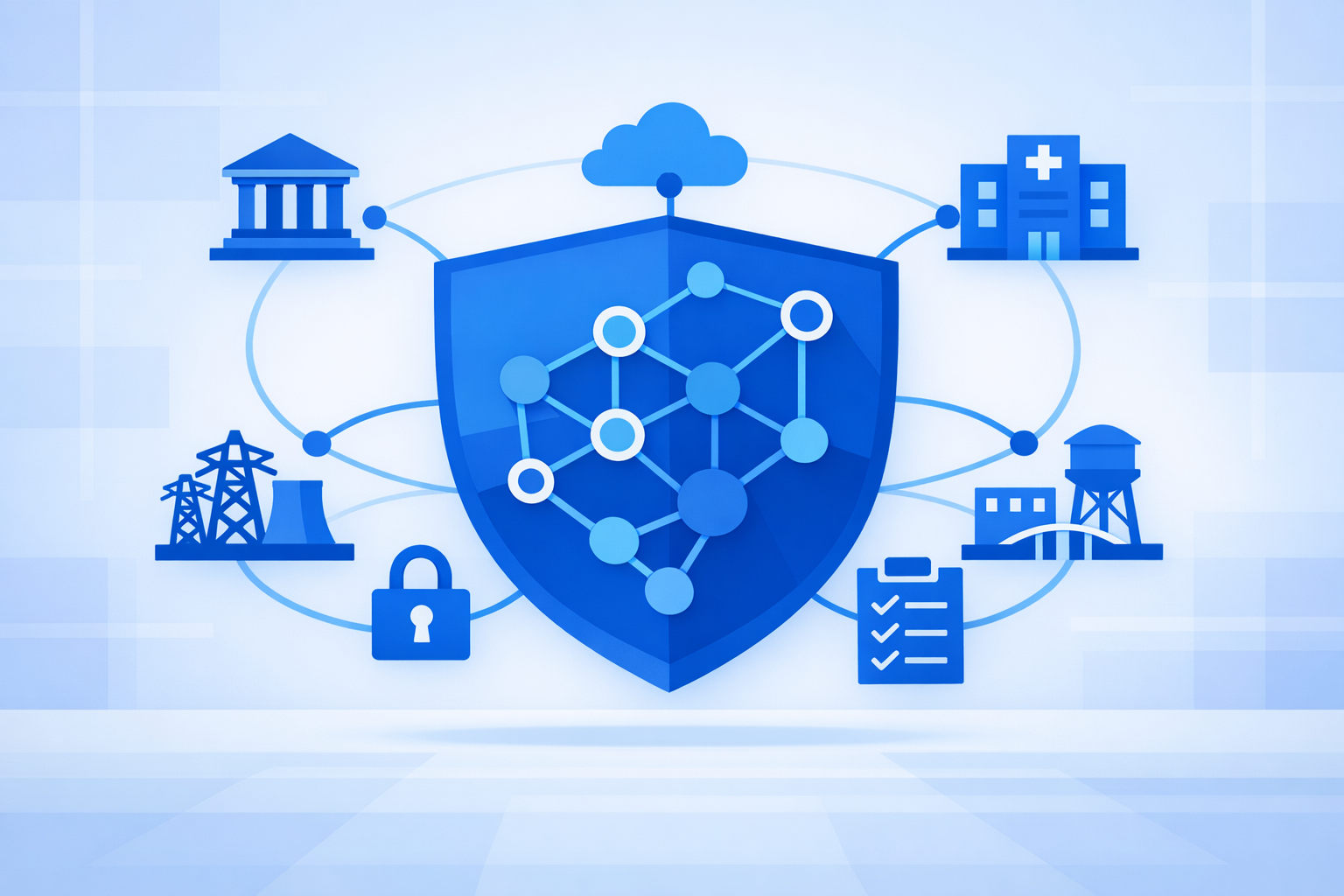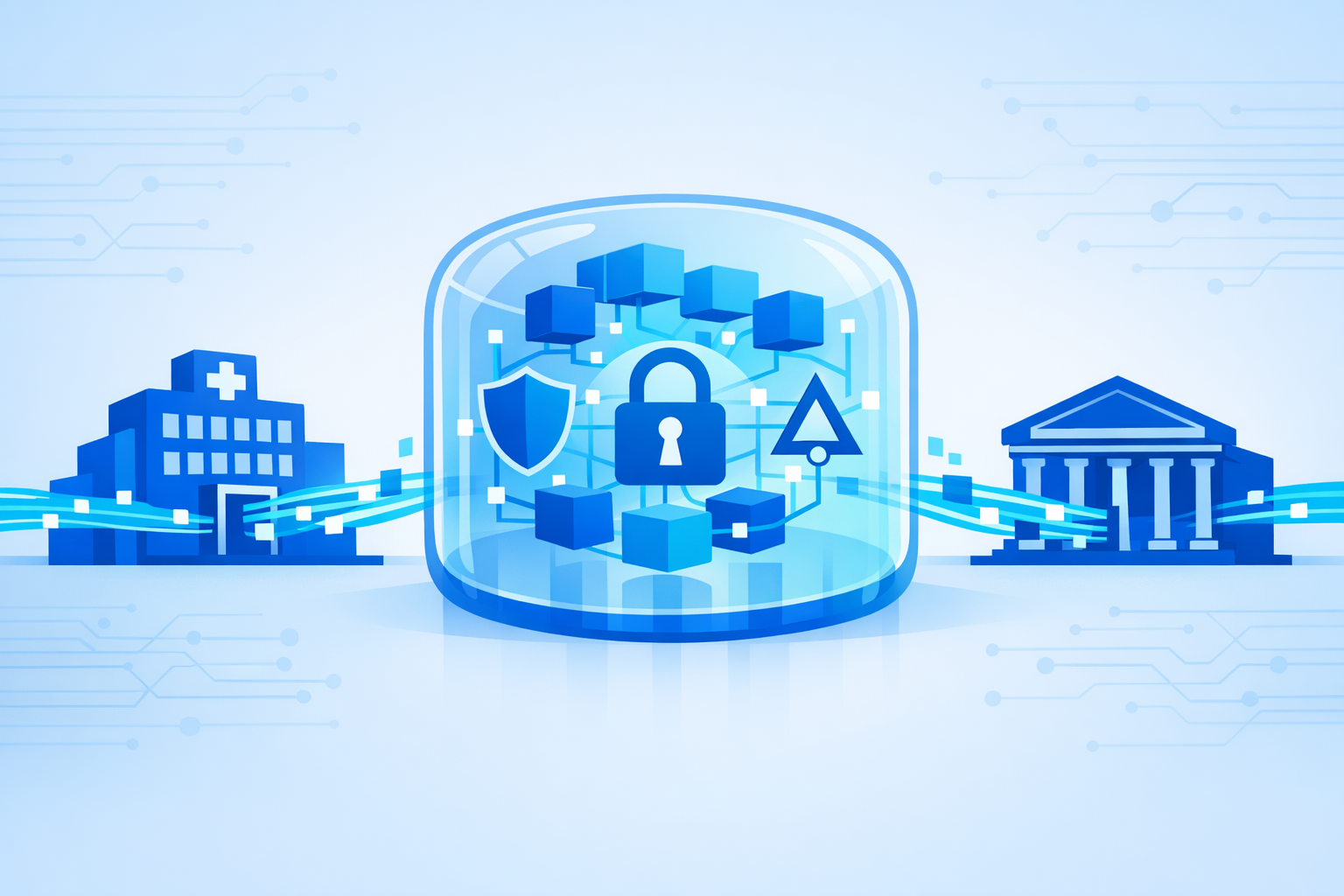
Healthcare systems and financial institutions are accelerating adoption of data clean rooms-secure, privacy-preserving computational environments-to power cross-organizational AI workflows without exposing sensitive patient or customer data. The shift reflects mounting regulatory pressure and a growing enterprise need to operationalize AI at scale while maintaining compliance with HIPAA, GDPR, and emerging obligations under the EU AI Act.
Background
A data clean room is a controlled environment in which multiple parties collaboratively analyze combined datasets without any participant accessing the other's raw records. These platforms enable privacy-preserving collaboration by computing joint insights without exposing raw personal data, using techniques such as hashing, aggregation, and differential privacy. The model gained initial traction in digital advertising but has since broadened significantly, with retail, finance, healthcare, and B2B sectors refining how they use clean rooms to transform data stacks into actionable intelligence.
The regulatory environment is a central driver. As of 2025, more than 15 U.S. states have enacted consumer data privacy laws, up from just five in 2023, introducing varying consent models and significant compliance overhead. The alignment of clean room architectures with privacy-by-design principles articulated in GDPR Article 25, the CPRA's risk assessment requirements, and emerging AI Act obligations in Europe positions clean rooms as a strategic compliance investment rather than a discretionary technology spend.[1]
Details
The global data clean room market was valued at $3.2 billion in 2025 and is projected to expand to $18.6 billion by 2034, registering a CAGR of 21.7% over the forecast period, according to market research published in March 2026. In 2025, over 67% of Fortune 500 companies had deployed at least a pilot clean room program, compared to just 29% in 2022, underscoring the technology's rapid mainstreaming.
Healthcare organizations represent one of the fastest-growing deployment segments. These organizations are deploying clean rooms to facilitate real-world evidence studies, clinical trial recruitment matching, and payer-provider data sharing under HIPAA-compliant architectures. On the clinical research side, hospitals and research partners have trained cancer-detection models on distributed patient images, with results matching the accuracy of centralized models-without any patient data being moved or exposed-meeting strict compliance requirements while enabling life-saving AI.
In financial services, the BFSI segment captures approximately 12.4% of the data clean room market in 2025, with major banks deploying clean rooms for fraud prevention, marketing personalization, and ESG reporting data aggregation.[2] Banks are collaboratively training fraud detection models without exposing account data, pooling distributed intelligence to detect patterns no single institution could identify alone while preserving customer confidentiality.
The underlying privacy-enhancing technologies (PETs) powering these workflows include federated learning, secure multi-party computation (SMPC), and homomorphic encryption. In federated architectures, raw data remains at its point of creation and only model updates are shared, with tools such as SMPC, homomorphic encryption, differential privacy, and trusted execution environments adding further protection. The federated learning market reached $0.1 billion in 2025 and is projected to reach $1.6 billion by 2035 at a 27.3% CAGR, with large enterprises capturing 63.7% market share for cross-silo collaboration, according to industry analysis.
Major platform vendors have moved to capture the regulated-industry opportunity. Databricks Clean Rooms now offers HIPAA compliance features, positioning it as an option for healthcare organizations processing sensitive patient data. Snowflake launched a major update to its Data Clean Rooms product featuring native support for differential privacy controls configurable at the column level, enabling more granular privacy budgeting for financial services and healthcare clients, along with a new visual query builder aimed at non-technical business users. Leading companies including Mastercard, Intuit, and AppsFlyer have already begun using Databricks Clean Rooms across financial services, healthcare, and advertising.
Despite adoption gains, integration complexity remains a material obstacle. Many organizations struggle to connect clean room solutions with existing CDPs, CRMs, and analytics platforms; approximately 40% of implementations require extensive customization, increasing deployment timelines by three to six months. Vendor lock-in is an additional concern, as many data clean rooms operate as walled gardens within a specific platform ecosystem. A shortage of professionals skilled in both data science and privacy compliance creates further bottlenecks in configuring and maintaining clean room environments.
Outlook
The market's acceleration is structurally supported by the emergence of interoperable clean room standards championed by industry bodies such as the IAB Tech Lab's Data Clean Rooms Standards Working Group, which published its first formal technical specification in late 2024 and is driving vendor alignment through 2025 and 2026. Looking ahead, the market will be shaped by the maturation of multi-party computation, the standardization of consent signal propagation across clean room instances, and the emergence of AI-native clean room interfaces that allow non-technical users to perform advanced analytics without SQL expertise. For enterprise IT leaders in healthcare and financial services, the governance and interoperability decisions made now are expected to determine which organizations can scale privacy-first AI workflows and which will remain constrained by siloed data architectures.