Major enterprise software vendors have moved governance and interoperability controls to the center of their no-code AI workflow tooling, signaling a market-wide shift from experimental automation to policy-enforced, auditable AI deployment across finance, HR, and operations.
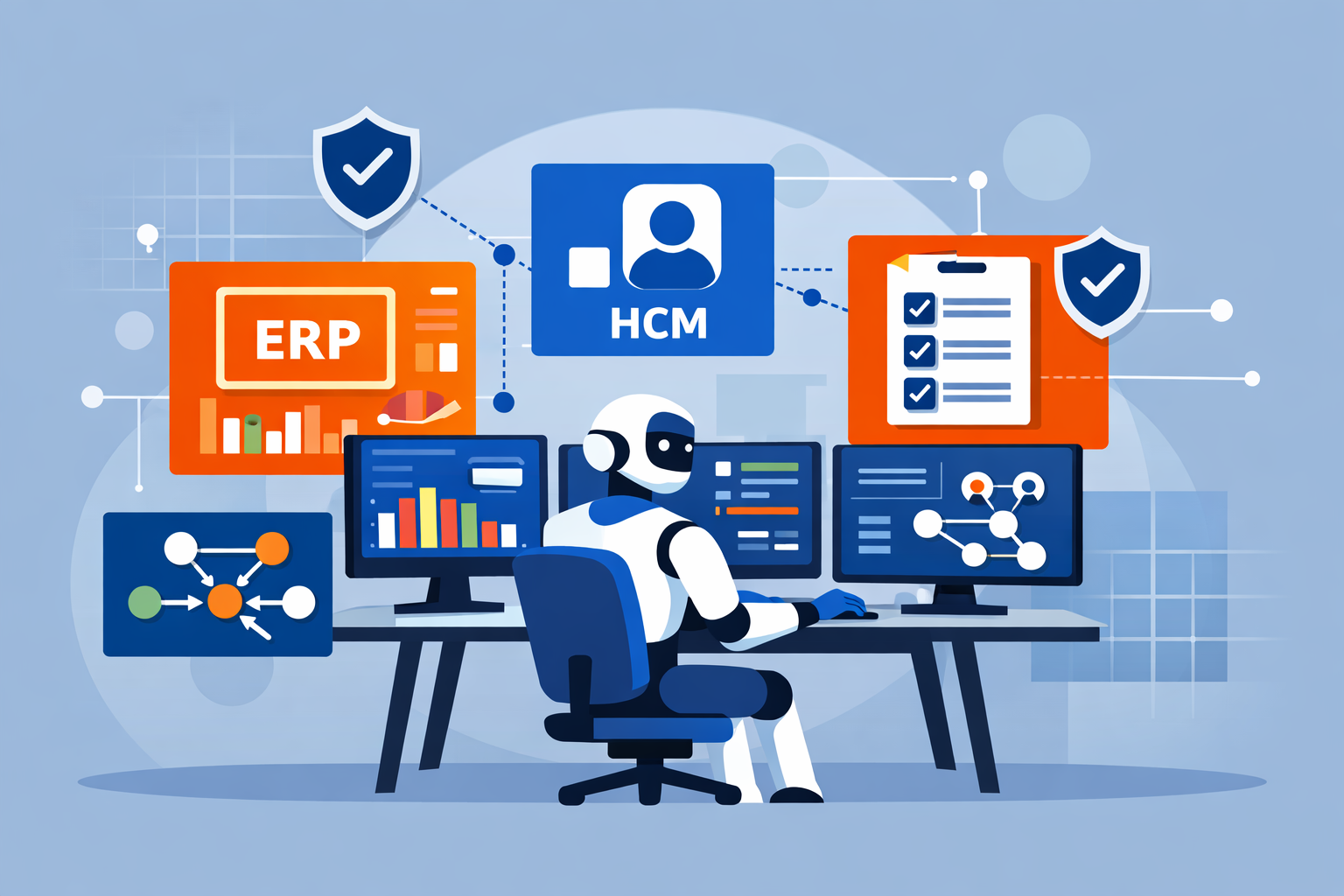
The moves-spanning product announcements from SAP, Oracle NetSuite, Infor, and Workday-reflect a shared architectural judgment: no-code AI steps embedded in enterprise workflow builders can no longer function as isolated productivity tools. They must operate within the same governance perimeter as core ERP and HCM processes.
Background
SAP has described agentic governance as a critical capability as organizations deploy growing numbers of specialized AI agents, warning that "agent sprawl" will mirror previous shadow IT crises-but with higher stakes given agents' autonomous decision-making capabilities. The concern is well-founded. According to research cited by SaaS governance platform CloudEagle.ai, 63% of enterprises lack a formal shadow AI policy, leaving AI tool usage untracked and uncontrolled.
An IBM study from mid-2025 found that enterprises expected an 8x surge in AI-enabled workflows by end of 2025, with 64% of AI budgets already directed at core business functions. Governance had to accelerate because AI was penetrating workflows faster than policy teams could update control systems. Regulatory pressure has compounded the urgency. In 2025 alone, the White House issued two AI governance memoranda, NIST launched an update to its AI Risk Management Framework, the SEC established an AI Task Force, and the European Commission activated an AI Act Service Desk.
Details
At SAP Sapphire 2026, SAP unveiled what it termed the "Autonomous Enterprise," anchoring AI agents in business processes, data, and governance through a new SAP Business AI Platform. The platform unifies SAP Business Technology Platform, SAP Business Data Cloud, and SAP Business AI into a single governed environment. SAP's Q1 2026 release notes confirm that SAP now has over 30 specialized agents and more than 2,500 Joule Skills, with an agent-to-agent protocol enabling cross-system interoperability and the SAP AI Agent Hub providing centralized infrastructure and guardrails to manage, govern, and discover agents. A prompt registry introduced in Q1 2026 allows customers to version and track complex AI workflows alongside orchestration configurations for governance and reproducibility.
Oracle NetSuite moved in the same direction in March 2026. Oracle NetSuite on March 31 announced the expansion of its AI Connector Service to let customers connect external AI assistants to ERP data within a governed, role-based framework. The new AI Connector Service Companion introduces structured prompt libraries, reusable "skills," and role-based access controls aligned to finance and operational workflows-designed to standardize outputs and reduce reliance on ad hoc prompting. NetSuite is also extending Model Context Protocol (MCP) support with embedded application experiences that bring familiar NetSuite interfaces directly into AI assistants, enabling more structured and auditable interactions.
Infor has built its governance architecture around interoperability. Native MCP servers standardize how AI models securely access data across both Infor and non-Infor applications-an approach the company calls architecturally significant because MCP is emerging as the interoperability standard for agentic AI. Infor's own research identifies security and compliance concerns as the number one barrier to AI scaling for 36% of enterprise respondents, making the observability layer a deployment prerequisite rather than a feature.
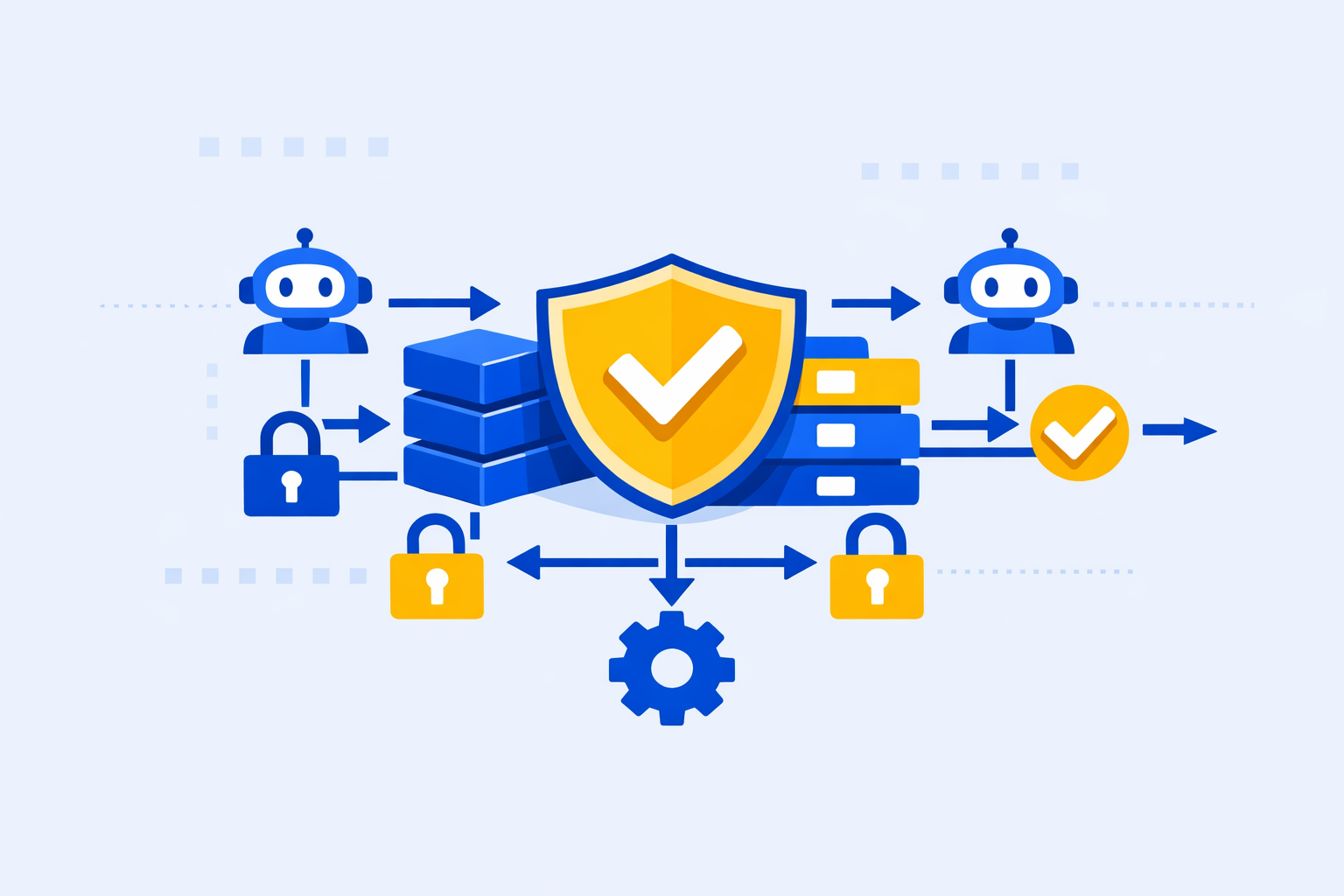
Workday, through its Sana platform, embeds AI agents directly within Workday's security and data model so workflows remain policy-aware, traceable, and compliant from deployment. Every agent action is logged with full context-who triggered it, what data was accessed, and what outcome was produced-with role-based access control, environment isolation, and data residency controls aligned to GDPR and SOC 2 Type II. Workday has cited research indicating that 82% of organizations are expanding the use of AI agents.
On interoperability, the market has yet to converge on a single standard. Anthropic's Model Context Protocol (MCP) standardizes how agents connect to external tools and data sources and is the most mature of the emerging protocols. Google's Agent-to-Agent (A2A) protocol enables agents built on different frameworks to discover and hand off tasks to one another. IBM's Agent Communication Protocol (ACP) focuses on structured agent-to-agent communication with emphasis on enterprise governance and auditability. As Forrester has noted, interoperability frameworks that work across vendor boundaries do not yet exist as universal standards.
Analysts caution that governance cannot be reduced to tooling alone. The most durable value from AI in ERP will come from agent-assisted work that remains inside governance, approval, and audit controls-with vendors signaling this direction through purpose-built agents and tooling to connect external models safely to ERP data. Organizations that blur the line between AI and human accountability risk faster processing paired with weaker governance rather than better decision-making.
Outlook
Half of enterprise ERP vendors are projected to introduce autonomous governance modules combining explainable AI, automated audit trails, and real-time compliance monitoring.[1] McKinsey's 2025 State of AI survey found that 88% of organizations regularly use AI in at least one business function, up from 78% the prior year, yet only about one-third have begun scaling AI across the enterprise-a gap that vendors with embedded governance tooling are positioning to close. For enterprise IT leaders evaluating workflow automation platforms, the governance layer is rapidly becoming a primary selection criterion alongside functional breadth and integration depth.