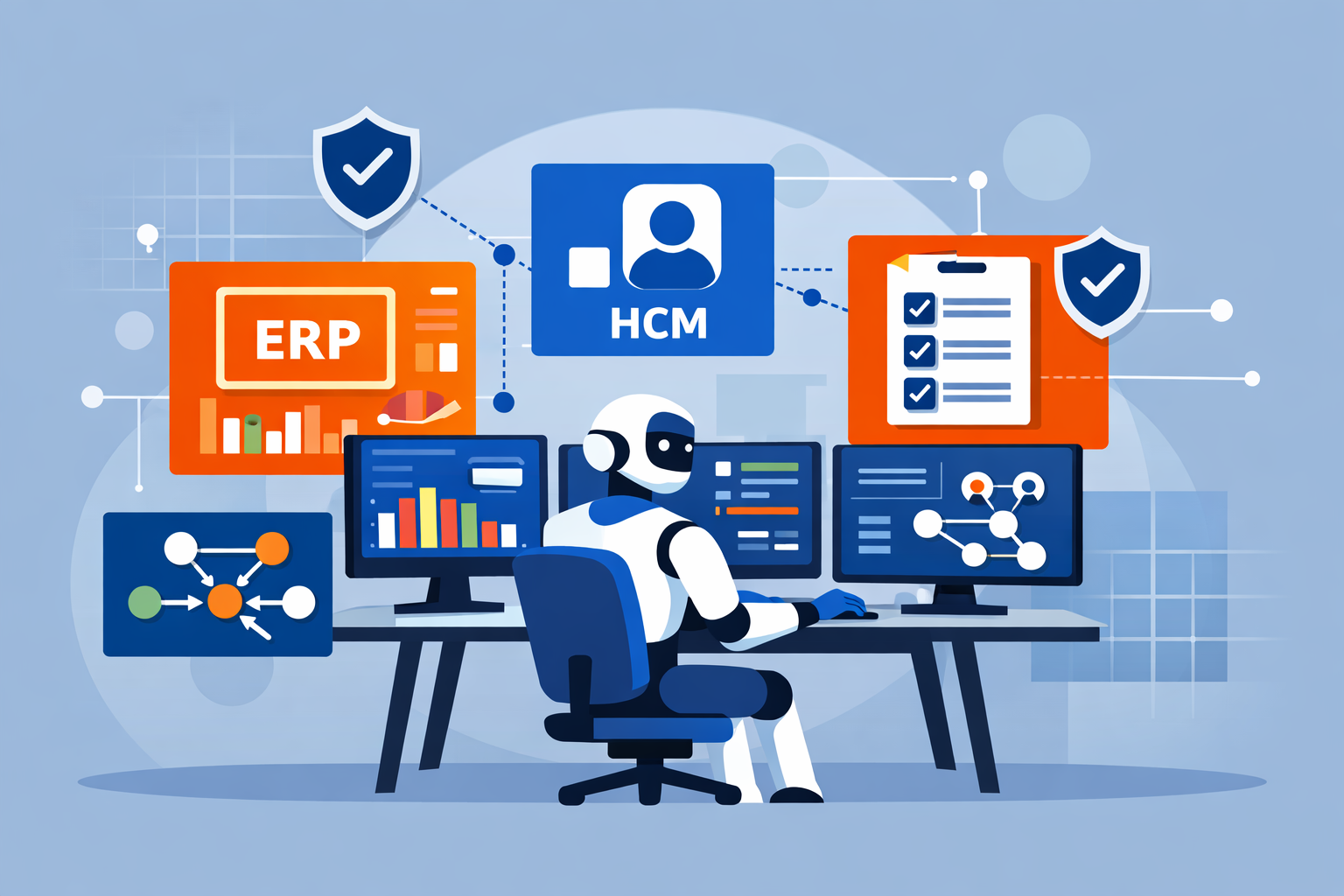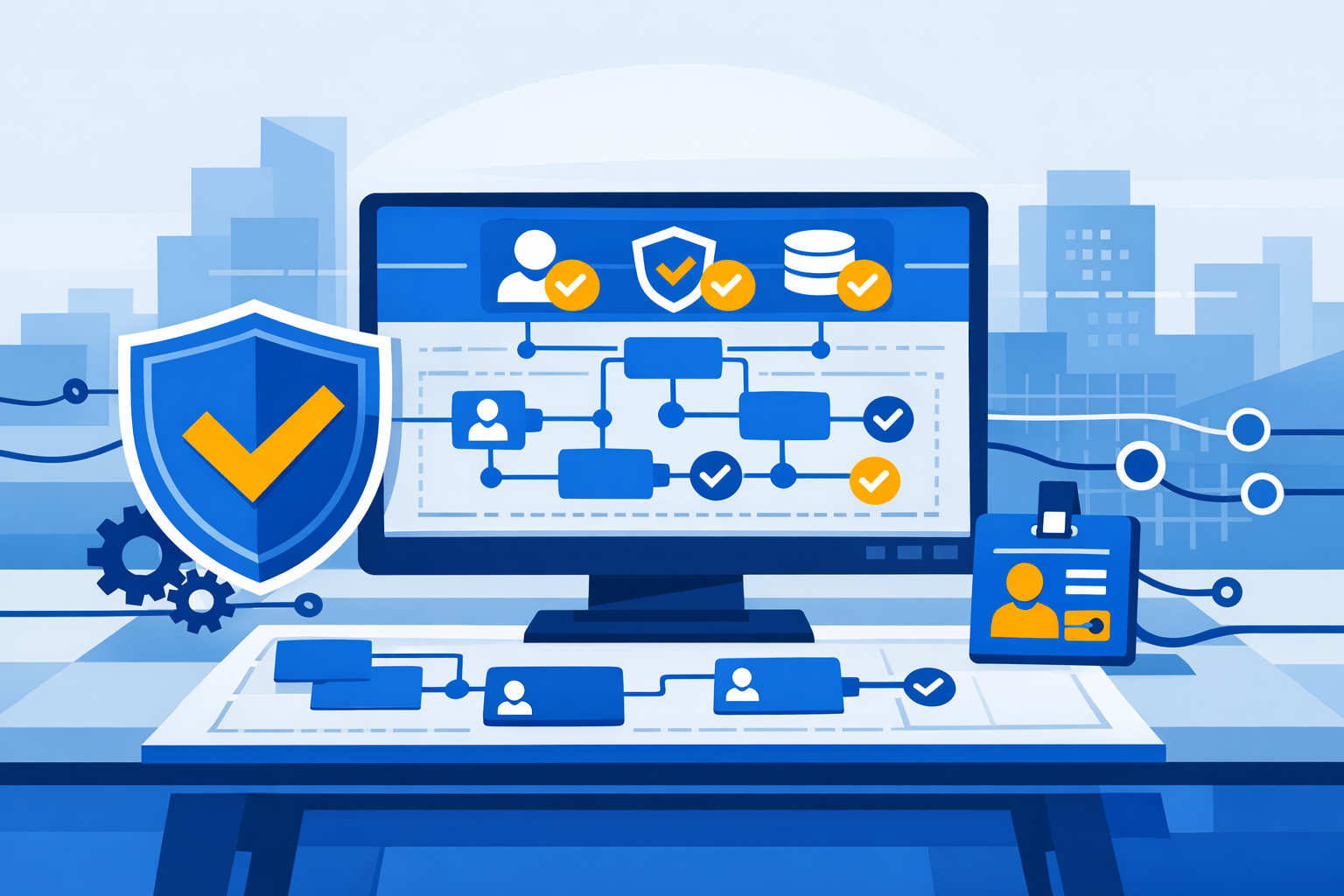
Major enterprise software vendors are racing to embed governance directly into no-code AI agent development platforms as organizations deploy autonomous agents across finance, HR, and IT at scale. Workday, SAP, Oracle NetSuite, and Microsoft have each released or announced governed agent-builder tooling in the first half of 2026, reflecting a shared architectural conclusion: AI agent proliferation without embedded compliance controls poses unacceptable risk to enterprise operations.
Background
AI spending has surged across enterprises, but deployments have too often been piecemeal, siloed, and disconnected from actual business processes. An MIT study found that despite billions spent on AI, only 5% of organizations saw a return. That gap has pushed ERP vendors to shift strategy. In 2025, the pattern of isolated AI features broke. Across major ERP platforms, AI moved from add-on capability to something closer to an operating layer, with systems beginning to propose actions and, in controlled cases, execute steps on behalf of users.
Research published in Versori's "The Future of ERP" whitepaper found that 100% of the 20 senior ERP leaders surveyed selected AI and automation as a top priority for 2026, while 82% cited emerging technology as the biggest driver of company innovation. Gartner predicts 40% of enterprise applications will include task-specific AI agents by the end of 2026, up from less than 5% in 2025.
Details
Workday has moved furthest in formalizing governance as a distinct infrastructure layer. The company is extending its Agent System of Record (ASOR) through integration with Microsoft Entra Agent ID, providing customers with verified identities and centralized governance for AI agents.[1] This allows agents built in Azure AI Foundry and Copilot Studio to register directly within Workday, ensuring interoperability and oversight. ASOR enforces accountability by applying precise identity permissioning, comprehensive observability, and data security measures across fragmented data sources, giving leaders confidence that critical people, financial, and operational data remain safe and compliant.
On the builder side, Workday debuted Workday Build for developers, built with Flowise, which Workday acquired earlier this year. Its new low-code Flowise AgentBuilder enables customers to create, deploy, and manage custom AI agents directly within Workday. In November 2025, Workday signed a definitive agreement to acquire Pipedream, a low-code, no-code integration platform for AI agents with more than 3,000 connectors. The company plans to introduce capabilities from recent acquisitions-Sana, Pipedream, and Flowise-during 2026, possibly in the first half.
Workday's Illuminate agents target specific enterprise workflows. The agents automate complex processes such as performance reviews, financial close, and planning. Unlike general-purpose chatbots, they are context-aware, operating within governed Workday data environments where security, accuracy, and explainability are paramount. The Planning Agent has helped early access customers reduce data exploration and analysis by 30%, equaling around 100 hours per month.
SAP has taken a parallel path with its own agent governance architecture. By leveraging SAP AI Agent Hub, a fully managed Joule runtime, and solutions like SAP Signavio and SAP LeanIX, Joule Studio embeds enterprise-grade governance, observability, and lifecycle management directly into the development process. The agent builder in Joule Studio allows developers to design a Joule agent with all necessary components in a low-code/no-code canvas that empowers both professional and citizen developers, supporting scalability, governance, and alignment with SAP's clean-core principles. Joule Studio uses SAP Cloud Identity Services to ensure agents have proper authorization and authentication, and enforces principal propagation-meaning the user's identity in Joule passes through end-to-end so that any triggered skill or agent runs strictly within that user's security context.
SAP's Cash Management Agent, which reached general availability in Q1 2026, reduces time spent on manual cash positioning by up to 80% by autonomously analyzing daily bank statements and automating reconciliations, according to SAP. SAP announced a €100 million partner fund at Sapphire 2026 for partners building new agents on the SAP Business AI Platform using Joule Studio. KPMG has rolled Joule out to 270,000 users, with 3,000 consultants using 20 agents and targeting $120 million in contract leakage reductions.
Oracle NetSuite moved to address the same governance gap from the ERP data layer. On March 31, Oracle NetSuite announced the expansion of its AI Connector Service, enabling customers to connect external AI assistants to ERP data within a governed, role-based framework. NetSuite's connector strategy reflects a broader shift in ERP architecture, where value comes from governing how external AI interacts with enterprise processes rather than embedding all intelligence within the application itself.
Microsoft, meanwhile, is developing agents in Dynamics 365 as task and basic workflow agents, progressing toward more comprehensive agents spanning larger business processes. Copilot Studio lets teams design and govern agents, publish them into Microsoft 365 surfaces, and enforce data controls with Microsoft Purview. The Dynamics 365 ERP Model Context Protocol (MCP) server is evolving from static actions to a dynamic, configurable framework that adapts as business needs change. A new analytics MCP server extends this capability to support agents reasoning over governed operational and financial data.
Vendors building real trust infrastructure-identity integration, policy engines, fine-grained agent permissioning, and full audit trails-into their platforms are emerging as clear differentiators, according to AlixPartners SVP Jordan Berger.
Outlook
As organizations move into 2026, the most durable AI value in ERP will come from agent-assisted work that stays within governance, approval, and audit controls. Vendors are signaling this direction through releases of purpose-built agents for finance and operations, plus tooling to connect external models safely to ERP data and actions. Enterprise AI agent adoption is accelerating at roughly 41% annually, with leading organizations using these platforms to automate complex, multi-system workflows and reduce operational overhead by up to 40% in year one. For IT leaders, the practical challenge remains ensuring that agent deployment speed does not outpace the governance frameworks designed to control it.