Enterprise organizations are deploying AI-enabled no-code workflow builders across core business functions at growing scale, but a persistent gap between pilot deployments and governed, production-ready automation is exposing systemic risk for IT and compliance teams.
Background
The global low-code/no-code enterprise workflow automation market was valued at $23.77 billion in 2025, projected to reach $37.85 billion by 2030 at a 9.52% CAGR, according to Mordor Intelligence. Market analysts attribute the expansion to finance, HR, procurement, and IT operations teams-departments that can no longer wait for centralized IT to build workflows from scratch.
The core appeal of no-code AI steps in enterprise workflow builders is their democratization of automation. Gartner projected that 70% of new enterprise applications would use low-code or no-code technologies by 2025, up from under 25% five years prior. That forecast is materializing: 84% of organizations already use low- or no-code tools, and three-quarters of large enterprises are projected to rely on four or more such platforms across IT and operations. Platform vendors-including Workato, Microsoft Power Automate, and UiPath-have responded by embedding AI-assisted orchestration, natural language workflow builders, and pre-built connectors into their enterprise offerings.
Rapid democratization has outpaced governance maturity, however. According to MIT NANDA's State of AI in Business 2025 report, only 5% of enterprise-grade AI pilots make it to production, with the primary bottleneck being the gap between a working prototype and a maintainable, observable production system. A separate McKinsey analysis found 88% of organizations now use AI in at least one business function, but only approximately one-third have managed to scale it across the enterprise.
Details
Research from Enterprise Management Associates (EMA) highlights adoption asymmetry within citizen developer programs. Only 28% of enterprises currently report meaningful contributions from citizen developers, while 52% say either no citizen development exists or only experimental use is permitted. Security concerns are a primary driver of hesitation: unmanaged citizen automation risks creating shadow IT environments that lack audit trails, access controls, and integration standards.
Shadow IT already accounts for an estimated 50% of total enterprise IT spending, according to industry research, while 25% of businesses express specific concerns about low-code and citizen development programs.
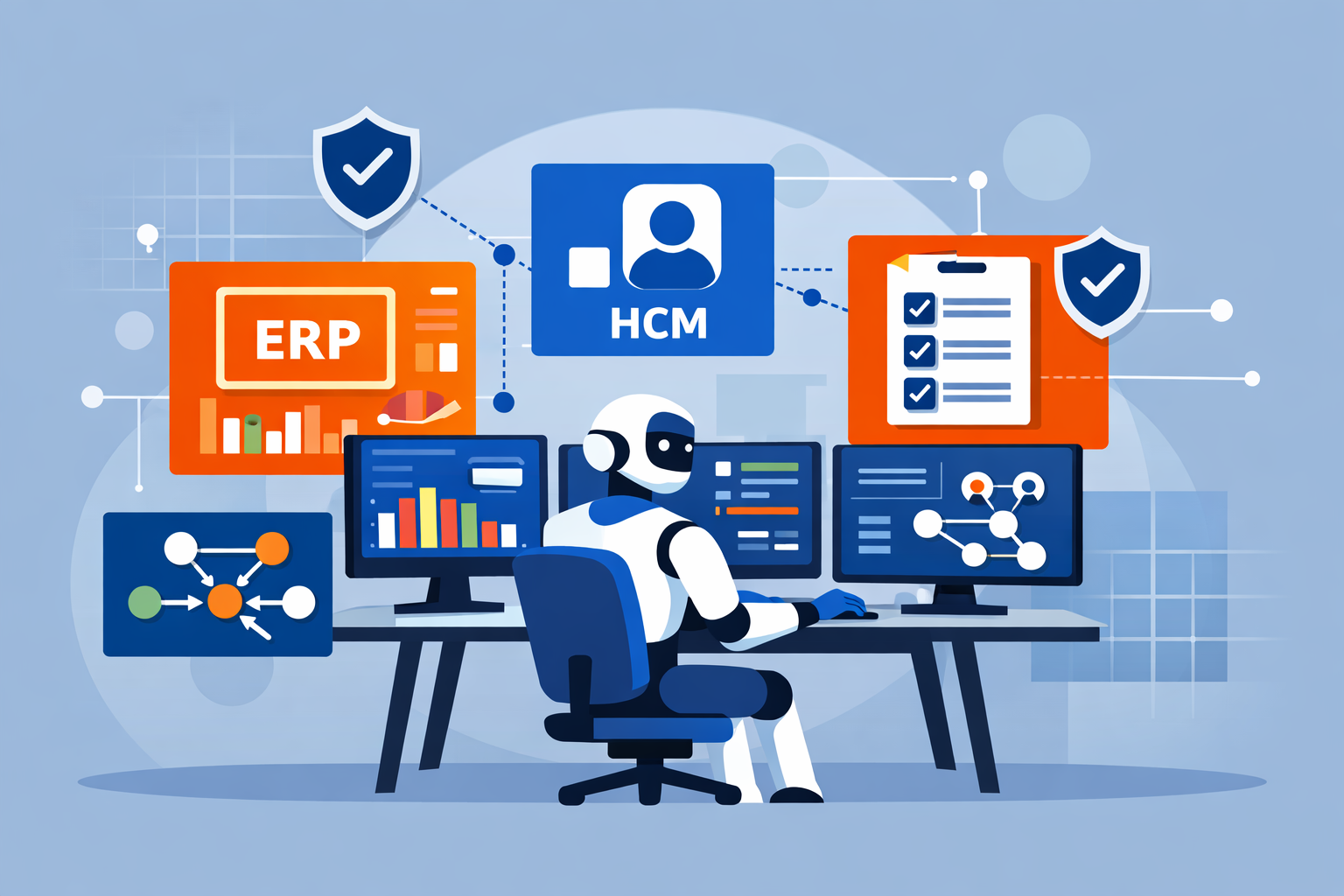
The governance challenge intensifies as AI-enabled workflow steps-capable of invoking large language models (LLMs), routing decisions, and modifying data across ERP and CRM systems-move beyond simple approvals and rule-based triggers. Security teams at organizations such as Microsoft are addressing this through layered control mechanisms. Microsoft's internal Power Platform deployment has crossed one million citizen-developed assets, encompassing more than 170,000 Power Apps, 50,000 Power Automate flows, and 1,200 chatbots-achieved, the company states, through governance baseline controls and guided enablement before broad rollout.
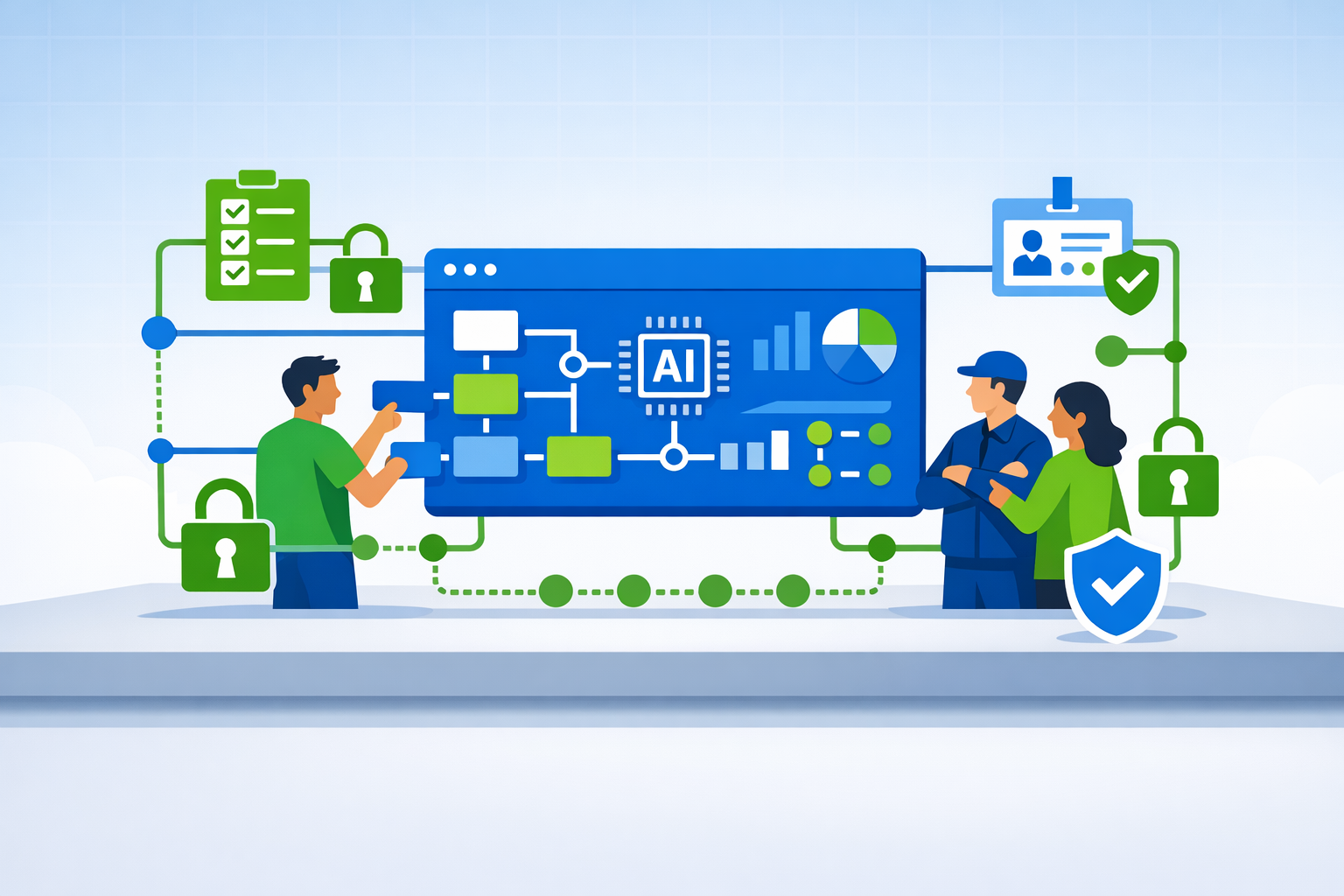
Leading platforms are responding to enterprise risk requirements with embedded controls. Workato, named a Gartner Magic Quadrant Leader for iPaaS seven consecutive times, introduced AI-powered automation agents called "Genies" in 2025, supported by over 1,000 enterprise-grade connectors and built-in governance. UiPath's AgenTeq platform, launched in May 2025, unifies AI agents, robots, and human workers on a single orchestration system under centralized governance. Effective governance frameworks across these platforms center on role-based access control (RBAC), immutable audit logs, sandboxed development environments, and policy enforcement across data access points.
ROI data supports the strategic case, though results remain uneven. Industry benchmarks indicate 60% of enterprises recover their automation investment within 12 months, driven by productivity gains of 25-30% in automated processes and error reductions of 40-75% compared to manual handling. In finance workflows specifically, AI-driven automation has produced cycle time reductions of up to 40% and error rate drops of up to 60%, according to industry reporting. The Wall Street Journal, however, has noted a "productivity paradox"-many organizations see under 10% cost savings and below 5% revenue gains despite widespread AI adoption, with only 1% of U.S. companies having successfully scaled AI beyond pilot phases.
Vendor lock-in presents a separate architectural risk. Enterprises that embed deeply into a single platform's proprietary connector ecosystem-without abstraction layers or open APIs-face constraints on multi-cloud interoperability and long-term portability. IT architects increasingly evaluate platforms on deployment flexibility, including private virtual private cloud (VPC) and on-premise options, to preserve data residency control alongside automation scale.
Outlook
The enterprise automation operating model is shifting: professional developers are moving from builders to platform architects, defining integration guardrails and governance frameworks within which citizen developers operate. Citizen developers are projected to account for 30% of AI-powered automation applications by 2026, according to Kissflow research, placing increased pressure on IT teams to establish policy enforcement before adoption accelerates further. Enterprises that embed governance-including change management protocols, continuous monitoring, and structured risk assessments-before scaling are better positioned to convert pilot ROI into sustained enterprise value, rather than inheriting a fragmented automation estate that proves difficult to audit or remediate.