Notion has launched a dedicated developer platform that transforms its collaborative workspace into an AI agent orchestration hub, intensifying competition with established enterprise automation vendors and raising new governance questions for CIOs and IT architects.
Background
When Notion introduced its developer platform in May 2026, it marked a significant shift for a product primarily known as a flexible workspace for notes, wikis, projects, and databases. Over time, Notion added AI writing assistance, search, meeting notes, and automation. With this release, the company moved further from a place where work is documented toward one where work is executed, coordinated, and reviewed across both people and software agents.
The trajectory began in September 2025. On September 18, 2025, Notion unveiled Notion AI Agent 3.0, featuring AI agents capable of autonomously handling complex workflows across an entire workspace. By rebuilding its agent system with GPT-5, Notion created an AI workspace that can reason, act, and adapt across workflows. Custom Agents-AI teammates that handle repetitive tasks like answering frequently asked questions, compiling status updates, and automating workflows-first launched in February 2026.
Details
In a livestreamed product announcement, the company introduced a developer platform that extends the capabilities of its custom AI agents, connects with external agents, and allows teams to build automated multistep workflows pulling data from any database.
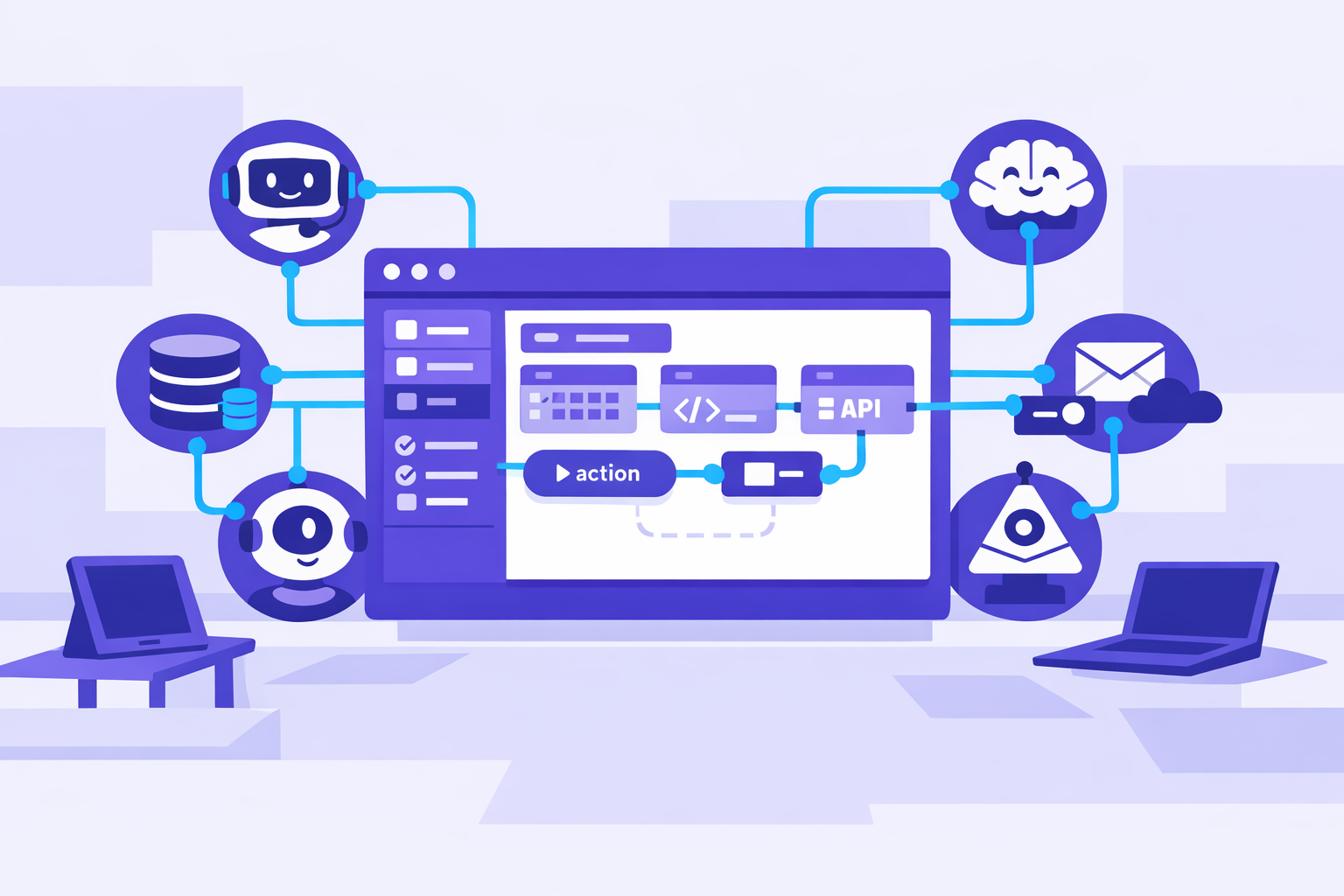
Three core capabilities define the platform's enterprise relevance. First, Notion Workers provide a cloud-based sandboxed environment for running custom code, enabling teams to sync external data, build custom tools, and trigger workflows via webhooks without external infrastructure. Powered by Workers, the database sync feature can pull data from any database with an API-including Salesforce, Zendesk, and Postgres-and keep it current within Notion databases.
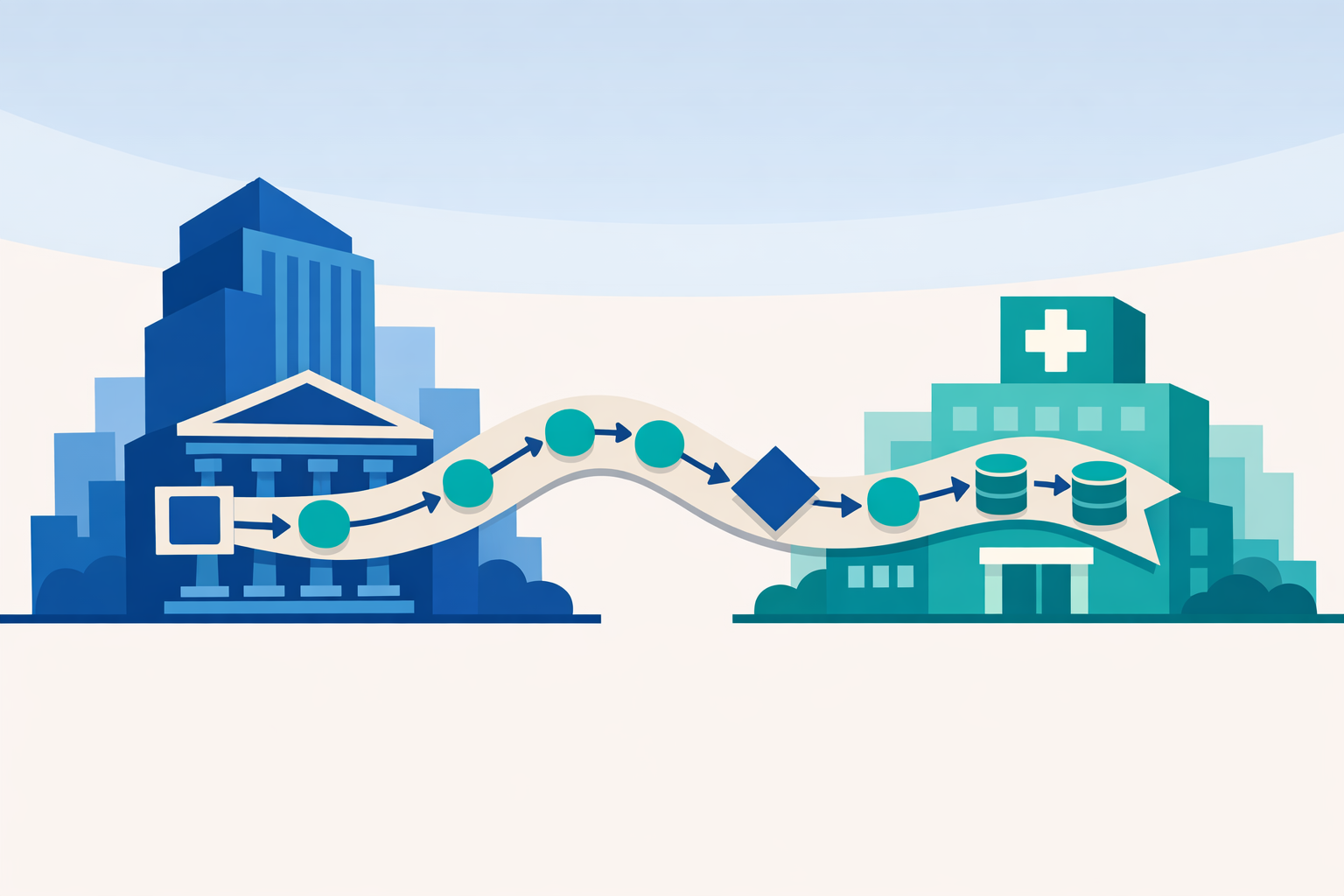
Second, the External Agents API expands Notion's role as an orchestration layer. Teams can bring external agents into Notion-including Claude, Codex, Decagon, or custom-built agents-with pre-built partnerships already in place. In practice, Notion functions as an orchestration layer: a support ticket can route to a coding agent, which proposes a fix and loops in the team for approval.
Third, Notion expanded its first-party Model Context Protocol (MCP) integrations to include partners such as Lovable, Perplexity, Mistral, and HubSpot, with Notion MCP allowing external tools to read context from a Notion workspace and write back to it. For example, a developer coding in Cursor can pull the latest tech specs from Notion, update the codebase, then mark the task as done in Notion.
Analyst reaction has been cautiously positive but measured. Analysts said the release gives Notion a larger role in enterprise software stacks, provided it can meet CIO expectations around governance and production readiness. Tulika Sheel, senior vice president at Kadence International, described Notion Workers as sitting "somewhere between low-code automation and lightweight serverless infrastructure," noting that while Notion is trying to combine AI agents, custom code execution, and workspace collaboration in a single environment, Microsoft Power Platform and cloud serverless offerings still hold advantages in enterprise integration depth and operational maturity.
Rivals including Atlassian, GitHub, JetBrains, and Tabnine are already pushing deeper into context, governance, and multi-agent orchestration. One analyst noted that "Notion's feature set is not fundamentally new" and that the platform's success "will depend less on what it offers and more on how well these capabilities perform in practice."
On governance, Notion introduced enterprise-specific controls alongside the platform launch. With MCP Governance enabled, Enterprise admins can approve specific AI apps and MCP clients that connect to Notion MCP, and Notion MCP continues to respect all existing workspace permissions. Workspace owners on the Enterprise Plan control whether members can connect external AI apps through Notion MCP. Administrators can set per-agent credit limits with agent creators and, on Enterprise plans, apply a single workspace-level credit limit to all new and existing agents.
Security risks remain a live concern. Notion's own documentation notes that, while the scope of exposed APIs is limited, there is "a non-zero risk to workspace data by exposing it to LLMs." External tools connected through Notion MCP could share data with systems outside Notion, and the company recommends always enabling human confirmation in workflows to prevent unauthorized changes. A widely reported issue with Notion MCP is that authentication succeeds on setup but the server fails to reconnect when a session drops; restarting the client or reinstalling the server does not reliably resolve the problem-a significant risk for agents running automated, multistep pipelines.
Outlook
The broader MCP ecosystem shapes how Notion's bets may play out. MCP, originally launched by Anthropic in November 2024, was donated to the Linux Foundation's Agentic AI Foundation in December 2025, with a 2026 roadmap prioritizing enterprise audit trails, SSO authentication, and gateway patterns. In one year, MCP achieved industry-wide adoption backed by OpenAI, Google, Microsoft, and AWS, with MCP server downloads growing from roughly 100,000 in November 2024 to over 8 million by April 2025 and deployments confirmed at organizations including Block, Bloomberg, and Amazon.
The Developer Platform represents a strategic shift for Notion, moving it from an application toward a programmable platform positioned to compete with workflow automation vendors. As businesses increasingly seek to automate knowledge work and build internal AI systems, a platform that ties together agents, custom code, and live data in one place begins to resemble core infrastructure rather than a productivity app. Whether Notion can close the operational maturity gap with established enterprise platforms will determine whether it wins meaningful share of strategic IT budgets-or remains a developer-facing convenience layer within larger stacks.