A convergence of open interoperability protocols and no-code AI tooling is accelerating cross-system workflow automation across enterprise resource planning (ERP) and human capital management (HCM) platforms, compelling major vendors to restructure their integration and governance strategies.
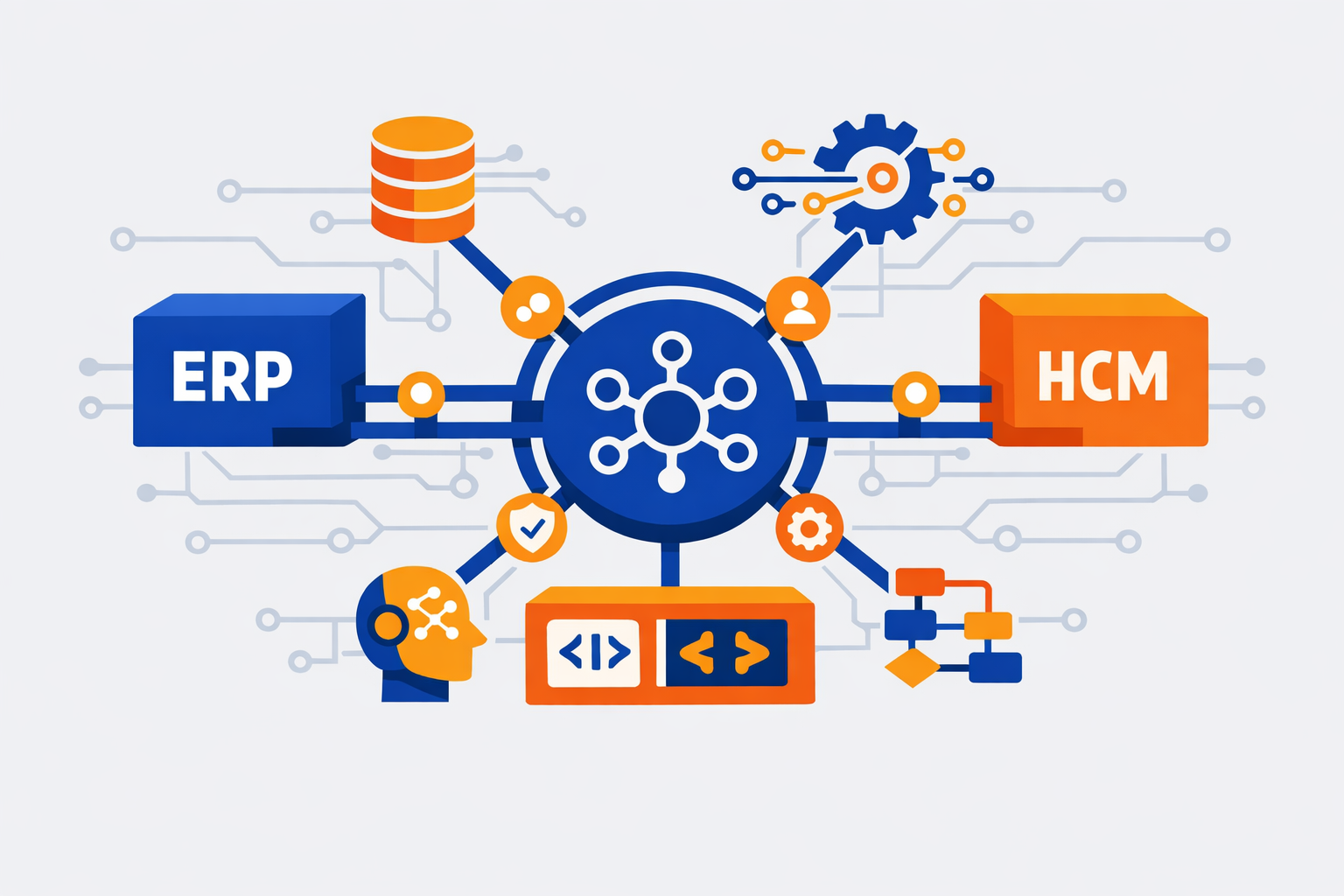
The shift follows years of fragmented, single-vendor automation deployments that left AI agents siloed within individual platforms. Enterprise architects and CIOs now face a rapidly evolving market in which open standards - particularly the Model Context Protocol (MCP) - are beginning to define how AI agents interact across heterogeneous enterprise stacks.
Background
MCP, originally developed by Anthropic and subsequently donated to the Linux Foundation's Agentic AI Foundation, is an open standard for connecting AI agents to external tools, data sources, and APIs. The protocol has attracted rapid ecosystem interest: an industry forecast projects that 30% of enterprise application vendors will establish their own MCP servers by 2026, enabling external AI agents to collaborate with a vendor's platform without locking customers into a single AI provider.
The urgency around interoperability reflects broader market dynamics. Enterprise AI agent adoption is accelerating at roughly 41% annually, according to analysis of Fortune 500 deployments, with leading organizations using these platforms to automate complex, multi-system workflows. AI-enabled workflows are forecast to grow eightfold - from 3% to 25% of enterprise processes by end-2025 - transforming static automation into adaptive, decision-capable systems. Meanwhile, the no-code AI platform market is expanding at a 31-38% compound annual growth rate and is projected to reach approximately $25 billion by 2030.
Details
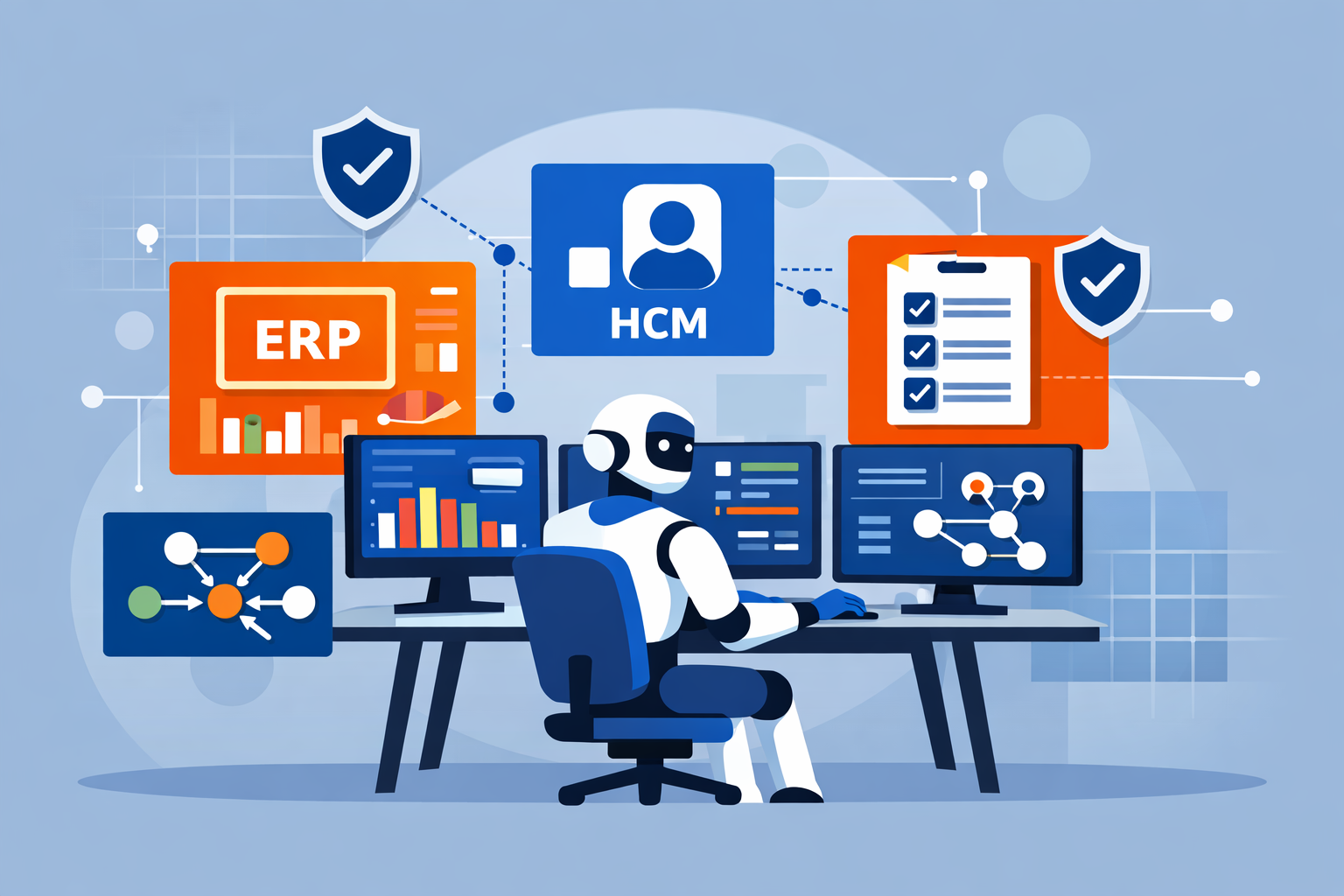
Major ERP and HCM vendors have moved to embed AI agents directly into core application suites rather than rely on external orchestration alone. Oracle has embedded more than 50 AI agents into its Fusion Cloud ERP, supply chain management (SCM), HCM, and CX products, with capabilities including autonomous invoice matching, cash flow prediction, and anomaly flagging. In March 2025, SAP announced plans to integrate NVIDIA Llama Nemotron reasoning models to enhance AI-driven automation across its cloud solutions, extending a partnership with NVIDIA. Microsoft integrates Copilot across its Dynamics ERP and CRM products, with agents operating in human-in-the-loop or autonomous modes powered by Azure OpenAI.
However, analysts and enterprise architecture practitioners are raising concerns that tight vendor coupling introduces structural risk. Enterprises building agentic workflows on proprietary orchestration layers face compounding lock-in at every layer of the technology stack, according to analysis published by integration specialist Kai Waehner in April 2026. Enterprises that build agentic workflows on MCP-compatible infrastructure preserve interoperability across models and vendors, reducing the risk of their agent architecture becoming inseparable from a single vendor's ecosystem.
The governance dimension is equally pressing. Industry forecasts indicate that half of ERP vendors are projected to introduce autonomous governance modules combining explainable AI, automated audit trails, and real-time compliance monitoring - a response to rising AI regulation, mission-critical autonomous processes, and high-profile failures in regulated industries. SAP, Microsoft, and Oracle are already investing heavily in compliance-ready architectures. Platforms targeting no-code deployment must satisfy additional criteria: enterprise-grade no-code tools are expected to provide role-based access control, audit logs, and compliance certifications such as SOC 2, HIPAA, and GDPR as baseline requirements, not optional add-ons.
On the vendor risk side, 87% of organizations express concern about AI-specific risks in their vendor relationships, according to survey data, and 84% of organizations factor digital sovereignty into their AI strategies. The tension between consolidated vendor ecosystems and open architectures is intensifying: in late April 2026, SAP updated its API policy with limited advance notice, prompting objections from the DSAG, which represents tens of thousands of SAP customers. The user group called the policy change unacceptable, citing unilateral modification and vague scope.
Procurement and legal teams are responding. Contract evaluation frameworks increasingly require vendors to disclose MCP roadmaps, data portability commitments, and explainability obligations - provisions absent from most enterprise software agreements two years ago.
Outlook
The next phase of competitive differentiation among ERP and HCM vendors will likely center on governance architecture rather than functional breadth, as platforms embedding auditable, interoperable AI become the default expectation for regulated industries. Enterprise architects who have not yet defined an agentic AI architecture strategy face a default outcome: vendor selection driven by marketing reach rather than governance posture. Procurement teams are advised to request binding contractual commitments on API openness, data lineage, and model portability before finalizing automation platform agreements.