Salesforce-owned Slack has introduced an AI-augmented Workflow Builder designed for enterprise-scale automation. The tool enables teams to generate multi-step workflows from natural-language prompts while embedding role-based access controls and audit logging directly into each automation run.
The updated platform, which includes a new "Generate AI response" step, marks a significant expansion beyond Slack's origins as a collaboration tool. By embedding no-code and AI-driven features, Slack aims to move well past traditional messaging into workflow automation. The latest release targets cross-functional use cases spanning HR, IT, finance, and supply chain operations-departments that have historically relied on siloed automation tools with inconsistent governance standards.
Background
The AI Workflow Builder generates common workflows from simple natural-language prompts to automate routine tasks. Users can type a prompt-such as "Remind my team to send project updates every Monday"-and Slack AI produces an editable workflow ready for publishing.
The release accelerates a broader trajectory set in motion at Dreamforce 2025, where Salesforce announced Agentforce 360-a platform designed to turn every business into an agentic enterprise-with Slack positioned at the center as the agentic operating system.
Adoption metrics underscore the urgency behind these updates. According to Salesforce, custom AI agents on Slack grew 300% between January and April 2026, per coverage of TDX 2026. Internally, 60,000 Salesforce employees already use Slackbot weekly to read and update the CRM. Slack GM Rob Seaman predicted at TDX 2026 that within two years, AI agents will outnumber human users in Slack.
Details
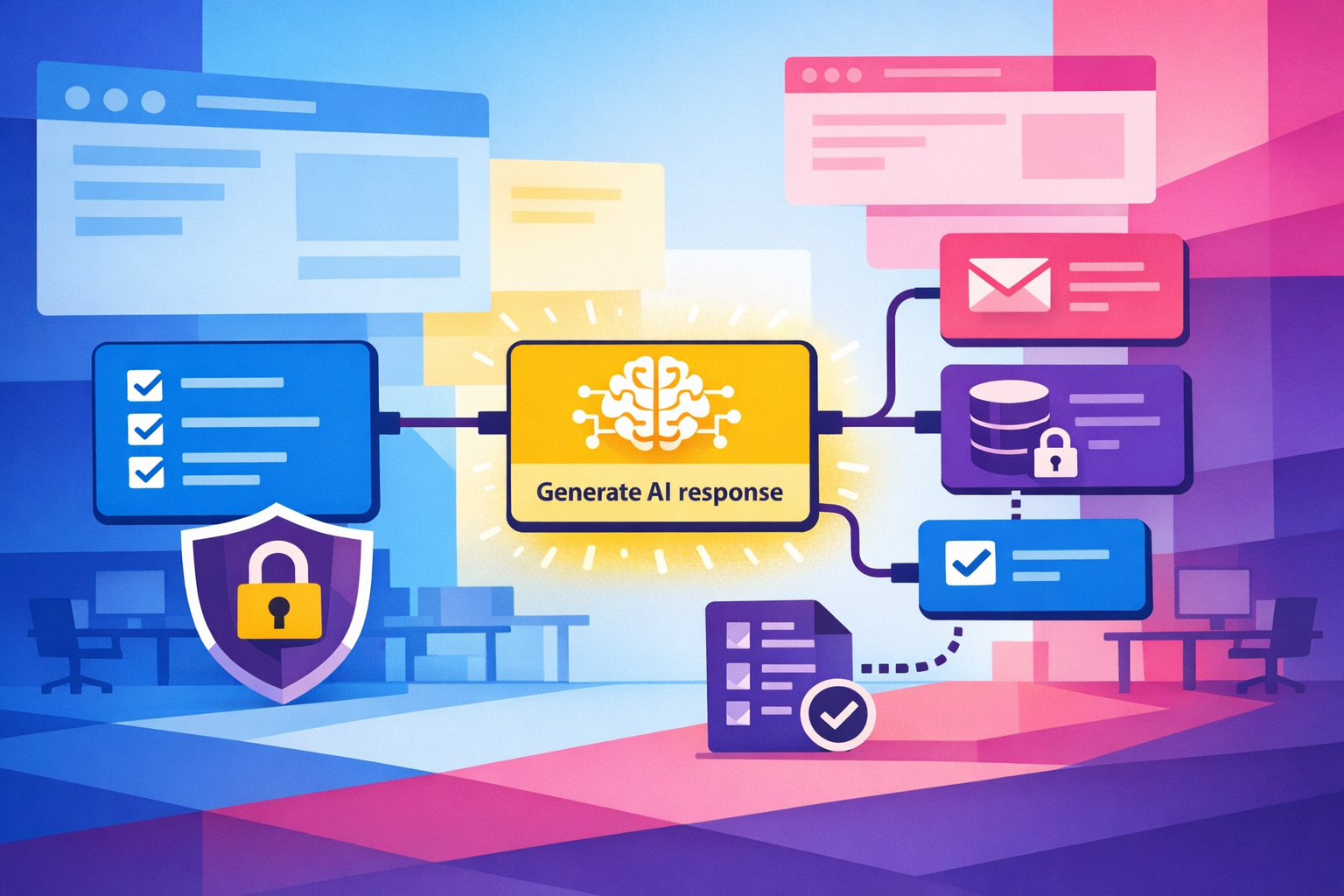
The new "Generate AI response" step sits at the core of the workflow expansion. It brings AI summaries, translations, and drafting into no-code workflows, grounding results in channels, canvases, lists, and files-with governance controls and a clickable setup for faster automation.
Governance architecture is a central design priority. Admins can restrict who builds with the step and control what data it touches, all backed by Slack's AI guardrails. At the platform level, Slack's audit trail framework logs which channels were accessed, what actions were taken, who triggered the request, and what model was used. The Audit Logs API records all admin-level changes, including exclusion settings and configuration updates.
Data privacy protections are enforced at the model layer. Slack AI keeps all customer data within Slack-controlled virtual private clouds (VPCs) and does not train large language models on customer data, according to Slack's official documentation. Slack AI searches only what a user already has access to-pulling from public channels and permitted conversations-and will not retrieve data from private channels, email, or external websites unless linked to Slack.
Interoperability with enterprise data systems extends through the Enterprise+ plan. The AI Workflow Builder automates tasks in Slack with simple prompts, while Enterprise+ adds integrations with tools including Google Drive and Salesforce for enterprise search. Connectors for Gmail, Outlook, Dropbox, and Notion are in active development, according to Slack. Workflows can include conditional logic with support for up to 15 conditions, scaling from one-step tasks to multi-branched processes.
On January 13, 2026, Salesforce introduced a revamped Slackbot powered by Anthropic's Claude, positioning it as a "super agent" capable of executing multi-step tasks across connected applications, including Salesforce CRM, Google Drive, and Microsoft OneDrive. As of January 2026, the upgraded Slackbot AI agent is included at no additional cost for Business+ ($15 per user/month) and Enterprise+ customers.
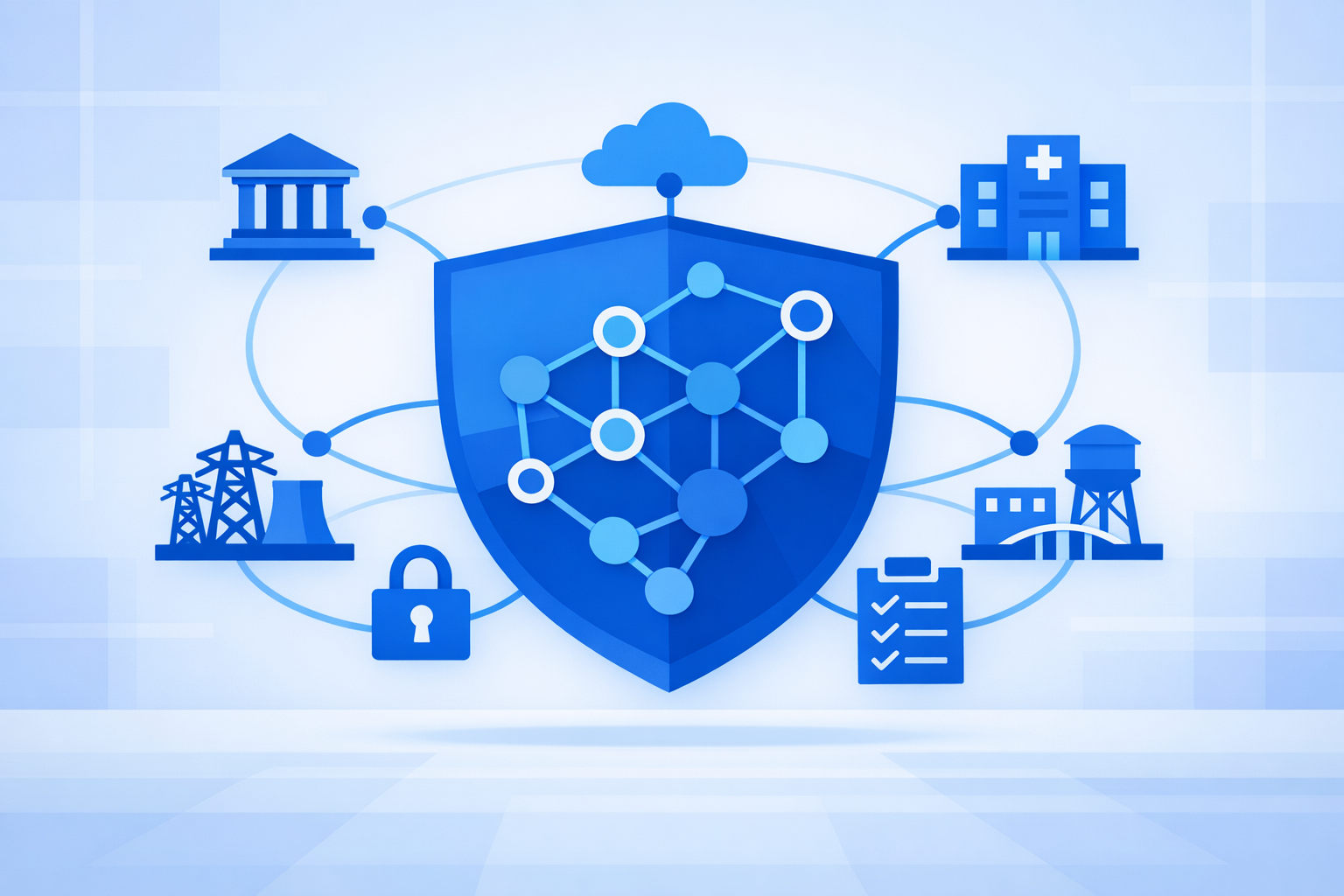
For regulated industries, AI runs within Slack's trusted boundary and upholds the security and compliance standards customers expect. The security program protects customer data at every layer while enabling customers to manage risk through adherence to applicable global and industry regulations, security standards, and data privacy frameworks.
Outlook
When employees cannot find an agent in their workflow, they default to manual processes. When IT leaders cannot govern what is deployed, shadow AI becomes a real risk. Slack's response is a unified, vetted directory that routes the right AI to the right person without friction. That directory-AgentExchange-brings together the ecosystems of AppExchange, Slack, and Agentforce into a single experience, built on enterprise-grade security refined over twenty years, with partners including Google, Anthropic, and Box.
Governance questions, however, remain partially unresolved. Who owns agents in a Slack workspace? Who audits what they do? How can organizations prevent agent sprawl when any developer with the Slack Agent Kit can deploy to a shared workspace? These are real problems requiring deliberate policy work on top of the tools Salesforce has shipped. Enterprise architects evaluating the platform will need to establish internal governance frameworks in parallel with deployment.