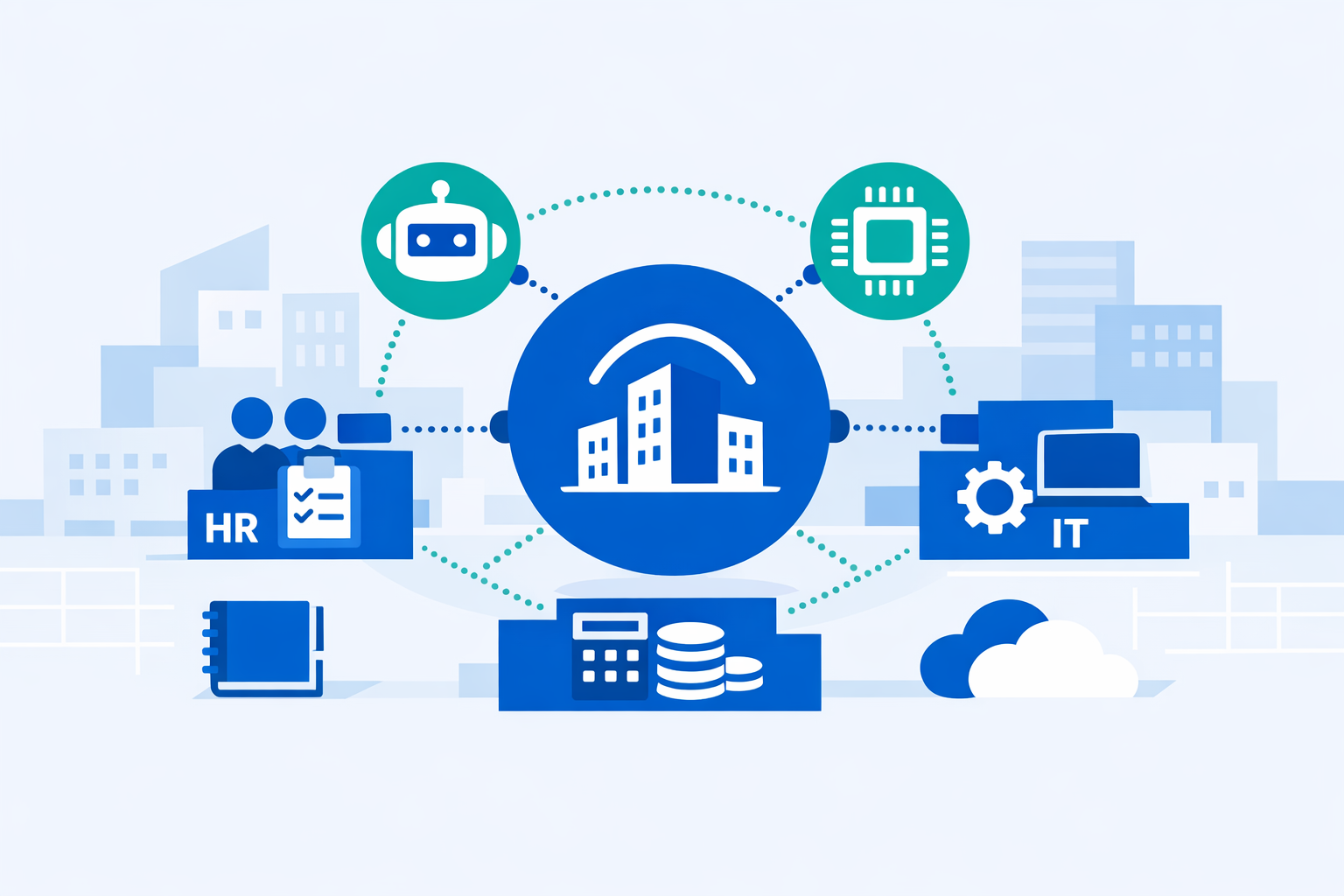
Workday has moved its AI agent strategy from pilot programs into broad enterprise deployment, integrating its Sana agentic platform into Microsoft 365 Copilot and expanding purpose-built automation agents across HR, finance, and IT. Industry analysts say the moves define an emerging blueprint for large-scale workflow automation in 2026.
Background
Workday announced the Sana Self-Service Agent for HR and Finance is now available in Microsoft 365 Copilot, effective May 13, 2026, according to the company's official newsroom. The integration follows a broader strategic pivot that accelerated at Workday Rising in September 2025, when Workday unveiled new Illuminate agents targeting HR and finance processes including performance reviews, workforce planning, and financial close.
The moves reflect a significant architectural shift. Workday has spent approximately $3 billion on acquisitions - including HiredScore, Evisort, Paradox, and Sana - to reposition the platform from a system of record into what it describes as a system of action, according to industry analyst Josh Bersin. Workday's platform processes more than a trillion transactions each year across millions of workers and tens of thousands of roles, according to company disclosures, giving its AI agents access to deep contextual data across HR and finance.
Details
The Sana integration with Microsoft 365 Copilot targets a persistent friction point in enterprise operations. Employees and managers routinely navigate between email, chat portals, and help desks to handle routine questions about pay, time off, expenses, or team changes, according to Workday's announcement. The new integration enables employees and managers to get answers to HR and finance questions and complete tasks directly inside Microsoft 365 without switching applications, while organizations maintain existing Workday security, compliance, and controls.
Srini Raghavan, Corporate Vice President of the Microsoft 365 Ecosystem at Microsoft, stated that "employees can access HR and finance support in the tools they use every day, while organizations retain the same policies, controls, and governance they already rely on with Workday."
Governance architecture is central to the deployment model. Every interaction with the Sana Self-Service Agent runs through Workday, with responses following each organization's role-based permissions, and every action respecting existing approvals and business rules, according to Workday. The underlying Workday data and transactions remain within the Workday trusted system, even as user interactions appear as activity history in Copilot.
Early enterprise deployments are generating measurable results. According to data published on Workday's website, Medtronic automated 80% of its HR processes including AI-led candidate scheduling; Cognizant cut payroll processing from 9 days to 2 days while improving compliance; and Chipotle reduced time-to-hire by 75% while increasing application completion rates. NetApp reported saving over $2.5 million and thousands of hours through automated contract reviews.
On the finance side, new Illuminate agents automate reconciliation, testing, and financial planning, enabling finance teams to redirect time from manual tasks to higher-value analysis. A Cost & Profitability Agent allows users to define allocation rules and drivers using natural language, while a Financial Close Agent streamlines the close process with automation and real-time visibility, according to Workday's September 2025 announcement.
Early adopters of Workday's AI agent suite have reported productivity gains across recruiting and FP&A. Recruiter capacity has risen 54% and FP&A efficiency has increased 49% among early adopters, with Workday planning to add another 14 AI agents in 2026, according to Moveworks.
Despite the momentum, adoption at scale faces real barriers. Futurum Research's Enterprise Data Survey found that 78% of CIOs cite security, compliance, and data control as the top barriers to scaling agent-based AI. Futurum analysts also flagged that Workday's strategy to consolidate workflows within its own ecosystem could increase switching costs and raise concerns about vendor lock-in for organizations with heterogeneous IT stacks.
Workday is used by more than 11,500 organizations worldwide, including more than 65% of the Fortune 500, according to the company.
Outlook
Workday's new Illuminate agents for HR, finance, and industry - announced at Workday Rising 2025 - are scheduled to become generally available in 2026, according to company disclosures. Analysts at Futurum have identified three open questions that will shape adoption through the rest of the year: whether Sana reaches meaningful active usage across Workday's Fortune 500 base, whether enterprises adopt cross-system connectors for complex multi-application workflows, and whether Sana's embedded compliance model satisfies audit teams in regulated sectors such as financial services and healthcare. Three buyer priorities define the 2026 enterprise evaluation cycle: seamless integrations, auditability, and enterprise-grade governance, according to market analysis of the platform landscape.