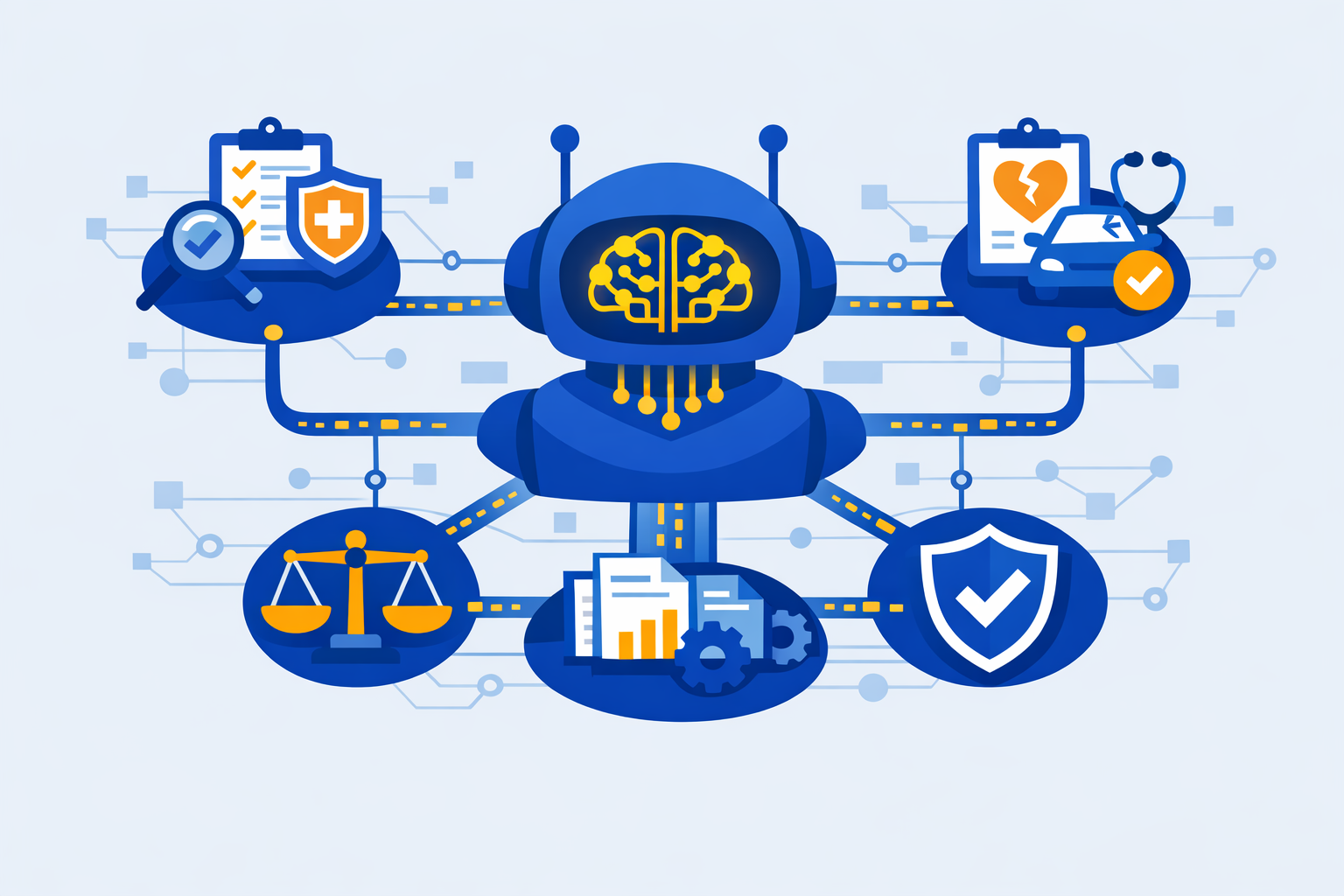
Zocks has commenced the targeted deployment of AI-driven workflow automation across life insurance operations, encompassing underwriting, claims processing, and back-office functions. This initiative has led regulators to revisit frameworks governing data interoperability and AI model oversight.
The rollout, launched earlier this year, spans multiple automation layers affecting sensitive insurer processes. European regulators, operating under frameworks such as the EU AI Act and Solvency II, are assessing whether these systems satisfy high-risk requirements, including explainability, data lineage, and human oversight. Concurrently, insurers continue to face challenges from legacy system fragmentation and inconsistent data standards, heightening demand for interoperable solutions.
Background
Life insurance is among the sectors designated as "high-risk" under the EU AI Act, which applies stringent controls to AI used in pricing, risk assessment, underwriting, and claims management. According to the European Insurance and Occupational Pensions Authority (EIOPA), approximately 50% of non-life insurers and nearly 25% of life insurers currently use AI, with adoption projected to increase over the next three years EIOPA said in its 2024 Digitalisation Report, as cited in Eurofi Magazine September 17, 2025. Regulatory friction is compounded by legacy IT systems, fragmented data sources, and requirements for explainability, cybersecurity, and supply-chain controls according to EIOPA's analysis published September 17, 2025.
Details
Zocks, originally recognized for its AI assistant technology in financial advisory, has extended its automation to insurance workflows that require compliance by design. Key features include audit-ready documentation, automated consent tracking, and integration with CRM and policy management systems. Zocks asserts its synchronization of meeting notes and client data is secure, recording-free, and preserves compliance integrity on its platform compliance page, Zocks states these functions operate within a fully controlled environment with client consent and documentation.
Interoperability remains a critical issue due to insurers' dependence on proprietary data formats and legacy platforms. ACORD, a global data standards body, underscores the necessity of structured, interoperable formats for effective AI model operation and cross-vendor system integration. ACORD reports its ADEPT platform and Transcriber AI models have enabled major reinsurers to reduce manual processing by 60%, increase data quality by 80%, and cut claims turnaround time by 50% ACORD Transcriber enabled these improvements, as reported by ACORD Solutions Group via Reinsurance News, seven months ago.
Outlook
With Zocks advancing its automation deployment, insurers and regulators are expected to consider sandbox programs and joint working groups to align governance and interoperability initiatives. Forthcoming regulatory guidance is anticipated to focus on strengthening model risk management, standardizing data schemas, and implementing human-in-the-loop controls.