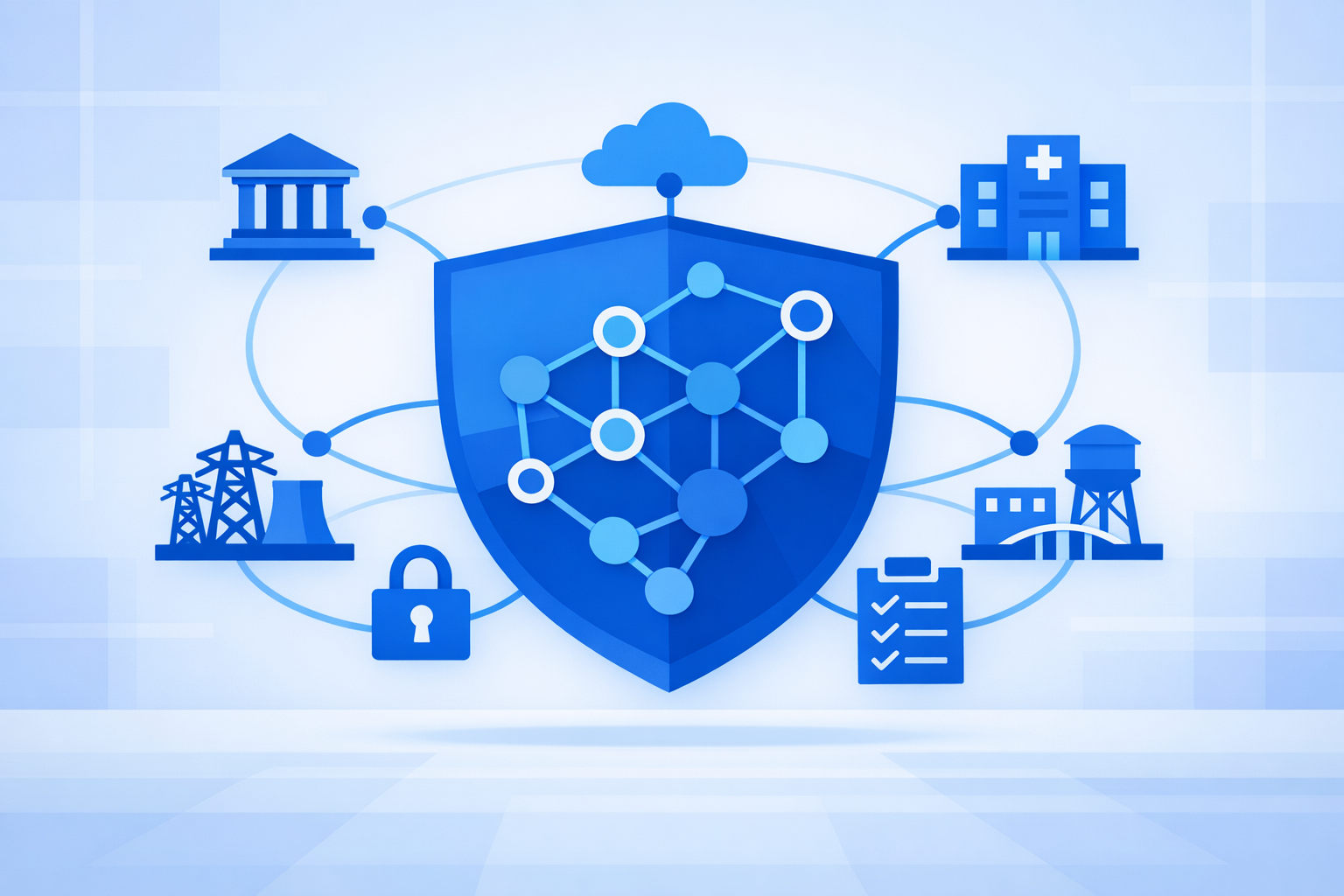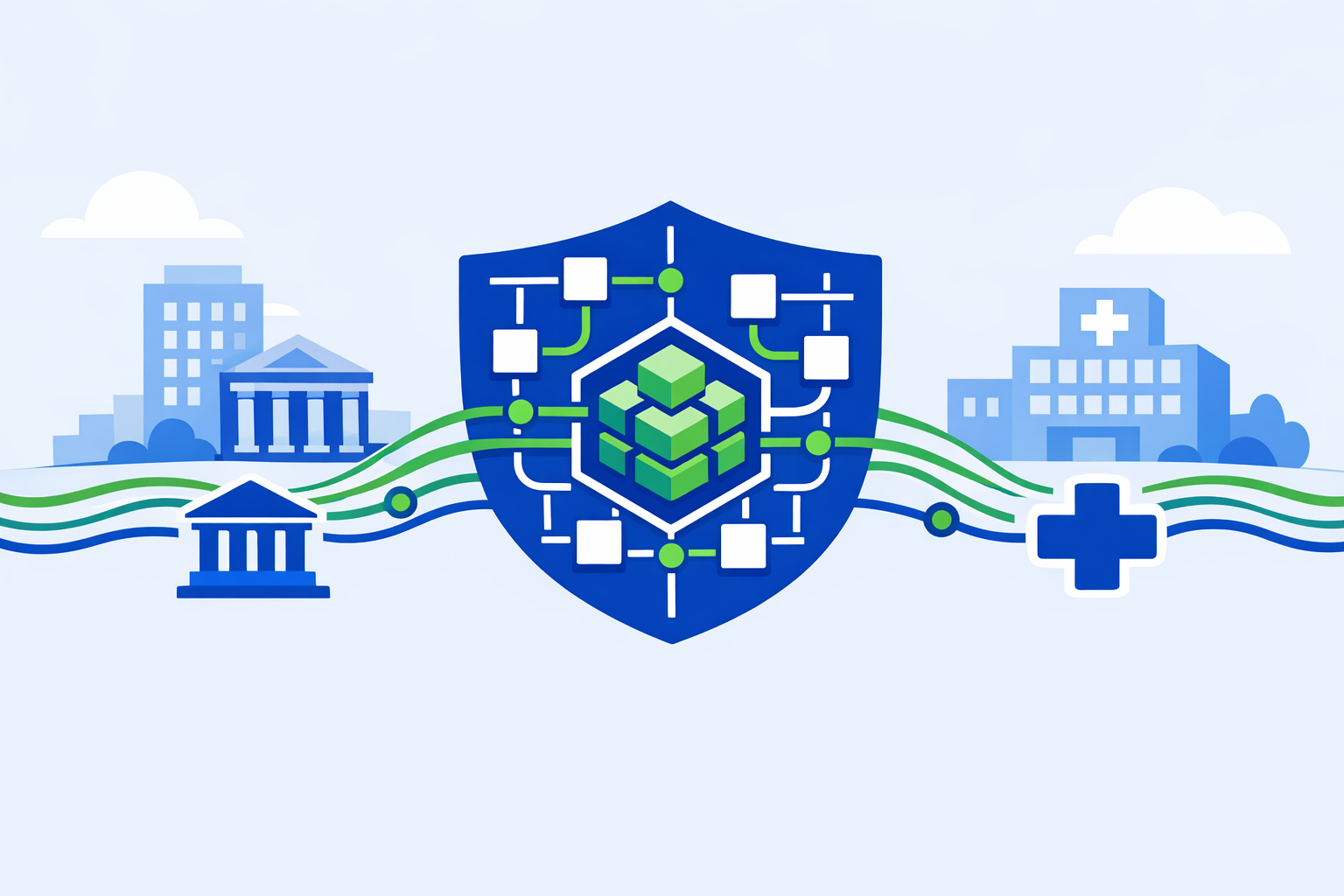
Financial institutions and healthcare organizations across the US and EU are accelerating deployment of multi-layered AI data provenance systems and cross-enterprise data clean rooms. Converging regulatory deadlines will make traceable, auditable AI decisioning a legal requirement rather than a best practice.
Background
The urgency stems principally from the EU AI Act, which becomes fully enforceable for high-risk AI systems on August 2, 2026. For financial institutions, the regulation explicitly classifies credit scoring, insurance pricing, fraud detection, and anti-money laundering (AML) monitoring as high-risk use cases, each triggering strict data governance obligations. Under Article 10, providers must maintain version control records and provenance information that enable traceability between datasets and model versions, with documentation producible as evidence during compliance assessments. Article 12 further mandates that high-risk systems automatically log events to identify risks and substantial modifications, with records capturing inputs, outputs, and decision points to allow full traceability. Non-compliance carries penalties of up to €35 million or 7% of global annual revenue, whichever is higher.
In the United States, no single federal AI statute applies, but the OCC, Federal Reserve, and FDIC continue to apply model risk management expectations - principally SR 11-7 - to AI and machine learning systems. The Federal Reserve's SR 11-7, issued in 2011, remains the most significant and clearest statement of model risk management regulation in US banking, and regulators have consistently applied it to AI deployments. Separately, the EU's Digital Omnibus proposal, introduced by the European Commission in November 2025, seeks to streamline overlapping AI, GDPR, DORA, and data act obligations-including aligning breach notification thresholds and introducing a single incident reporting point for financial entities.
Details
The compliance challenge for banks centers on constructing an end-to-end data lineage chain: tracing training data from origin through transformation pipelines, model development, and individual model outputs. According to practitioners and governance specialists, organizations must document training data sources and provenance, implement quality management for training and validation data, maintain complete lineage from data through model to decision, and create audit trails for all data processing to satisfy high-risk AI requirements.
Immutable logging has emerged as a critical architectural requirement. Hardened logging adds integrity controls including WORM (write-once, read-many) storage, log signing, external attestation, and tamper-evident timestamps-approaches that materially strengthen evidentiary value in regulatory audits. Cryptographic provenance mechanisms, such as distributed audit trails logged to immutable ledgers, are also gaining traction as institutions weigh the adversarial legal scrutiny that may accompany AI-related litigation. Gartner forecasts between 1,000 and 2,000 AI-related legal claims globally by end of 2026.
Beyond individual institution controls, data clean rooms have rapidly emerged as shared governance infrastructure for inter-organizational collaboration on sensitive datasets. These environments allow multiple parties to run approved analytics and train AI models without exposing raw data to counterparties. In healthcare, data clean rooms allow multiple entities to collaborate on research or technology initiatives without compromising governance controls, preserving each party's data ownership and operating in accordance with applicable privacy, security, and data protection requirements, according to Lee Kim, HIMSS senior principal for cybersecurity and privacy. In banking, Databricks Clean Rooms have been used to demonstrate how two banks can collaborate on joint fraud detection by securely bringing fraud detection models from various sources into the clean room, running agreed-upon analytics and sharing only approved results.
Enterprises that have deployed clean rooms report an average 41% reduction in privacy incident response costs and a 28% reduction in data governance labor overhead, according to market analysis. The regulatory alignment is structural: clean room technical architectures align with privacy-by-design principles in GDPR Article 25, CPRA risk assessment requirements, and emerging EU AI Act obligations, positioning them as strategic compliance investments. Major cloud vendors including AWS, Google Cloud, Microsoft Azure, and Snowflake have lowered the cost and complexity of clean room deployment by offering native, managed services that eliminate the need to build cryptographic infrastructure from scratch.
Governance platforms that enforce policy across data catalogs, access controls, retention schedules, and automated compliance reporting are also seeing heightened demand. Model risk management frameworks need to extend explicitly to AI, with board-level accountability, explainability requirements, and bias detection built into the model development lifecycle from the outset, according to Wolters Kluwer analysis. Banks that separate AI deployment from AI governance are already drawing regulatory scrutiny, according to compliance executives.
Jurisdictional complexity adds another layer of operational difficulty. For financial institutions deploying AI in EU markets, data sovereignty and AI compliance are inseparable in practice, due to intersecting GDPR restrictions on cross-border data transfers, DORA ICT risk requirements, and EU AI Act audit obligations. Consent management across jurisdictions and ensuring explainability when provenance reveals complex multi-step data transformations remain unresolved challenges for many institutions.
Outlook
With the EU AI Act's high-risk AI deadline less than three months away, financial institutions that have not yet inventoried AI systems or built traceable data lineage chains face acute compliance exposure. In the US, continued application of SR 11-7 to AI models, combined with the White House AI Action Plan's AI regulatory reform recommendations released in July 2025, is expected to sustain model governance expectations even as the federal legislative posture remains fragmented. Vendors offering interoperable data provenance and clean room platforms compatible with existing ERP and CRM data stacks are positioned to see the strongest near-term institutional demand, as both banking and healthcare organizations seek infrastructure that satisfies audit requirements across multiple regulatory frameworks simultaneously.