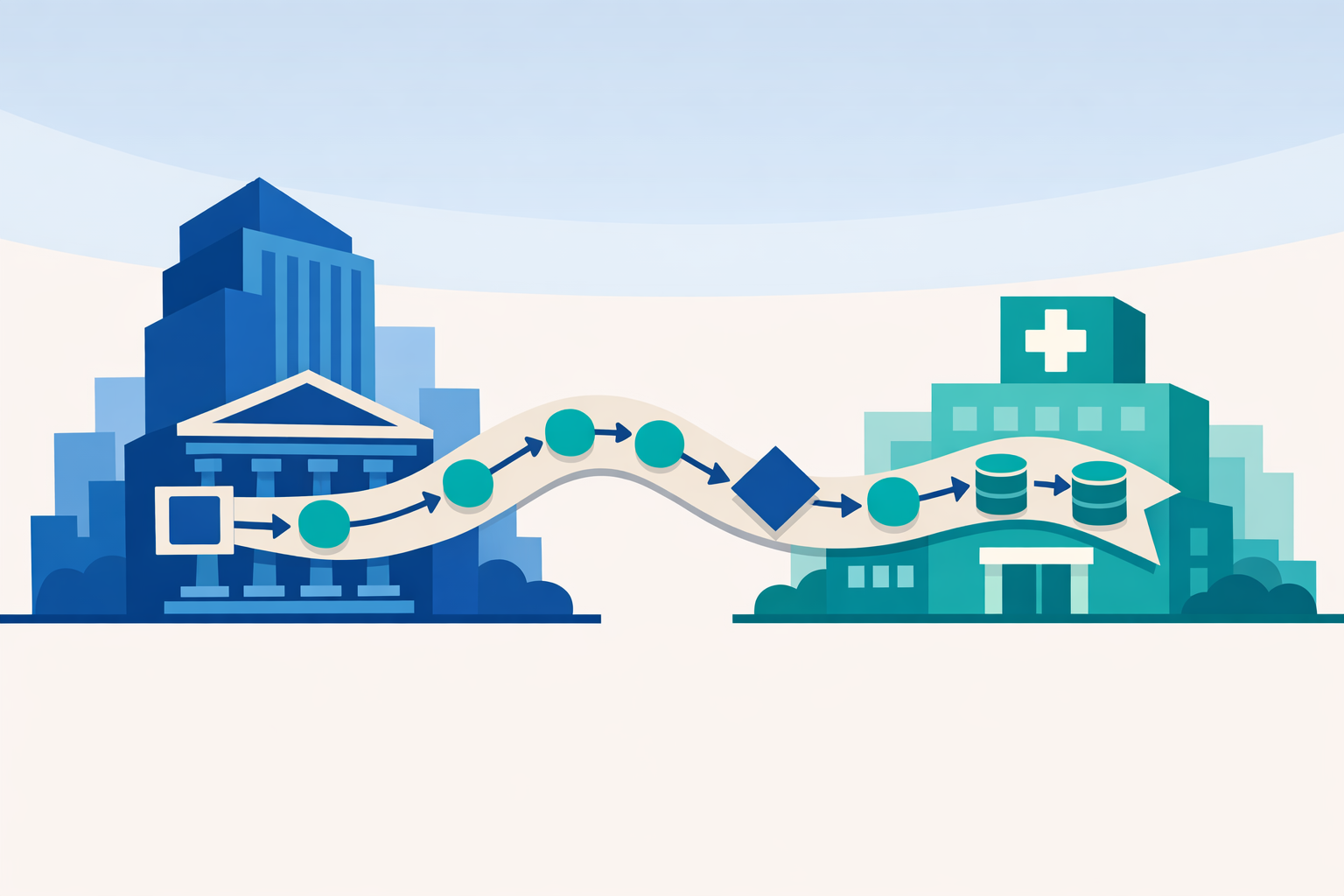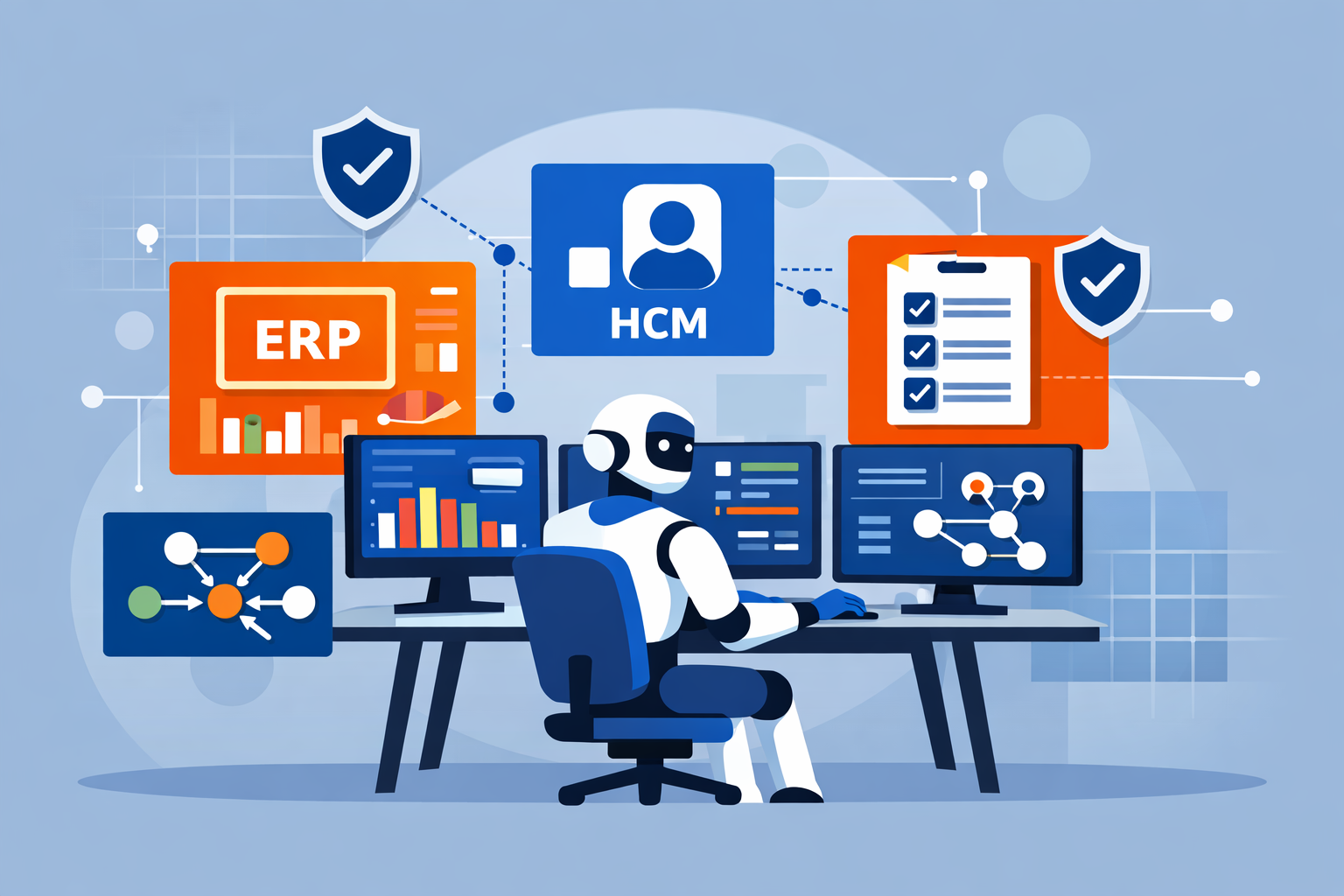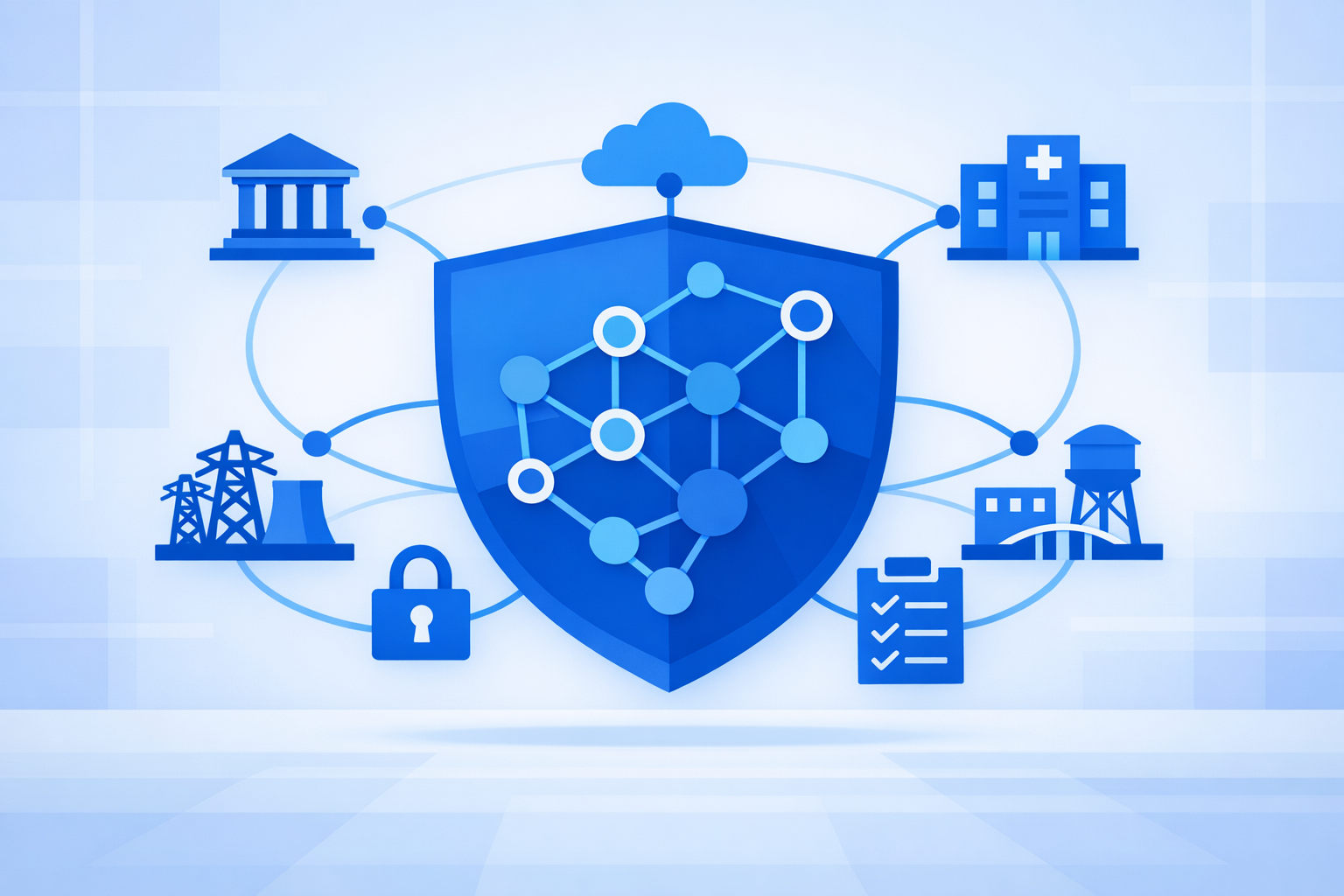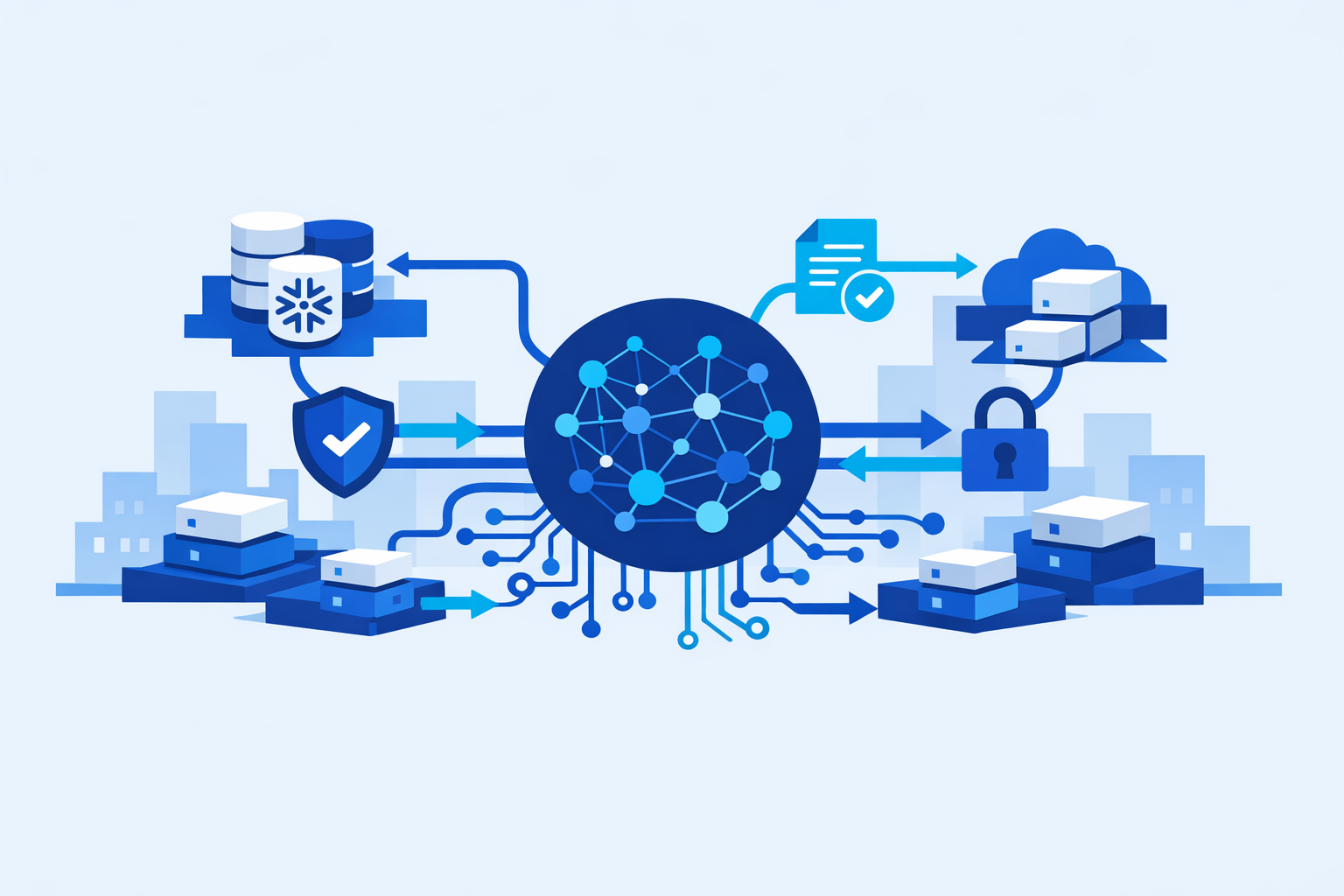
Enterprise AI initiatives are prompting the convergence of data governance, security, and privacy into a unified control plane. Recent developments by Bedrock Data and Snowflake-including Bedrock's metadata lake-centric platform and Snowflake Ventures' investments in governance and trust vendors-reflect a shift: AI data governance is moving toward core infrastructure status, no longer a peripheral compliance concern.
These shifts indicate an operational model in which enterprises treat metadata, lineage, data quality, and access policy as interoperable services spanning data lakes, warehouses, and AI workloads-moving beyond siloed, tool-specific controls.
AI Data Governance Moves Into Core Infrastructure
AI adoption has heightened regulatory, operational, and reputational risks associated with data privacy and governance. Market forecasts reinforce this context: recent research estimates the AI governance market will reach roughly USD 0.34-0.62 billion in 2025, with compound annual growth rates between 28% and 36% through 2030.[1] Stakeholders increasingly recognize that AI governance requires dedicated platforms rather than isolated controls.
Key drivers include:
- Regulatory pressure. The EU AI Act's Article 10 requires providers of high-risk AI systems to document data governance and demonstrate that training, validation, and test datasets meet quality and bias criteria. Effective compliance depends on robust data management, lineage, and documentation covering data sourcing, transformation, and use.[2]
- Privacy and ethics oversight. According to the IAPP Privacy Governance Report 2024, 69% of surveyed chief privacy officers have expanded their scope to include AI governance; 69% now cover data governance and ethics.[3] Privacy programs increasingly address not only raw data but model inputs and outputs.
- Data quality for enterprise AI. A 2024 Ataccama study found that 69% of chief data officers cite data quality as their primary challenge in leveraging AI.[4] Poor or weakly governed data can transform AI projects into compliance and operational risks.
This context underscores the relevance of Bedrock Data's recent funding and Snowflake's governance strategy, including the Snowflake Horizon Catalog and investments in governance- and trust-centered platforms.
Bedrock Data: Metadata Lake as an AI Governance Control Plane
Funding and Strategic Direction
In November 2025, Bedrock Data closed a $25 million Series A round led by Greylock Partners, with Mangusta Capital, Mantis Venture Capital, Pier 88 Investment Partners, and others participating.[5] The company delivers a modern Data Security Posture Management (DSPM) solution focused on data-centric security, governance, and AI data control.
Bedrock's platform centers on a patented metadata lake-a graph-based repository that continuously discovers, classifies, and contextualizes data across private, IaaS, PaaS, SaaS, and AI environments, including for model training and inference.[6] The objective is to provide definitive insight into data sensitivity, access, lineage, and usage, making this information available to downstream tools through an API-first approach.
Differentiation from Traditional Data Catalogs
Traditional data catalogs focus on dataset discovery, emphasizing schema, business glossary, and ownership metadata. DSPM tools often stress sensitive field classification and storage risk detection.
Bedrock's metadata lake unifies and extends these functions:
- Graph-based context. Models relationships between datasets, identities, entitlements, and systems in a graph, supporting lineage and multi-hop access analysis across systems.[6]
- Push-down classification and tags. Synchronizes classifications and tags (e.g., PII, PHI, IP) to underlying platforms like Snowflake, S3, or SharePoint, so native masking and access policies enforce at the source.[7]
- Natural-language policy and Copilot. Provides a natural-language policy engine and "Metadata Lake Copilot" for context-rich queries around data access, AI agent interactions, or regulated data storage.[6]
- Coverage for AI workloads. ArgusAI, launched with the Series A round, maps data access by AI models and agents during training and inference, enforcing related policies.[5]
The metadata lake thus acts as an AI data governance control plane, feeding consistent, actionable context into security, governance, and data engineering tools.
Bedrock's 2025 Survey: Demand Signals
Findings from Bedrock's "2025 Enterprise Data Security Confidence Index" highlight governance gaps:
- 82% of cybersecurity professionals identified gaps in finding and classifying organizational data across production, customer, and employee stores.[8]
- 76% could not produce a full data asset inventory within hours for compliance or incidents; 65% needed days, 11% required weeks.[8]
- Nearly 59% added AI data responsibilities in the past year, and 54% assumed AI training-data governance duties.[8]
- When briefed on the metadata lake concept, 88% considered it critical or very valuable for addressing data visibility challenges.[8]
These findings match independent research, reinforcing AI governance and data quality as enterprise priorities and signaling interest in platforms offering end-to-end lineage, access insights, and AI data bill-of-materials (DBOM) features.
Interoperability with Snowflake and Multi-Cloud Environments
Bedrock targets large-scale cloud and AI estates, supporting IaaS, PaaS, and SaaS platforms.[6] For Snowflake, "Bedrock Free for Snowflake" enables discovery and classification of sensitive data as a freemium service, delivering AI-assisted classification and Copilot features while maintaining data residency in Snowflake.[9]
This enables Bedrock to:
- Govern Snowflake as part of a broader multi-cloud strategy
- Push sensitivity tags into Snowflake to trigger native masking and access controls
- Analyze data lineage and flows between Snowflake and external services
For enterprise AI, this design allows Snowflake Horizon Catalog to govern in-platform artifacts while an external metadata lake supplies cross-platform context and AI-specific insights.
Snowflake's Governance Fabric: Horizon Catalog and Open Metadata
Snowflake has expanded its governance with Snowflake Horizon Catalog, Polaris/Open Catalog, and AI-focused features such as Cortex AI and Snowflake Copilot.
Native Governance in the AI Data Cloud
Launched in January 2025, Snowflake Horizon Catalog acts as a centralized repository for data, models, notebooks, and native apps within the AI Data Cloud, with integrated security, compliance, discovery, and collaboration features.[10] Key features include:
- Security and RBAC. Centralized role-based access control with robust network security and authentication.
- Compliance and privacy. Automated sensitive data classification, tag- and policy-based masking, and audit-aligned enforcement.[10]
- Data quality and lineage. Integrated monitoring and lineage visualization help teams trace dependencies and assess change impact.[10]
- AI-assisted discovery. Cortex AI, Snowflake Copilot, and natural-language search streamline asset discovery and documentation.
These functions position Snowflake as a leading data catalog and governance layer for workloads operating entirely within its AI Data Cloud.
Interoperability Through Polaris and Open Catalog
Snowflake supports interoperability by linking Horizon Catalog with Apache Polaris and Open Catalog, facilitating management of Apache Iceberg tables both inside and outside Snowflake.[10] This architecture enables governance policies and lineage to apply to open table formats across different engines.
For enterprises, this supports a layered governance design:
- Horizon Catalog governs in-platform Snowflake workloads
- Polaris/Open Catalog coordinates open-format table governance across engines
- External metadata lakes and governance tools provide extended context and controls as needed
Snowflake Ventures: Building a Governance and Trust Ecosystem
Snowflake Ventures has invested in several governance and trust-focused platforms that enhance the Snowflake AI Data Cloud ecosystem.
Recent Investments in Governance and Trust Platforms
Recent investments underscore Snowflake Ventures' strategy:
- Theom - multi-store data security/governance. In May 2025, Snowflake Ventures invested in Theom, enabling cross-store data governance and security through an AI-powered platform available as a Snowflake Native App.[11]
- Ataccama - data quality, catalog, lineage. Snowflake Ventures invested in Ataccama, a vendor that unifies quality, observability, cataloging, lineage, and reference data management and is recognized by Gartner as a Leader.[12]
- Veza - identity and access governance. Snowflake Ventures has invested in Veza, a platform visualizing access and entitlements across applications and data stores, supporting least-privilege models.[13]
- Metaplane - data observability and trust. In 2024, Snowflake Ventures backed Metaplane, focusing on data observability as a trust foundation for analytics and AI in the Data Cloud.[14]
Snowflake's Q4 2025 report states: the firm invests in partners innovating with the AI Data Cloud, supported by an ecosystem of more than 1,100 partners.[15]
Comparative View: Governance-Focused Ecosystem Partners
| Vendor | Primary role | Governance focus areas | Snowflake integration pattern |
|---|---|---|---|
| Bedrock Data | Metadata lake & DSPM platform | Data discovery, entitlements, AI governance, cross-platform lineage | External metadata lake with tag push-down; "Bedrock Free for Snowflake" for in-platform classification.[6] |
| Ataccama | Data quality and governance suite | Data quality, observability, catalog, lineage, reference data management | Deep integration with Snowflake governance; supports consistent AI pipelines.[12] |
| Theom | Data security/governance platform | Cross-store governance, sensitive data classification, policy automation | Snowflake Native App with AI-driven classification.[11] |
| Veza | Identity security/access governance | Least-privilege enforcement, entitlements visibility, identity-based controls | Ingests and visualizes Snowflake data, aligning identity and data permissions.[13] |
| Metaplane | Data observability | Data quality monitoring, anomaly detection, incident triage | Observability for analytics and AI pipelines in Snowflake.[14] |
These ecosystem partners converge on a shared requirement: delivering consistent, interoperable AI data governance across catalogs, quality, lineage, security, and identity, operating near where data and AI workloads reside.
Strategic Implications for CIOs and Data Leaders
Transitioning to Interoperable AI Data Governance
Enterprises have historically implemented siloed governance and privacy controls within individual platforms. The emergence of Bedrock's metadata lakes, Snowflake Horizon Catalog, and a richer ecosystem of governance tools points toward a more integrated target state:
- Shared metadata and lineage. Maintain lineage, classification, and sensitivity labels in interoperable repositories (Horizon, Polaris/Open Catalog, metadata lakes) and propagate them into operational systems.
- Identity-aware governance. Integrate identity and access governance (e.g., Veza) with data-level policies to enable least-privilege access and comprehensive auditability for AI pipelines.
- Data quality as part of governance. Treat data quality as a governance function supporting AI initiatives, using tools such as Ataccama and Metaplane alongside native capabilities.
Regulatory Alignment
Regulatory frameworks like the EU AI Act and GDPR expect organizations to demonstrate control over:
- Data provenance and lineage for high-risk AI systems
- Data minimization and purpose limitation for training data
- Technical and organizational safeguards against unauthorized access and leakage
Industry guidance for AI Act compliance identifies robust data management and lineage as essential for meeting dataset quality and bias assessment requirements under Article 10.[2] Platforms that automate AI data flow documentation, generate AI DBOMs, and enforce policies are increasingly aligned with regulator expectations.
Architectural Patterns in Enterprise AI
Three common patterns are emerging:
- Snowflake-centric AI with extended governance. Use Horizon Catalog as the core policy engine for Snowflake assets. External tools (metadata lakes, identity governance, quality platforms) integrate via API and tag synchronization.
- Multi-cloud AI with a metadata lake hub. Centralize metadata across Snowflake, object stores, SaaS apps, and model platforms for unified AI governance and risk management.
- Regulated workloads with AI data BOMs. Tools like Bedrock ArgusAI map datasets, lineage, and access for specific AI models, supporting regulatory reporting and risk assessments.
Actionable Conclusions and Next Steps
Organizations reevaluating AI data governance should consider the following steps:
- Map AI use cases to data flows. Document which systems provide training, validation, or inference data.
- Assess current governance coverage. Identify which controls are handled natively and where gaps exist in lineage, entitlements, or cross-platform controls.
- Establish a metadata reference architecture. Plan for interoperability among native catalogs (Horizon, Polaris/Open Catalog) and external metadata lakes, including tag and lineage exchange.
- Elevate data quality into AI governance. Treat data quality and observability as integral to AI risk management and model lifecycle processes.
- Unify privacy, security, and data governance leadership. Align privacy, security, data, and AI leadership around shared governance controls and metrics.
- Monitor the governance ecosystem. Track interactions among platforms like Bedrock, Ataccama, Theom, Veza, Metaplane, and Snowflake; prioritize architectures balancing native integration with avoidance of lock-in.
Frequently Asked Questions
How does a metadata lake differ from a traditional data catalog for AI governance?
Traditional catalogs cover discovery and documentation. Metadata lakes extend these by ingesting operational metadata-including access logs, entitlements, classifications, usage patterns, and model interactions-into a graph-based store. This supports entitlement analysis, lineage, and AI-specific visibility across systems.[6] In practice, this enables organizations to track what data fed into which models, who accessed training data, and where policies were enforced.
What is meant by "interoperable AI data governance"?
Interoperable AI data governance describes governance capabilities-such as cataloging, quality management, access control, masking, and lineage-that operate consistently across multiple data and AI platforms. Shared metadata and identity mappings allow controls to remain portable and auditable as workloads move between Snowflake, open table formats, object stores, or external AI services.[10]
How should enterprises combine Snowflake Horizon Catalog with external data governance tools?
Horizon Catalog serves as the authoritative catalog and policy store for Snowflake AI Data Cloud assets. External governance tools integrate via APIs and bidirectional tag or policy synchronization, enabling extended oversight without duplicating controls.[10]
What role do data quality and observability play in AI data governance?
Data quality and observability demonstrate that AI input data is accurate, complete, and reliable. Ataccama and Metaplane monitor schema and anomalies, while Snowflake and others embed quality and lineage monitoring.[12] Quality metrics and issue histories increasingly support model approval and risk assessment.
Does Snowflake Ventures' activity change how enterprises should select data governance tools?
Snowflake Ventures' investments indicate a strategy to build a governance ecosystem around the AI Data Cloud. While investment activity alone should not determine tool selection, platforms with deeper Snowflake integration may offer operational benefits for Snowflake-centric deployments.[11] Enterprises should still assess tools based on their own multi-cloud architectures, regulatory needs, and governance models.