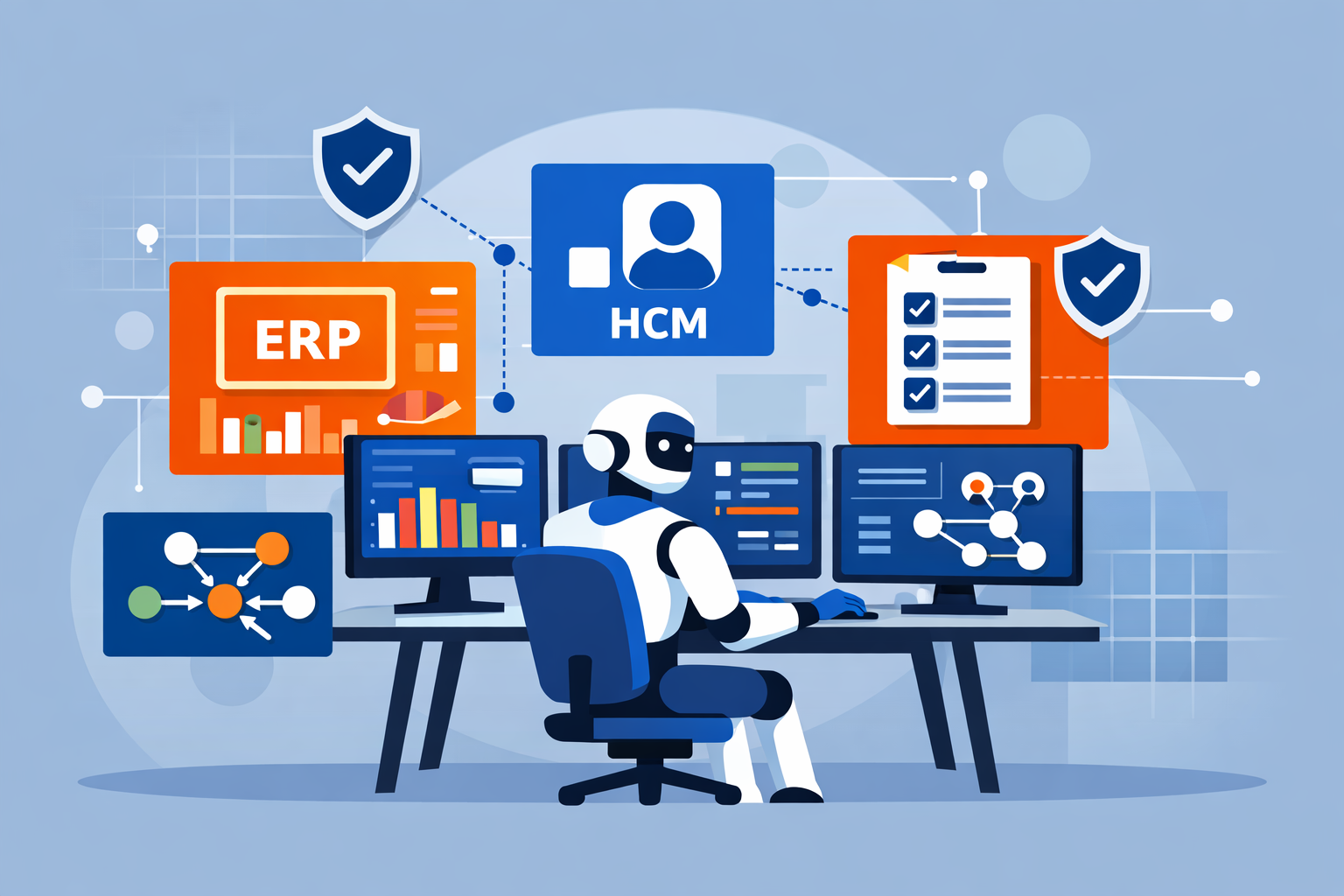
Regulators are increasing scrutiny of AI-powered IT service management (ITSM) tools, focusing on interoperability, data control, and governance. Governments and standards organizations are emphasizing cross-vendor data exchange, immutable audit logs, and structured storage requirements, raising compliance demands for enterprise IT operations.
Background
In the European Union, the AI Act and developing harmonized standards from CEN and CENELEC are establishing new regulatory expectations for interoperability and governance within AI applications. Under the harmonization framework, compliance with these voluntary standards can provide a presumption of conformity and support CE marking for AI systems deployed in the single market . Globally, regulators are also considering oversight mechanisms such as auditability, human-in-the-loop controls, and interoperable logging to prevent vendor lock-in and maintain control over AI data and models [1].
Details
The Organisation for Economic Co-operation and Development (OECD), the National Institute of Standards and Technology (NIST), and the EU AI Act contribute multi-layered risk governance frameworks, mapping AI system lifecycles, model validation, and documentation to interoperability requirements [2]. Within ITSM contexts, regulators are expected to mandate "AI cards" or model fact sheets documenting each AI model's purpose, data sources, retraining frequency, impacted workflows, and decision logs. These records are intended to support auditability and transparency [3]. Compliance requirements may also insist on immutable audit trails that log every workflow action with timestamps, user identification, and change details-features now considered essential governance controls[4].
Governments and procurement bodies are using public contracts to influence AI ecosystems, requiring open interfaces, modular system architectures, and data portability tools to limit vendor-specific silos. Some are proposing the development of "data refineries" that transform proprietary formats into model-agnostic, exchangeable structures, supporting interoperability and aligning with national AI sovereignty objectives [5].
Outlook
Enterprises deploying AI-based ITSM platforms should anticipate more stringent requirements for documentation, oversight, and interoperable architectures. Procurement and governance teams may be required to make compliance with evolving standards-such as the EU AI Act, ISO/IEC specifications, or local risk frameworks-mandatory, alongside criteria for cost efficiency and incident response controls.
As regulatory guidelines solidify through 2026 and beyond, organizations can align internal practices by implementing immutable audit features, increasing human oversight, and adopting modular designs. These measures can help preempt compliance risks and streamline incident management processes.