AI spending has skyrocketed across the enterprise, yet most organizations have not seen real returns. Deployments remain too often piecemeal, siloed, and disconnected from how work actually gets done - and an MIT study found that despite billions spent on AI, only 5% of organizations saw a measurable return. Workday is betting that purpose-built, embedded AI agents - not bolt-on copilots - are the answer.
At Workday Rising 2025, the company unveiled a sweeping expansion of its Workday Illuminate™ AI agent portfolio spanning HR, Finance, and IT, alongside a governance architecture designed to make agent-driven automation auditable, identity-verified, and interoperable at enterprise scale. The announcements represent one of the most substantive platform-level shifts in the enterprise software market since the early days of cloud ERP.
From System of Record to System of Action
Workday's stated ambition is to redefine ERP for the AI era - transforming it "from a passive system of record into a system of action that drives real outcomes."[1] That framing signals a fundamental architectural shift in how enterprise platforms are expected to operate.
Workday processes more than a trillion transactions each year across millions of workers and tens of thousands of roles, giving the platform deep insight into how people and money move through organizations. That contextual depth is positioned as the key enabler for applying AI where it delivers the greatest impact.
The company's broader vision holds that the enterprise of the future will not be limited by what people alone can do. Instead, it will be powered by people and AI agents working together, combining human judgment with always-on reasoning, speed, and scale.
The Illuminate Agent Portfolio: Scope and Reported Performance
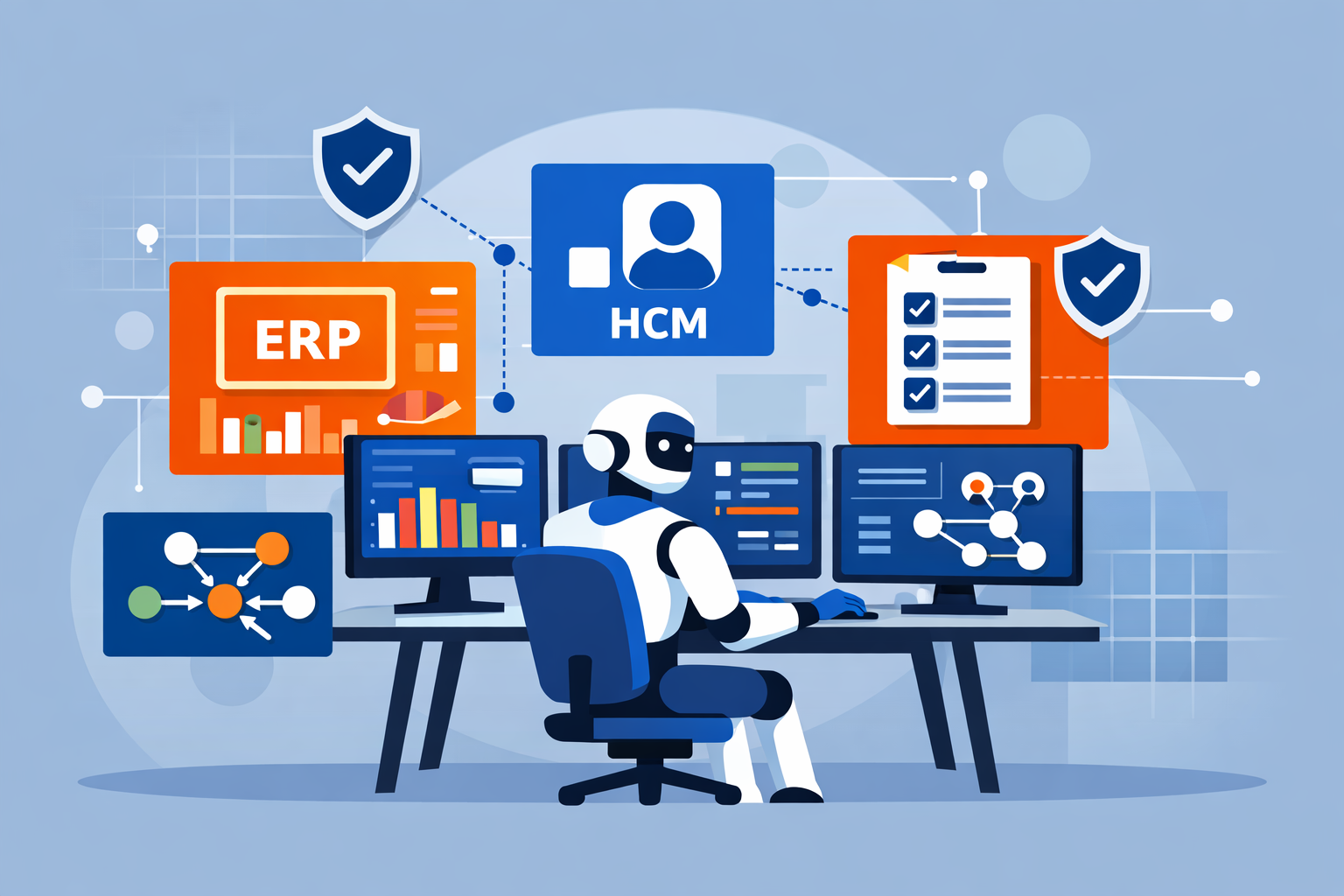
Illuminate agents are purpose-built for work, embedded in HR and Finance, and designed to deliver measurable outcomes. They address some of the most complex processes - including performance reviews, workforce planning, and financial close - at operational speed.[2]
Workday has disclosed performance metrics for agents already in early access or general availability, providing a clearer picture of potential ROI than most enterprise AI vendors have offered to date:
- The Contract Intelligence Agent reduces contract execution time by 65% and accelerates both sales cycles and supplier onboarding.
- The Frontline Agent cuts time spent managing staffing changes by up to 90%.
- The Financial Audit Agent saves early access customers up to 900 hours per year by automating audit evidence collection and reporting.
- The Payroll Agent automates payroll tasks and enables compliance up to 4x faster.
- The Planning Agent helps early access customers reduce data exploration and analysis by 30%, equaling roughly 100 hours per month.
On the HR side, new Illuminate for HR agents aim to improve employee experiences and free HR teams to focus on strategy by automating critical but time-consuming processes. Specific additions include agents for performance management, job architecture, employee sentiment analysis, contingent labor documentation, and business process configuration.
For finance teams - which face the dual challenge of protecting and growing the business while adapting to constant change - new Illuminate for Financials agents streamline reconciliation, testing, and planning. The goal is to shift time from manual tasks to value-added analysis and decision-making.
Workday has also introduced Sana for IT Service Management, an AI-powered agent deeply integrated into its platform to automate and unify routine IT workflows. Sana for ITSM is built on a strategically important insight: many IT tickets are downstream consequences of HR events that Workday already tracks - such as hiring, role changes, transfers, and departures.
Selected Workday Illuminate Agents and Reported Outcomes
| Domain | Agent | Primary Function | Reported Outcome |
|---|---|---|---|
| HR | Frontline Agent | Manages staffing changes | Up to 90% time reduction |
| HR | Performance Agent | Analyzes cross-app performance data | Streamlined review cycles |
| HR | Employee Sentiment Agent | Continuous feedback analysis | Insight-driven action at scale |
| Finance | Financial Audit Agent | Automates audit evidence collection | Up to 900 hrs/year saved |
| Finance | Payroll Agent | Automates payroll and compliance | Compliance up to 4x faster |
| Finance | Contract Intelligence Agent | Contract execution and onboarding | 65% faster execution |
| Finance | Planning Agent | Data exploration and analysis | ~100 hrs/month saved |
| IT | Sana for ITSM | Automates IT tickets tied to HR events | Reduced manual ticket handling |
Governance Architecture: The Agent System of Record
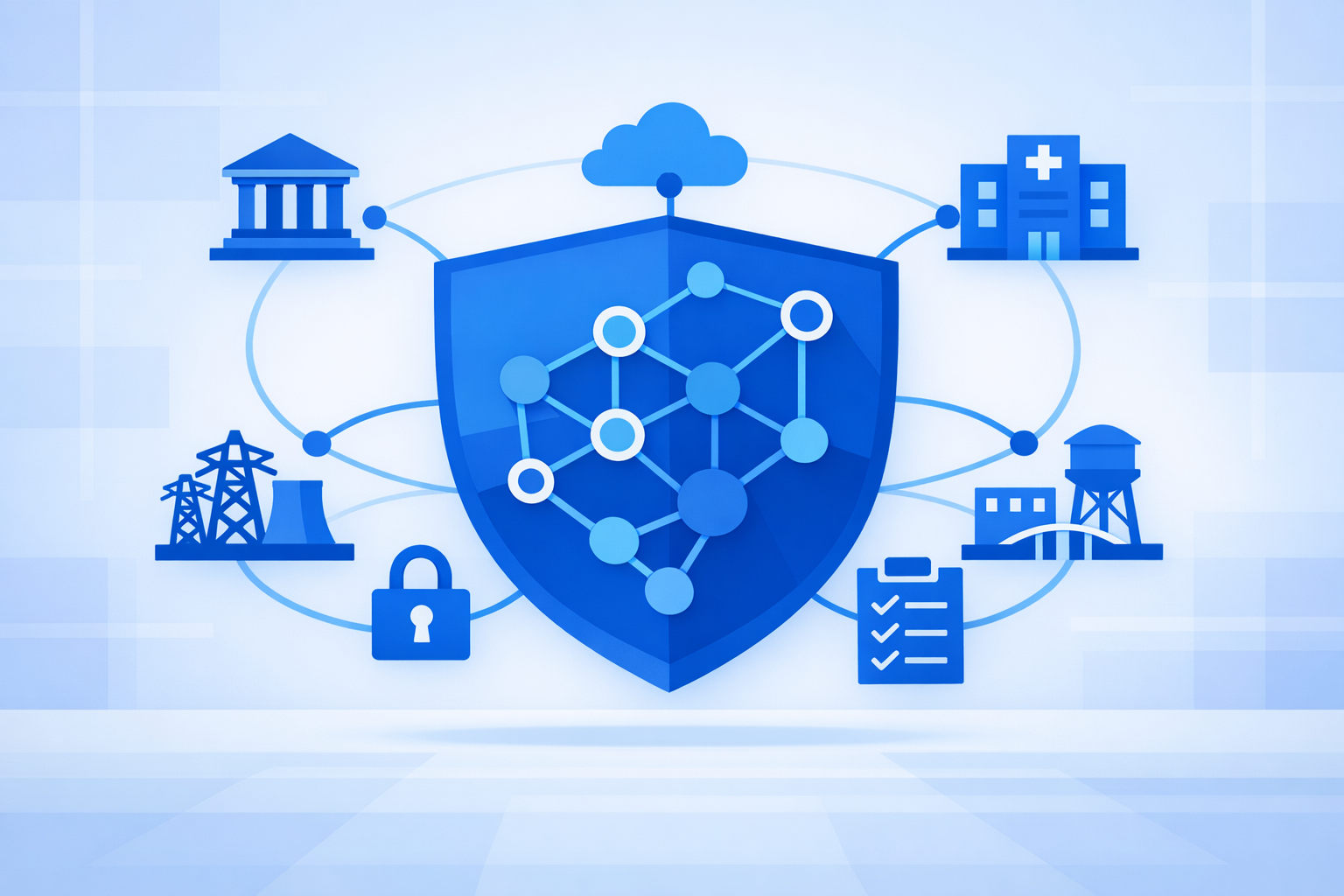
The governance infrastructure underpinning the agent expansion may prove as consequential as the agents themselves. Workday introduced its Agent System of Record (ASOR) as a centralized registry and lifecycle management plane for AI agents - enabling them to be onboarded, assigned roles and cost centers, audited, and decommissioned in a manner analogous to human employees. The ASOR brings financial visibility, HR context, and governance controls to agent deployments and surfaces measurable outcomes such as time saved and productivity improvements.
In practice, the ASOR serves as the centralized registry and management plane for digital workers: onboarding, role assignment, access controls, cost tracking, performance monitoring, and marketplace deployment all flow through it.
The governance model extends beyond Workday's own platform. Customers building AI agents with Microsoft Azure AI Foundry and Copilot Studio can register and manage them within the Workday ASOR. The integration between Workday ASOR and Microsoft Entra Agent ID ensures every agent built on Microsoft agent-building platforms has a verified identity and the right business context to operate safely across the organization.
By extending the ASOR through integration with Microsoft Entra Agent ID, Workday provides customers with verified identities and centralized governance for AI agents. Agents built in Azure AI Foundry and Copilot Studio can be registered directly within Workday, ensuring interoperability and oversight. Leaders can track usage, productivity gains, time savings, and ROI in real time.
Workday has also introduced an Agent Gateway using shared protocols such as the Model Context Protocol (MCP) and Agent-to-Agent (A2A) Protocol to enable third-party connectivity. This positions Workday as attempting to build an open - or at least openly governed - ecosystem rather than a fully closed agent marketplace.
Important: Vendor Lock-In Alert As AI agents become load-bearing components in mission-critical workflows - payroll, financial close, compliance reporting - the operational cost of switching platforms escalates significantly. IT and procurement leaders should assess agent portability, data export rights, and interoperability commitments before deepening dependencies on any single vendor's agentic ecosystem.
Interoperability and the Data Layer
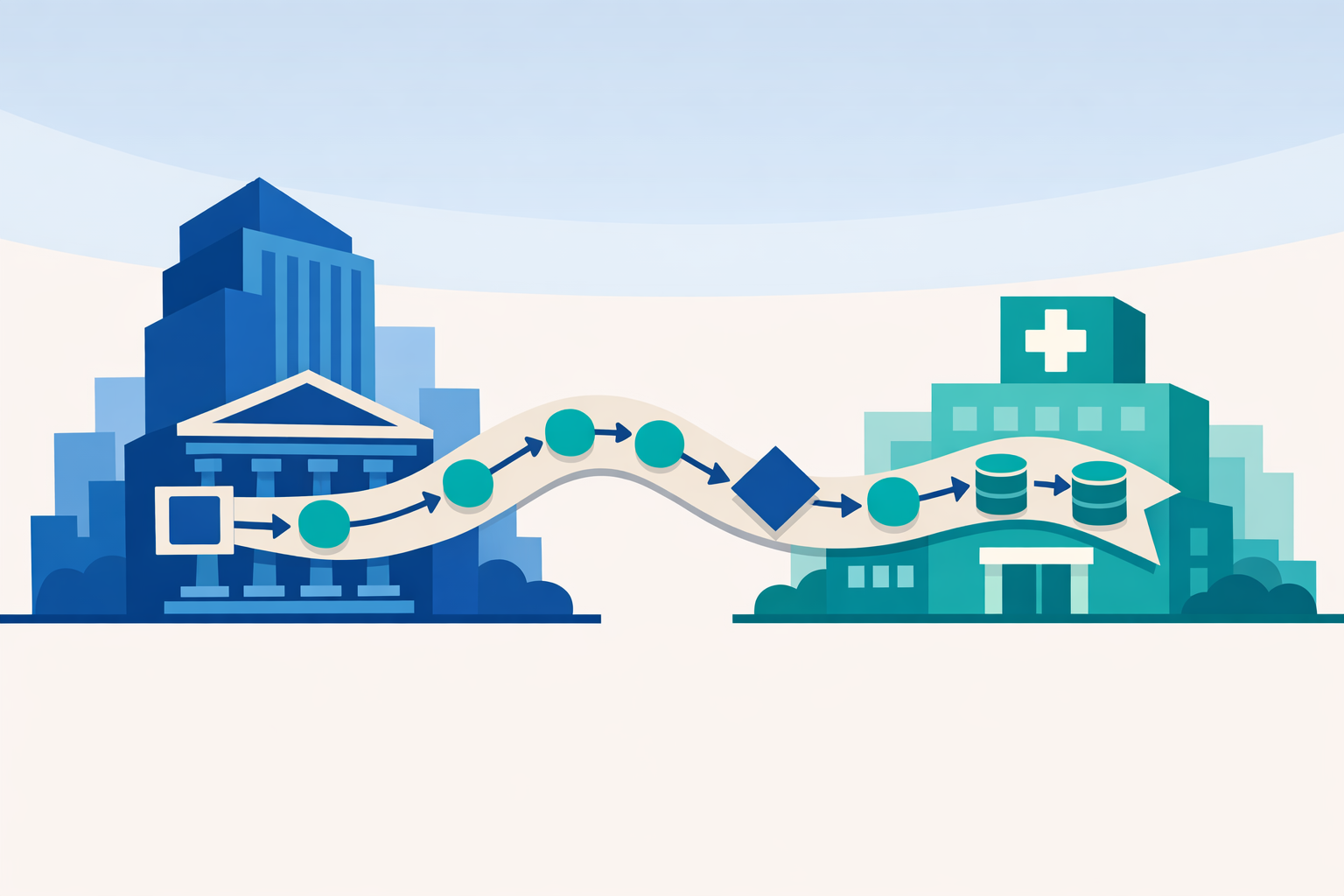
Governance of agents is only as strong as the data underpinning them. With the launch of Workday Data Cloud, HR and finance data can now connect to external platforms without moving or duplicating data through zero-copy governance. Partnerships with Databricks, Salesforce Data Cloud, and Snowflake enable two-way sharing via Apache Iceberg, linking workforce and financial data with operational or market data.
Cross-platform agent integrations - such as the partnership with Glean - leverage enterprise-wide context and interoperability between agent ecosystems, enabling more contextual interactions that draw on data from both Workday's HR and finance systems and other widely used enterprise SaaS tools. All agent interactions are designed with enterprise-grade security and governance, ensuring that identity, permissions, and compliance frameworks are maintained as agentic workflows scale.
From a data governance standpoint, independent analysis underscores that investor and regulatory scrutiny of AI agent deployments is intensifying - especially where decision-making affects hiring, payroll, benefits, or financial reporting. Organizations should expect auditors and regulators to demand traceability, provenance, and explainability of agentic actions.
The Vendor Lock-In Question
The breadth of Workday's agent strategy introduces a structural tension that IT and procurement leaders must evaluate explicitly. Workday's unified data model and governance for HR and finance is a recognized strength, but expanding the agent model to ITSM and other operational domains carries risk: the platform's deep integration advantage could become a constraint if it cannot attract ecosystem partners or extend to more specialized domains.
According to Futurum Group's Enterprise Software Decision Maker Survey (n=830), 74% of enterprises are planning to switch or possibly switch vendors between 2025 and 2028, meaning Workday must prove that its agentic approach can scale horizontally without sacrificing the compliance and user experience advantages that differentiate it.
Without disciplined IAM practices, cross-functional operational playbooks, and rigorous provenance controls, organizations risk creating a particularly dangerous form of shadow IT: authenticated, privileged agents that act at machine speed.
The competitive pressure on this dimension is real. Vendors such as ServiceNow, SAP, and Oracle have promoted AI-driven automation, but most rely on loosely coupled copilots or workflow bots that require separate identity, policy, and approval layers. Workday's agents inherit these natively, reducing the need for parallel controls and minimizing compliance gaps.
What IT and Business Leaders Should Watch
For organizations currently evaluating or running Workday, the AI agent rollout introduces several immediate strategic considerations:
Governance framework readiness. The ASOR architecture requires enterprises to define role-based access controls, escalation protocols, and agent lifecycle policies before deployment scales. Organizations without these foundations will need to accelerate that work.
Data quality prerequisites. AI agents are only as reliable as the data they consume. Master data management, data lineage tracking, and data quality assurance programs are no longer back-office hygiene - they are prerequisites for agentic automation.
Interoperability due diligence. The Workday-Microsoft integration via Entra Agent ID is a meaningful step toward cross-platform governance, but enterprises with complex ecosystems spanning multiple ERP, CRM, and ITSM platforms will need to map agent interaction paths carefully.
Procurement and contractual exposure. With 82% of leaders expecting to deploy AI agents within the next 12 to 18 months, according to Microsoft's Work Trend Index Survey 2025, the pressure to get governance right is immediate - and extends to contract terms, SLA commitments, and data portability provisions.
Regulatory anticipation. Organizations in regulated industries should proactively map agent deployments to applicable compliance frameworks, particularly where agents touch payroll, performance management, financial reporting, or access control.
The Workday AI agent expansion is among the most consequential platform moves in the current enterprise software cycle. The governance architecture being built around it - ASOR, Entra integration, MCP/A2A protocols, zero-copy data governance - will determine whether this represents a genuine step toward scalable, trustworthy enterprise automation or a faster path to a new kind of operational dependency.
For broader context on how enterprises are navigating AI workflow governance challenges, see our analysis of AI workflow agents expansion and governance pushback and how enterprises are deploying AI workflow agents for cross-system ROI.