The global data clean room market was valued at $3.2 billion in 2025 and is projected to reach $18.6 billion by 2034[1], growing at a compound annual rate of 21.7%. That trajectory is no longer driven primarily by digital advertising-the sector that pioneered clean room adoption. In finance and healthcare, a structural shift is underway: data clean rooms (DCRs) are transitioning from niche analytical tools into foundational AI governance infrastructure, enabling organizations to collaborate on sensitive data at scale without exposing raw records to counterparties.
For senior IT and compliance leaders evaluating AI strategy, the question is no longer whether clean rooms belong in enterprise architecture. It is how to deploy them with sufficient rigor to satisfy regulators, auditors, and institutional data partners simultaneously.
From Advertising Niche to Regulated-Sector Necessity
Data clean rooms were initially conceived to address digital advertising measurement challenges-allowing brands and publishers to analyze overlapping audiences without sharing raw user data. Since then, adoption has spread beyond advertising into retail, finance, healthcare, and B2B sectors.
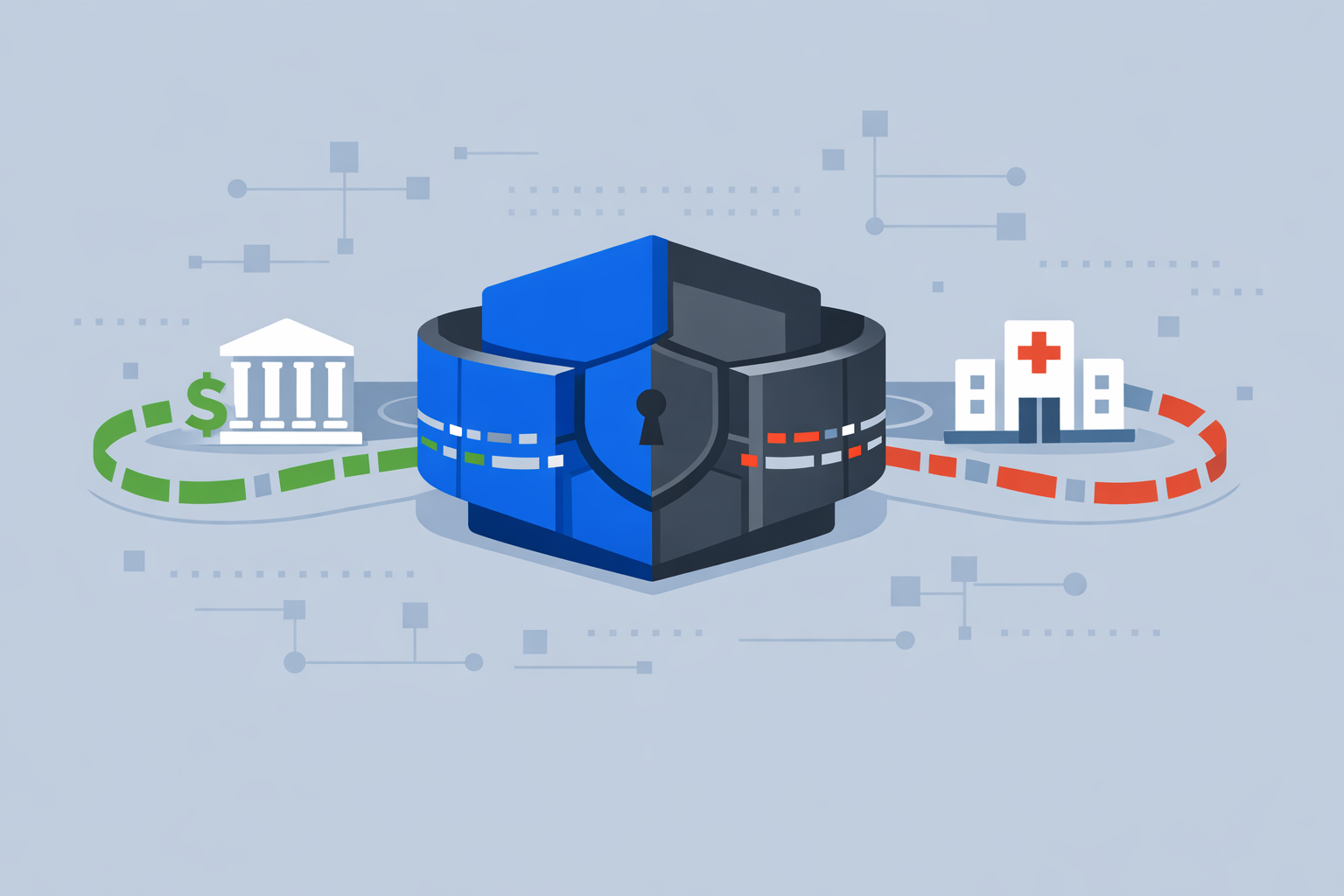
The mechanics remain consistent across contexts: clean rooms are secure environments where multiple parties can analyze and share data without exposing raw records to each other. They enable collaborative analysis while ensuring privacy, regulatory compliance, and strict access controls through privacy-enhancing technologies that anonymize or aggregate data.
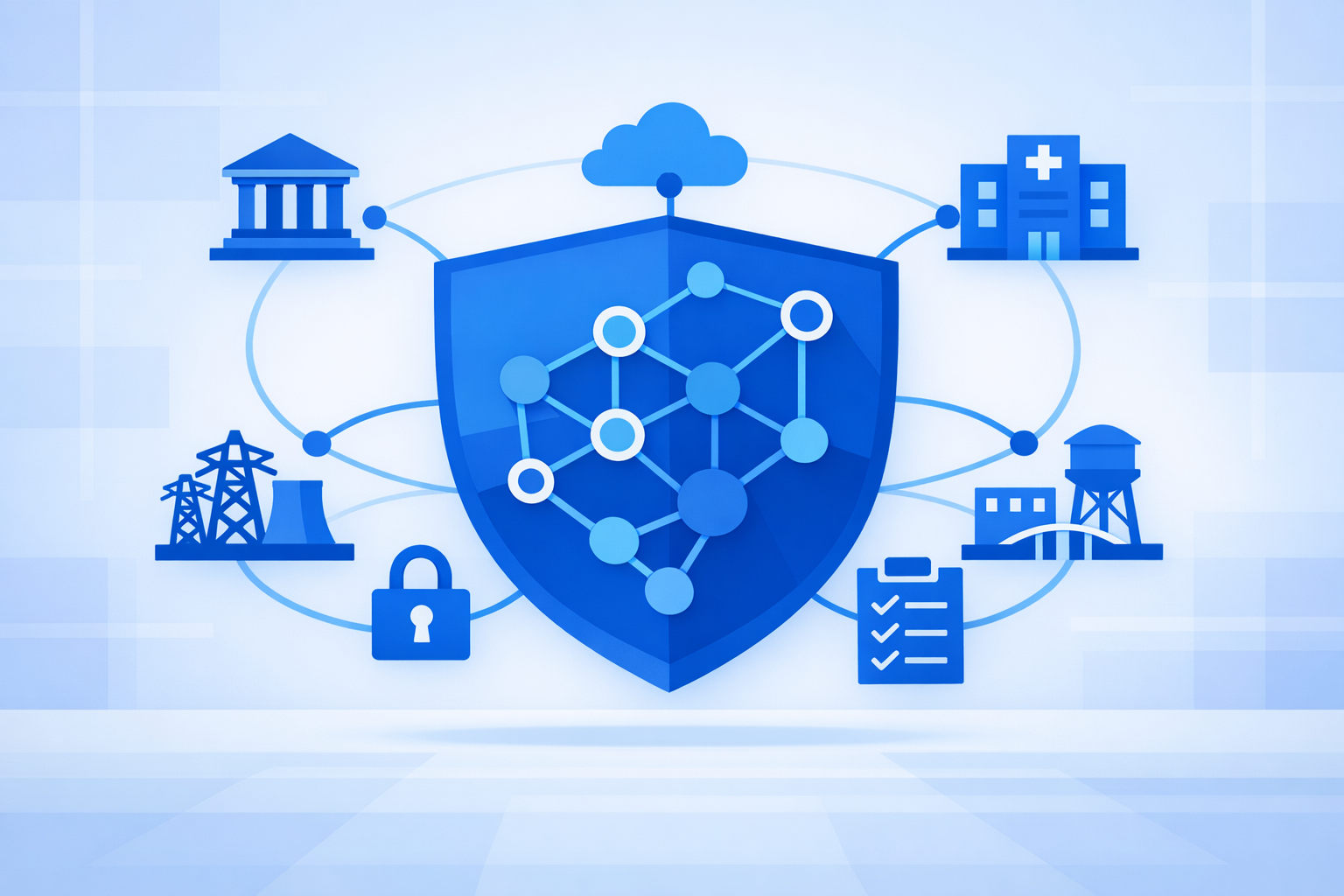
What has changed is the regulatory pressure driving adoption. As of March 2026, 20 U.S. states have comprehensive privacy laws in force, with Indiana, Kentucky, and Rhode Island joining the list on January 1, 2026[2]. In parallel, clean room technical architectures align with privacy-by-design principles articulated in GDPR Article 25, the CPRA's risk assessment requirements, and emerging AI Act obligations in Europe. This positions clean rooms as a strategic compliance investment rather than a discretionary technology spend.
The Finance Sector: Risk Management Through Collaborative Intelligence
Financial institutions face a dual imperative: extract analytical value from data spanning multiple organizations while remaining defensible under model risk management frameworks, fair lending regulations, and anti-money laundering (AML) requirements.
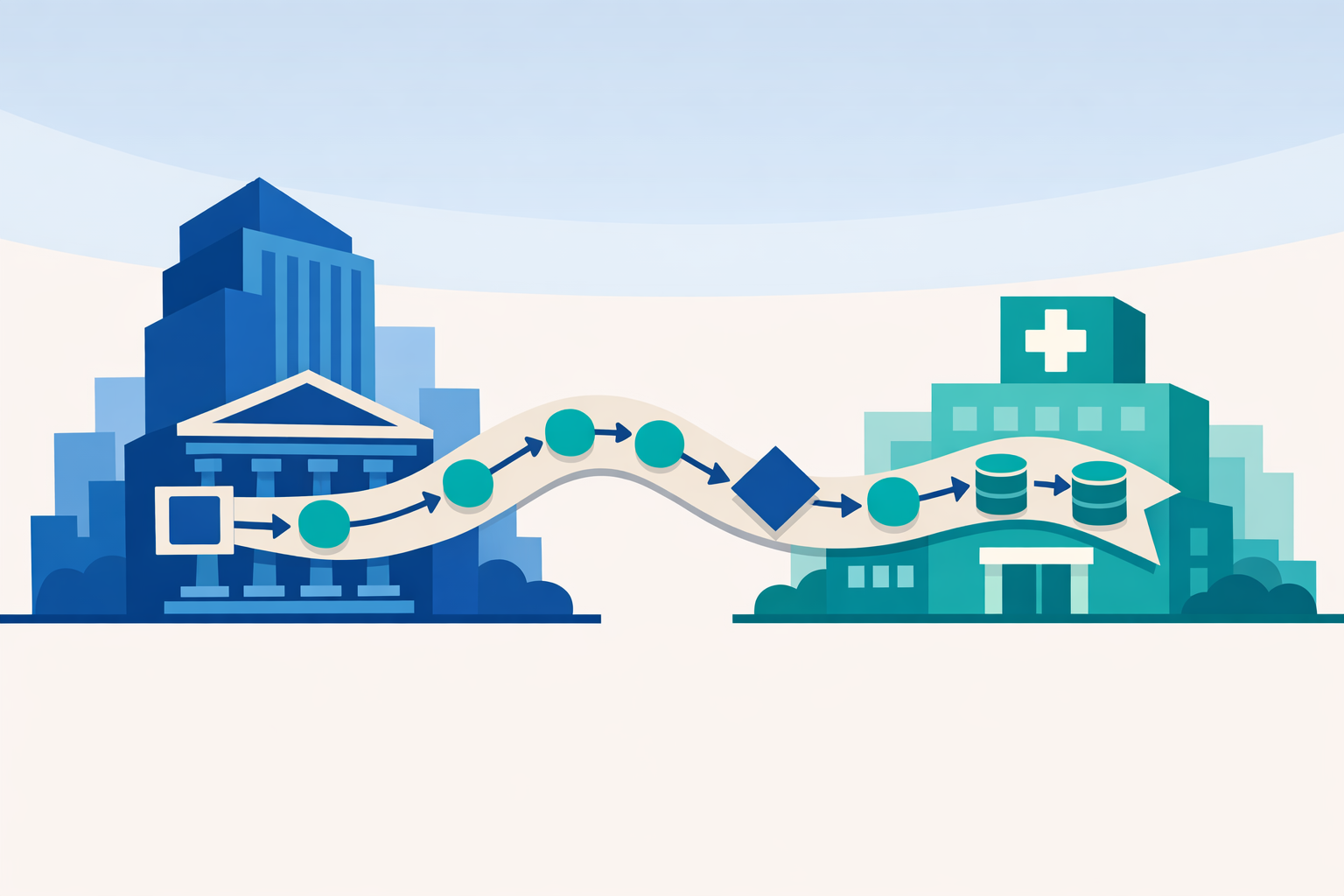
Financial services organizations are accelerating fraud detection and improving credit scoring models while safeguarding customer data. The clean room mechanism ensures that participating institutions contribute anonymized inputs and receive only aggregated outputs-never raw counterparty data.
Banks are collaborating on joint fraud detection initiatives using DCRs to identify suspicious transaction patterns. Each institution securely contributes its data and fraud detection models, then runs agreed-upon analytics and shares approved results-all while maintaining robust data governance and compliance.
Real-world deployments illustrate the depth of integration possible. Mastercard has deployed privacy-enhancing technologies (PETs) within a Databricks Clean Room environment to dynamically govern privacy and confidentiality capabilities based on collaborators, data types, and regional requirements-a deployment that Mastercard's Chief Data Officer describes[3] as central to responsible data innovation.
The banking, financial services, and insurance sector can use confidential clean room environments to collaborate on financial data while complying with regulatory requirements. These environments enable joint data analysis and development of risk models, fraud detection models, and lending scenarios without exposing sensitive customer information.
Regulatory expectations are tightening around AI used in lending and credit decisioning. The Federal Reserve, the OCC, and the SEC are intensifying oversight of AI use in lending and risk modeling, with guidance crystallizing around the understanding that AI governance now intersects with traditional compliance domains-amplifying risk in credit adjudication, pricing, and decisioning. Clean rooms provide an auditable, policy-enforced environment for the model inputs that regulators will increasingly scrutinize.
Healthcare: Privacy-Preserving Analytics at Population Scale
Healthcare organizations operate under some of the most stringent data protection requirements of any sector, with HIPAA governing protected health information (PHI) in the United States and GDPR applying in European jurisdictions. The challenge extends beyond compliance-it involves unlocking the analytical value of clinical, genomic, and claims data held across fragmented, siloed institutions.
Multiple entities can collaborate on research or technology initiatives without compromising governance controls. Secure environments for sharing data also benefit healthcare organizations seeking to augment cybersecurity alongside research, provided they are configured properly.
By enabling analytics on aggregated data without revealing individual-level information, healthcare organizations can derive insights while preserving patient privacy-a capability essential for improving care coordination and population health management.
This positions organizations to collaborate on medical research, population health analytics, and clinical and operational improvement initiatives while preserving patient data privacy. One HIMSS expert describes the data clean room as a "force multiplier" for life science organizations, enabling them to bring together rich yet sensitive data sets spanning clinical records, real-world evidence, and genomic sequences.
Emerging use cases include cross-institutional clinical trial optimization, where pharmaceutical companies partner with clinical sites to monitor efficacy and safety signals using aggregated outputs without accessing raw patient records. The extension to precision medicine is equally significant: DCRs help unify genomic, clinical, and demographic data to enable more personalized therapies while respecting strict data governance rules.
Governance Architecture: What Differentiates Production-Grade Deployments
Not all clean room implementations are equal. The gap between a proof-of-concept deployment and a production-grade governance environment is substantial, and regulators are paying attention. Regulatory bodies are placing increasing scrutiny on DCRs, noting they are not a "magic bullet" that automatically guarantees privacy compliance-their efficacy depends on the safeguards implemented by the companies operating them.
Regulatory note: The FTC has explicitly cautioned that data clean rooms do not automatically confer privacy compliance. Deployment without robust policy management, access controls, de-identification rigor, and contractual governance can expose organizations to enforcement risk under GDPR, HIPAA, and applicable state privacy laws.
Mature deployments share several distinguishing characteristics:
- Standardized access controls with role-based permissions and multi-factor authentication enforced across all participating parties
- Configurable differential privacy settings that apply mathematically bounded disclosure limits[4] to query outputs
- Transparent data lineage documenting how inputs are ingested, transformed, de-identified, and consumed by AI models
- Secure enclaves and trusted execution environments (TEEs) that prevent data exfiltration outside the clean room boundary
- Auditable usage logs enabling post-incident analysis and regulatory reporting
Advanced privacy-enhancing features-including protected governance and audit, verifiable trust, differential privacy, and controlled access-further strengthen collaborative analytics within the clean room.
Enterprises that have adopted clean rooms report an average 41% reduction in privacy incident response costs and a 28% reduction in data governance labor overhead-metrics that resonate with procurement and operations leaders evaluating total cost of ownership.
The Data Lineage Imperative
Data lineage has emerged as the governance capability most directly demanded by regulators and model risk frameworks. For AI systems trained or validated within clean room environments, the ability to trace a model decision back to its upstream data inputs-including transformation and de-identification steps-is no longer optional.
As data ecosystems grow more interconnected and regulatory scrutiny intensifies, DCRs are evolving from a privacy workaround into a foundational layer for secure, cross-party collaboration. The next generation of clean room solutions is moving beyond static batch analysis. Interoperability is becoming a key differentiator, as organizations seek to collaborate across multiple clean rooms and vendors without sacrificing control or compliance.
Organizations that have published on the broader challenge of data governance as a foundation for autonomous AI have noted that lineage and provenance are shifting from best practices to enforceable regulatory requirements. Clean rooms operationalize those requirements at the inter-organizational level.
Cross-Sector Use Case Comparison
The following table maps key clean room capabilities to their most prominent applications across finance and healthcare:
| Capability | Finance Applications | Healthcare Applications |
|---|---|---|
| Privacy-Preserving Analytics | Cross-bank fraud pattern detection on anonymized transaction data | Population health analytics without exposing PHI |
| AI Model Training | Shared credit-risk and AML model training across institutions | Clinical outcome prediction models trained on multi-site EHR data |
| Data Lineage & Auditability | Traceable inputs for model risk management and regulatory compliance | HIPAA-aligned audit trails for third-party analytics partnerships |
| Differential Privacy | Mathematically bounded disclosure for benchmark reporting | De-identified genomic and claims data for research consortia |
| Secure Enclaves / TEEs | Confidential computing for inter-bank liquidity analysis | Encrypted multi-site clinical trial data collaboration |
| Regulatory Sandbox Pilots | Real-time monitoring dashboards for cross-entity model decisions | Governance-verified AI tools tested against claims and outcomes data |
Operational Challenges and Emerging Mitigations
Adoption at scale surfaces three persistent operational challenges that CIOs and enterprise architects must address directly.
Multi-party access management complexity increases non-linearly as the number of participating institutions grows. Granting more entities access to a DCR can inadvertently expand the perimeter requiring defense-meaning organizations hosting a clean room must evaluate their partners' security practices, data governance policies, and storage and permission configurations. Leading deployments respond with centralized policy management that enforces a consistent governance baseline across all participants.
Encryption consistency presents a related challenge. Sensitive data exists in three basic states-at rest, in transit, and in use-and is most vulnerable during processing, analysis, or manipulation. This is precisely the challenge DCRs aim to address. Organizations are responding by adopting zero-trust architectures and extending encryption-in-use capabilities through confidential computing platforms.
Performance at scale becomes a constraint as data volumes and model complexity grow. Vendors are differentiating on interoperability and sector-specific workflow integrations[1] that reduce latency without sacrificing privacy controls. The emergence of management APIs for automated clean room orchestration is reducing administrative overhead and accelerating time-to-insight across multi-collaborator environments.
Outlook: A Foundational Layer for Cross-Institutional AI
A Gartner analysis projects that 60% of large organizations will adopt at least one privacy-enhancing computation technique for processing data in untrusted environments-a trend driven substantially by clean room adoption. This regulatory tailwind is expected to intensify as digital service laws, data governance acts, and sector-specific healthcare and financial data rules continue to multiply globally.
Industry groups are working to standardize data provenance frameworks within clean rooms to ensure portability and consistent auditability across vendor environments. Emerging standards such as the IAB's Data Clean Room Standards aim to make cross-vendor interoperability a reality. As these standards mature, clean rooms are positioned to become the trusted, auditable substrate on which cross-institutional AI governance is built-providing the documented evidence trail that regulators, auditors, and institutional partners will increasingly require.
For enterprise leaders, the strategic implication is clear: clean room capability is no longer an advanced feature of a mature data platform. It is becoming a procurement prerequisite for any AI initiative involving sensitive data shared across organizational boundaries.